The digital ruble proves its worth in payments
The analytical department of Realnoe Vremya has attempted to examine the advantages of transitioning to the new form of the Russian currency
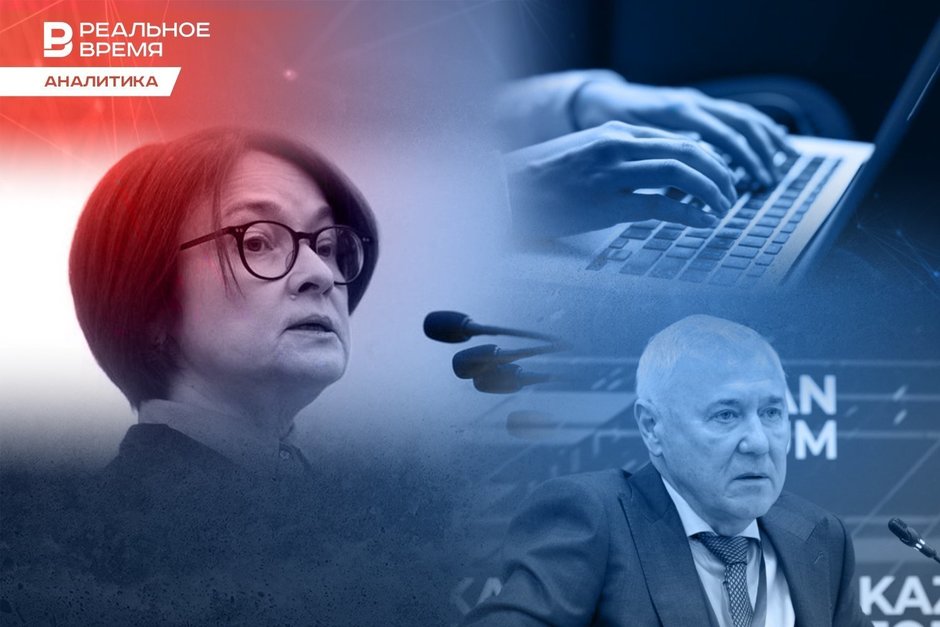
Russia has begun testing the digital ruble among the public — the chairman of the State Duma Committee on the Financial Market, Anatoly Aksakov, has already received and even partially spent his first salary in digital rubles, while Ak Bars Bank presented Elvira Nabiullina with the first smart contract. In the near future, the head of the Bank of Russia and her colleagues plan to begin receiving their salaries in “digital” form. At the same time, the Ministry of Labour of the Russian Federation remains cautious and intends to start making payments in digital rubles only once it has earned the trust of the population. Who stands to benefit from switching to payments in digital rubles, and who might suffer from such “whitening” — in the review by the analytical department of Realnoe Vremya.
The digital ruble goes public
On 1 October, the first stage of digital ruble testing began in Russia. It is planned to be used for part of federal expenditures and certain social benefits. This list will include, for example, child support payments.
Starting from 1 January next year, payments from the federal budget are expected to be made in digital rubles — including pensions, scholarships, and salaries for public sector employees. By 2027, it will also be used for regional payments and in the systems of extrabudgetary funds.
A rapid switch of all payments to the digital ruble will not take place immediately. The full transition will take several years. The government will have time to refine the technology using a limited list and to connect all regions and agencies.
In practice, for an average family in 2025, little is likely to change. Even if a benefit is included in the pilot list, banks and agencies will prepare the infrastructure for payments in digital rubles. All citizens will be notified of possible changes in advance.

Use of the digital ruble is voluntary
The head of the Central Bank, Elvira Nabiullina, has repeatedly emphasised that no one will be forced to switch to the digital form. All familiar methods of receiving and spending money will remain available.
Automatic opening of digital ruble accounts is not envisaged. Benefit recipients will independently determine the format of payments: non-cash transfer, cash, or digital form. If a citizen does not plan to use digital rubles, they do not need to open a wallet, the regulator explains.
To refuse the use of the digital ruble, there is no need to contact MFCs or other government bodies.
Bankers are the pioneers
For now, bankers have become the pioneers in this field. The chairman of the State Duma Committee on the Financial Market, Anatoly Aksakov (A Just Russia — Patriots — For Truth), became the first recipient of such a salary. He received funds in his digital wallet on the Central Bank’s platform and tested making payments from his account — transferring money to the Life Line charity for children with serious illnesses and to SOS Children’s Villages, as well as paying for an order at the Teremok restaurant.
“The Bank of Russia is not yet a participant in this pilot, but it will become one in the near future, and our employees will be able to voluntarily join this pilot,” said Elvira Nabiullina.
The head of the Central Bank herself also plans to join her colleagues.
“Receiving wages in digital rubles is an additional opportunity for people. They can decide for themselves how to receive their salaries: in cash or by bank transfer. This is the right to choose. And when the digital ruble becomes available to everyone, they can make that choice,” Nabiullina said.

According to her, the Central Bank will later consider the possibility of offline payments in digital rubles. Currently, other payment directions are prioritised, she explained — namely, budget-related payments, cross-border transfers, and the development of smart contracts.
Ak Bars Bank, together with the Bank of Russia and the Ministry of Finance of Tatarstan, also tested a scenario using the digital ruble — transferring subsidies from the republican budget. This was announced by the first deputy chairman of Ak Bars Bank, Tagir Karimov, at the Finopolis forum.
The chosen pilot was the “Subsidy for financial support of expenses for publishing the laws of the Republic of Tatarstan”. Within the project, the conditions for receiving and using the subsidy are defined by a smart contract.
“All work according to the roadmap has been completed. The functionality of the smart contract on the digital ruble platform has been implemented. We are awaiting the establishment of the necessary legal framework at the federal level. Ak Bars Bank is ready to use the digital ruble in the budget process,” Karimov reported to the head of the Bank of Russia, Elvira Nabiullina.
At the same time, the Ministry of Labour of Russia announced that it does not intend yet to use the digital ruble in the social welfare system and does not plan to make benefit payments in digital currency in 2026, RIA Novosti reported, citing Minister of Labour and Social Protection Anton Kotyakov.
According to him, no such decisions are planned for the coming year. “In 2026, we are not yet ready to switch to payments in the form of digital money,” Kotyakov stressed.
He clarified that the introduction of this instrument into the social welfare system will depend on whether it earns the trust of the Russian population.
The full transition may take 7–10 years

The state and the Central Bank will benefit most from the introduction of the digital form of the currency — they gain more transparent management of budget payments, reduced leakage, and greater control over the movement of funds. Businesses will also benefit, potentially through lower transaction costs and faster operations. “But there are also many risks: threats to privacy and surveillance, dependence on technical infrastructure and potential failures, cyberattacks, digital inequality (people without smartphones or in remote areas), issues of trust, citizens’ refusal to participate, and the risk of funds flowing out of banks into the Central Bank’s wallets, which could destabilise the banking system,” Kabakov listed.
The expert believes that “adaptation” will take at least five years — possibly seven to ten — before the digital ruble becomes a familiar option for a significant part of the population, though it may never fully replace cash or traditional non-cash rubles.
For citizens, the benefits of using the digital ruble are not obvious
“Even if there are still people who withdraw all their money after receiving wages, pensions, or stipends and use only cash, they are clearly in the minority now. This is no longer typical behaviour. Ten years ago it was common, but today the share of cashless payments is the highest in history, and it will only continue to grow. So in this sense, it’s not a limiting factor for the digital ruble,” says economist and CEO of the analytical agency BusinessDrom, Pavel Samiev.

People will need time to get used to the digital ruble and to understand how it works, Samiev explains. “If the Bank of Russia and the authorities explain how it all works, how the digital ruble can be used, and what its advantages are, as public understanding grows, there will be no problems with the spread and adoption of the digital ruble,” he is confident.
The level of trust will depend precisely on whether people understand what it is and how to use it. “It is clear that the main beneficiaries of the introduction of the digital ruble are the regulator and monitoring structures — it is primarily about transparency of transaction flows, public expenditures, payments to officials, and other social payments.” The state benefits by gaining control, transparency, and traceability of financial flows. On a larger scale, this reduces improper and opaque budget spending, the shadow-corruption component, and enhances monitoring and spending oversight — overall, this is beneficial for the state.
“But for ordinary people, there are probably no major direct advantages,” the expert noted. “Among them, one might mention lower transaction and payment transfer costs. But that is not an obvious advantage, since these costs are not very high now.”
On the other hand, it may become a more convenient transaction format, for example, when there is no internet connection. “This, by the way, is quite an important advantage, because it will allow transactions, transfers, and payments to be made without a network connection. And this, perhaps, is the most tangible and significant benefit for people today,” the expert explained.

For financial institutions, however, this is not a particularly profitable story — it may lead to reduced opportunities for attracting funds to accounts, since digital rubles are not bank liabilities; banks act only as operators. Moreover, it entails additional infrastructure costs, Samiev stressed.
No deposits, no bonuses, no cashback
The digital ruble will not replace cash or non-cash money. It is a third form of the Russian national currency, issued by the Bank of Russia, stored in digital form on a special Central Bank platform. It can be used for payments — to pay for goods and services or transfer funds to other people. One digital ruble equals one ruble in cash or in a bank account. Transfers and payments can be made around the clock without the participation of commercial banks, explained economist and head of R-Invest, Rustem Shayakhmetov.

When using digital rubles, the intermediary — the commercial bank — disappears, so transactions will be cheaper for consumers. However, this also reduces the income of commercial banks. Currently, banks act as intermediaries between the Bank of Russia and legal and physical persons in non-cash payments, deposits, and withdrawals, earning significant income from settlement services and account balances used for lending.
“When citizens and organisations switch to digital rubles, commercial banks lose a significant share of profits. That’s why banks oppose digital rubles,” Shayakhmetov said.
Retailers, however, stand to benefit due to lower acquiring costs, which can reach up to 2%. “Essentially, everyone making payments will benefit,” he explained. “At the same time, the state gains easier control over cash flows, which is an effective anti-corruption measure, and life will become more difficult for those engaged in shadow operations.”

“The digital ruble will transform financial activity and provide Russians with a convenient, inexpensive, and reliable payment instrument. But for most Russians, it is still a new and unfamiliar tool, and the pace of transition to digital rubles will depend on how effectively the Bank of Russia promotes this service,” concluded the expert.