Mikhail Varfolomeyev: “Pilot productions will open in every area of small-scale chemistry”
Head of the KFU Technopark Mikhail Varfolomeyev talks about a 250 million ruble grant for the Russian fuel and energy complex
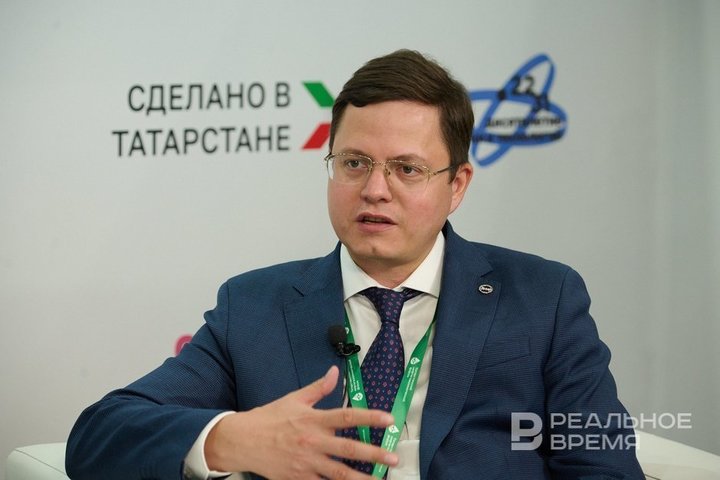
The average oil recovery factor in Russia is about 35%, meaning two-thirds of reserves remain in the deposits. Scientific studies show that this rate can be increased to 60-70% by using chemical enhanced oil recovery methods. Mikhail Varfolomeyev, head of the Department for Development and Operation of Hard-to-Recover Hydrocarbon Fields at Kazan Federal University (KFU) and winner of the “Scientific Breakthrough” award, told Realnoe Vremya about the development program of the “Small-scale Chemical Technologies” technopark, the “critical” niches in the oil sector that scientists have managed to close, and explained why the university is building a third pilot-industrial site near the Kazan Synthetic Rubber Plant.
Without a “pinch” of small-scale chemistry, fuel and energy giants stall
No global oil company extracts oil without the “golden pinch” of catalyst. Oilfield reagents are needed to increase oil recovery; special chemical additives are used in hydraulic fracturing; and refining and petrochemicals may simply “stall” without a “pinch” of catalyst. This is small-scale chemistry.
Before sanctions, oil and petrochemical companies actively purchased supplies from the German BASF and French Axens, but after their exit, Russian authorities began promoting domestic developments. This year KFU won a 250 million ruble grant from the Russian Ministry of Science and Higher Education, fully dedicated to the development and pilot-industrial implementation of small-scale chemistry products.
— Mikhail Alekseevich, over 500 million tons of oil and 670 billion cubic meters of gas are extracted annually in Russia, but maintaining high hydrocarbon production rates is becoming more difficult. The era of “easy” oil is ending. In the republic, where 80% of mature fields are located, work on this topic has long been underway. How far have we come in enhanced oil recovery technologies?
— In my opinion, the main breakthrough over the past decade was the development of domestic catalysts to increase oil recovery and partial oil processing. Since the mid-2000s, KFU has operated a World-Class Scientific Center (WCSC) focused on rational stock development of liquid hydrocarbons. The center has created a whole range of oilfield products, which are specialized small-scale chemistry. This is where the first steps in searching for and implementing new small-scale chemical solutions were made.

For oilfields, “chemistry” must be inexpensive but effective in extracting oil from complex reservoirs. Currently, the average recovery factor in Russia is about 35%. This means two-thirds of oil reserves remain unrecovered — which is inefficient. Oil companies invest billions in building wells, infrastructure for extraction, gathering, and transport, but get only one-third of the hydrocarbons. This is not the limit. Scientific research shows oil recovery can be increased to 60-70% using chemical EOR (enhanced oil recovery) methods. Our center has developed a wide range of oilfield reagents that meet or exceed foreign analogs in quality. Recovery factors reach 38%, with potential for more. We see our main task as creating a domestic line of oilfield chemicals.
— What are the challenges?
— Unfortunately, there are no effective chemical components for chemical enhanced oil recovery methods yet. This problem remains relevant, and we will continue to solve it, because the number of fields with hard-to-recover reserves will keep growing.
The technopark will be “powered” by polymers and oilfield chemistry
— In February this year, a new structure appeared at the university — the “Small-scale Chemical Technologies” technopark. Judging by the name, it will continue research in this area?
— Yes, exactly. One of Russia’s national goals is technological leadership. Tatarstan is one of the leading regions actively working to achieve the national development goals. This agenda is endorsed by Rustam Minnikhanov — many initiatives receive direct support from him.
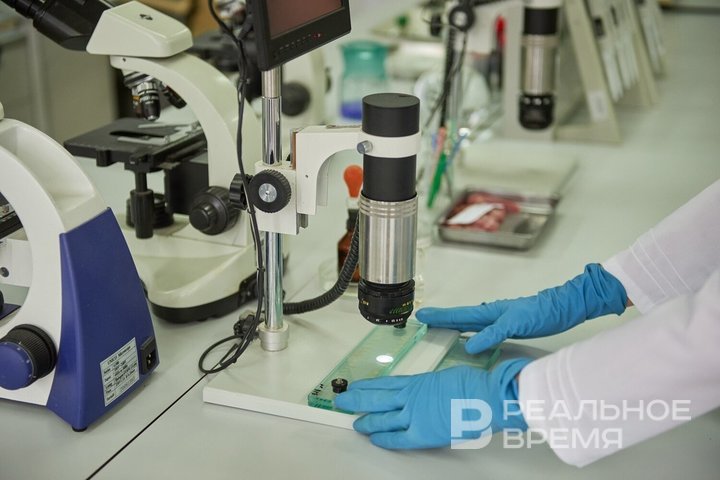
By the decision of the republic’s leadership, a technopark was established based at the university. Why here? We have collected many developments in the oil and petrochemical industry; laboratory testing and modeling were conducted. The next necessary step is industrial implementation. The technopark is created for scaling developments and increasing conversion of ideas into industrial products. We have great potential. To create it, we won a federal grant of 250 million rubles from the Ministry of Science and Higher Education of Russia. It will be used to purchase pilot-industrial equipment for producing chemicals and new materials.
— What are the technopark’s core directions?
— When defending our program before the Ministry, we identified two main directions: heterogeneous catalysis and small-scale chemistry for the oil and gas industry. This means the engineering center at the technopark will focus on catalyst development for polymer production and reagents for oilfield chemistry.
SIBUR and Gazpromneft become industrial partners of KFU
— Who are ready to become industrial partners of the technopark?
— Partners in these directions include SIBUR, Gazpromneft, Tatneft, Zarubezhneft, Irkutsk Oil Company, and small oil companies of Tatarstan. Agreements and contracts have been signed and are being implemented with these companies. Besides the oil sector, we have started cooperation with Tasmy, Nefis, and other companies. Thanks to a developed chemical and petrochemical industry and comprehensive support from the republic’s leadership, Tatarstan can become a center of small-scale chemistry. We have large raw material producers concentrated here, on whose base we can build product chains and create new processing stages.
— How do you plan to use the grant money?
— This year we are planning to purchase technological equipment for pilot production organization in Kazan. Technologies must be developed through pilot-industrial tests. In autumn, a site will be opened at 2a Modelnaya Street with pilot installations to produce and test pilot batches of small-scale chemistry products for various sectors — from oil and gas to the agro-industrial complex.
A useful capsule for wells
— What does science need to strengthen ties with industry?
— Support for pilot production and, most importantly, pilot batches is essential. We understand that the cost per unit with small batches of 5–10 thousand tons will be higher than with 100 tons. To speed up the process, a subsidy program for pilot batches is needed. This will allow faster transition from research (R&D) to development (R&D).
— Which oil companies use your developments?
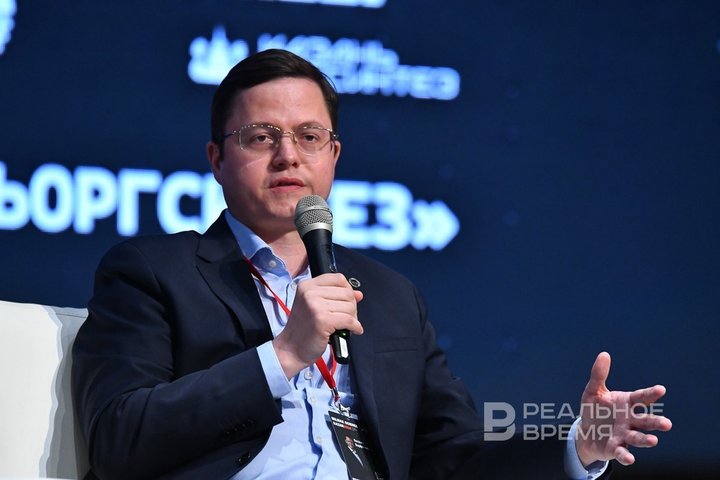
— We work with almost all the major oil and gas companies in the country. I want to especially highlight projects aimed at developing fields with hard-to-recover oil reserves. Within the world-class laboratory supported by the Russian Science Foundation and industrial partners, we are engaged in thermal enhanced oil recovery using catalysts, and also develop chemical surfactant reagents used for residual oil recovery in mature fields. Tatarstan is one of the world leaders in these areas.
— A year ago, you told about an interesting reagent developed on the principle of medical drugs: it dissolves inside the well like a capsule in a human stomach.
— This is a capsule with liquid for well kill (shutting). This reagent is needed for well conservation during drilling or repair works. Its action is unusual: the reagent self-destructs inside the reservoir, after which oil production can be stopped.
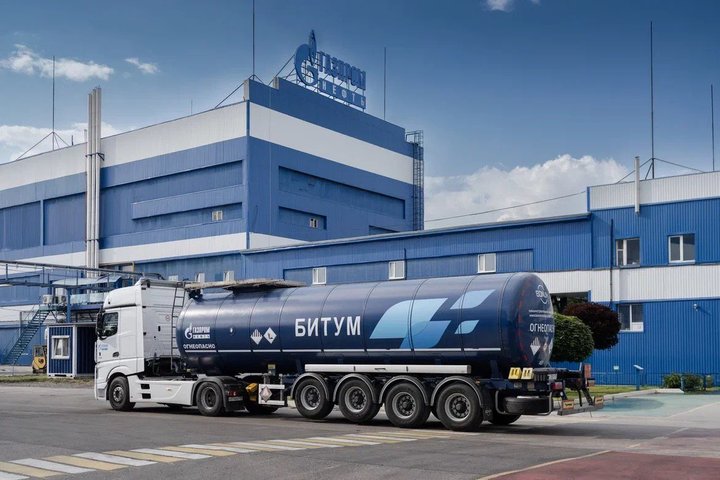
This development reached industrial application. Tests were carried out at the Orenburg oil and gas condensate field near the city of Orenburg on the left bank of the Ural River. The development is implemented by Gazprom Dobycha Orenburg LLC — a subsidiary of PJSC Gazprom. The technology was recognized as effective according to all technical parameters of the customer.
We are now preparing testing in fields with different reservoir pressure conditions.
— Tatneft is strengthening scientific cooperation with the Higher School of Oil in Almetyevsk. Aren’t you afraid of internal competition in this direction?
— No, in some directions we cooperate. We conduct joint scientific and technical activities and discuss projects. We try not to compete but to develop partnerships.
Science works for results
— Nowadays, science and education focus on achieving practical results, and fundamental science seems unnecessary. Grants are awarded only on condition of practical work. How to find a balance between science and applied business goals? Is it worth doing fundamental science if it doesn’t bring income?
— Yes, sometimes it takes decades from discovery to implementation. But we managed to shorten the transition — from idea to industrial application for some developments took just a year. Science receives great support in Tatarstan.
At the end of 2022, the state scientific and technological development program of the Republic of Tatarstan was approved, prioritizing fundamental and applied science development. Of course, there is a federal program used by all regions, but we have our own support program in the republic. Competitions for fundamental grants and applied research are held, ordered by the Science and Technology Foundation of the Republic of Tatarstan. To accelerate the implementation of new chemical technologies, the venture fund ecosystem is expanding. This inspires optimism — large industries cannot do without small-scale chemistry products.