From Kamal to Broadway: Tatarstan on the way to a cultural bridge between tradition and modernity
How the republic seeks to preserve its cultural identity while keeping up with technological progress
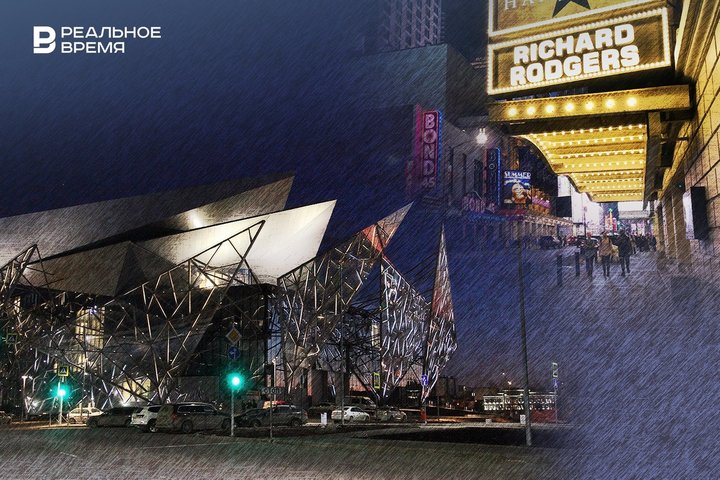
In the context of globalisation, when cultural boundaries are being erased, preserving one's native language is of particular importance. According to digital economist Ravil Akhtyamov, digital tools are now a key link between tradition and modernity. According to him, technology makes it possible to rethink heritage, making it accessible to a younger audience. For example, online broadcasts of folklore performances with multilingual subtitles or viral dance challenges on TikTok not only adapt cultural values to the requirements of the digital age, but also attract the attention of millions of users, forming a new dialogue between generations.
A cultural bridge between tradition and globalisation
Kazan, 2025. Projects where traditional art meets digital innovation come to life on the city's stages. Live broadcasts of folklore performances are subtitled in English and Chinese, and short videos featuring artists go viral on TikTok. This is not a utopia, but part of Tatarstan's strategy to preserve its cultural identity while keeping up with technological progress.
Digitalisation is an opportunity for national cultures to make themselves known. Crowdfunding for ethnic projects or processing folk melodies with algorithms — this is how we overcome borders and speak to the world in the universal language of technology.

The main question for the republic: how to remain unique in an era when social networks are shaping global trends? The solution lies in combining authenticity, digital tools and international co-operation.
World Experience: How Ethnicity Becomes Mainstream
Successful cases of foreign festivals demonstrate that ethnic music and traditional art can win a global audience. For example, the WOMAD festival (UK), founded by Peter Gabriel, brings together musicians from Mali, India and Brazil, supplementing live performances with digital masterclasses. In 2024, Japan's kabuki theatre gave VR tours backstage at its performances, attracting 500,000 viewers online
In Malaysia, Rainforest World Music Festival experiments with hybrid formats: traditional sape melodies are mixed with electronic beats, and neural networks generate arrangements based on ancient tunes. In Morocco, the Fès Festival of World Sacred Music has turned Sufi spiritual songs into podcast hits, downloaded 2 million times.

Three principles unite these projects: hybridisation of formats, active use of digital platforms and a focus on international audiences. It is these ideas that can become the basis for the transformation of Tatarstan's cultural scene.
‘Winds of Change’: reform of the Tatar flagship programme
Three strategies for breakthroughs
- Courage to experiment. Tatar culture is capable of setting global trends if it goes beyond templates. An example is international collaborations where artists and composers create music based on national poetry. Such works are often integrated into popular media projects, and their video-visualisation reflects the historical heritage of the region.
- Digital adaptation of traditions. Social media are becoming a tool to popularise heritage: short videos of folk dances and songs, complete with multilingual subtitles, attract millions of viewers. Such initiatives demonstrate how digital formats can turn ethnic art into viral content.
- Urban space as a stage. Organising large-scale street events with local and guest artists can turn a city into a cultural epicentre. Funding such events through crowdfunding and grants confirms the effectiveness of hybrid models that combine public support and public resources.
Over the eight years of its existence, the Yzgaresh җile (Winds of Change) festival became an important cultural marker of the region, reflecting its ambitions and creative potential. By 2025, however, the project was at a crossroads: formulaic programmes, a lack of fresh talent and limited engagement with international audiences called into question its continued relevance.

Experts insist on a profound transformation. Instead of the traditional concert format, it is proposed to create a multi-level platform combining:
- TV projects featuring well-known artists;
- residencies to support young authors;
- podcasts exploring the evolution of Tatar music.
A serious obstacle is the poor digital accessibility: the festival materials are hardly available in the public domain — only fragmentary recordings on YouTube and scattered selections on social networks. The solution requires:
- systematic publication of materials on streaming services;
- regular broadcasts of rehearsals and backstage content in TikTok;
- production of documentary films revealing the process of performance creation.
An important step will be the involvement of new experts — from independent directors to digital strategists, who are able to breathe fresh ideas into the project and expand its horizons. This will allow not only to overcome the current challenges, but also to turn the festival into a dynamic platform for cultural dialogue.
International lessons: how to support culture
The experience of other countries shows that heritage preservation requires flexible financing models and co-operation with business. In Germany, tax incentives encourage companies to invest in the arts: Deutsche Bank sponsors the Berlin Philharmonic Orchestra, and proceeds from concerts go towards restoration of monuments. In Sweden, 55 per cent of musicians' salaries are covered by government grants.
China relies on digital platforms. The Douyin app (an analogue of TikTok) popularises traditional dances: Hangzhou drummers gain 50 million views per day. At the same time, the authorities are investing billions of yuan in projects like the Peking Opera House, turning them into soft power tools.

Hybrid solutions are relevant for Tatarstan. The creation of an endowment fund modelled on the American Getty Foundation will allow accumulating private donations. The introduction of a voluntary ‘cultural levy’ for companies operating in the region will ensure stable funding. Crowdfunding platforms like Patreon will give independent authors a chance to realise their projects.
Conclusion: Kazan is the laboratory of the future
Tatarstan today is a unique fusion of geography, history and technology. Its location between Europe and Asia, multinational identity and digital infrastructure create ideal conditions for a cultural breakthrough.
To become a bridge between East and West, the republic needs to:
- Turn ‘Yzgaresh җile’ into an analogue of New York's Off-Broadway, where experimental hits are born.
- Create creative clusters like Berlin's Holzmarkt, bringing together musicians, IT specialists and designers.
- Launch an online Tatar language academy with gamification — quests, NFT certificates, streaming with bloggers.
Culture is not a museum. It must breathe, take risks and speak the language of the new generation.
Tatarstan is already making steps in this direction. All that remains is to be courageous and the wind of change will lead to shores where tradition and innovation merge in harmony.