What the luminous Arkhip Ivanovich hid in the painting “Ai-Petri. Crimea”
The exhibition “Arkhip Kuindzhi. Absolute Light” has opened in the main building of the State Museum of Fine Arts of the Republic of Tatarstan
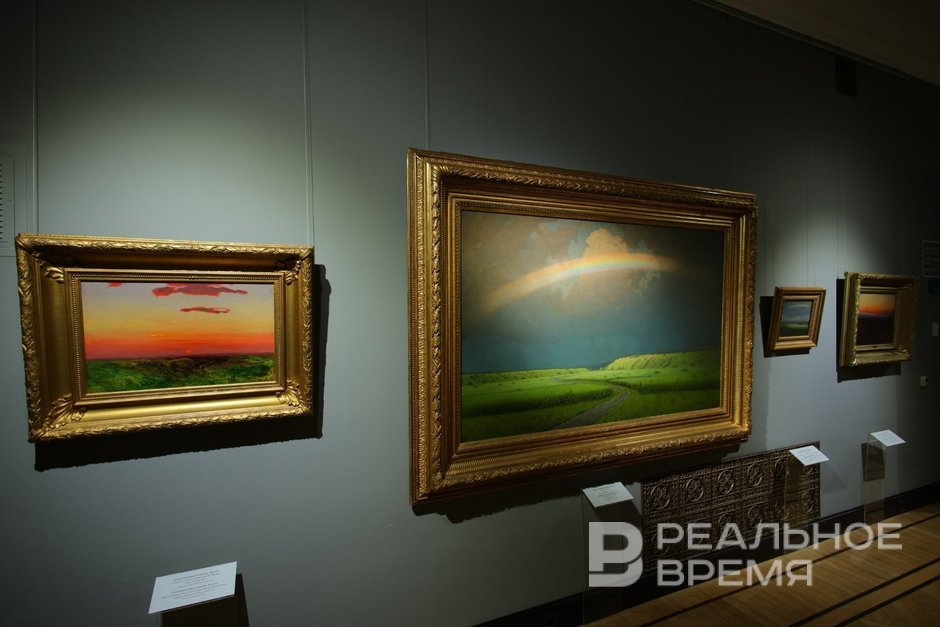
Today the exhibition of the “quiet revolutionary” of Russian landscape painting, Arkhip Kuindzhi, opens at the State Museum of Fine Arts of Tatarstan. 60 works have come from the collections of the Russian Museum; the exposition has been supplemented by four paintings from the funds of the State Museum of Fine Arts of the Republic of Tatarstan, as well as the creations of his students. The exhibition will run until March 8, 2027.
Where to look for “Moonlit Night on the Dnieper”
The State Russian Museum holds 466 works by Kuindzhi, including 202 paintings and 264 graphic works. In March of this year his exhibition “Arkhip Kuindzhi. The Illusion of Light” ended in the Benois Wing — more than 150 works of the artist from the leading museums of Russia. His landscapes were brought to Kazan in 2008, also to the State Museum of Fine Arts of the Republic of Tatarstan; then visitors could see his famous “Moonlit Night on the Dnieper.”
This year its “variant” has ended up in Kazan. This is told by the deputy general director for accounting, storage and restoration of museum valuables of the Russian Museum, Sergei Sirro: at the exhibition there is the painting “Ai-Petri. Crimea," which in 2019 was taken out of the Tretyakov Gallery. It was quickly returned, examined and an interesting fact was established.
— When you are asked why the Russian Museum did not bring “Moonlit Night," answer: they brought it, Kuindzhi hid it under a layer of painting. Indeed, there is a reduced repetition there; it is known that Kuindzhi repeated this thing more than once, Sirro pointed out.
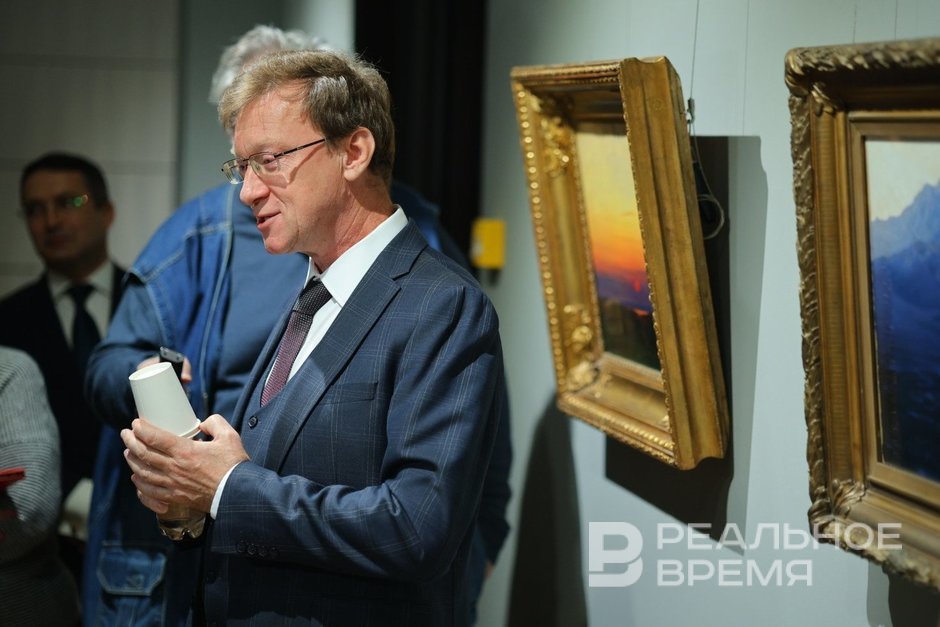
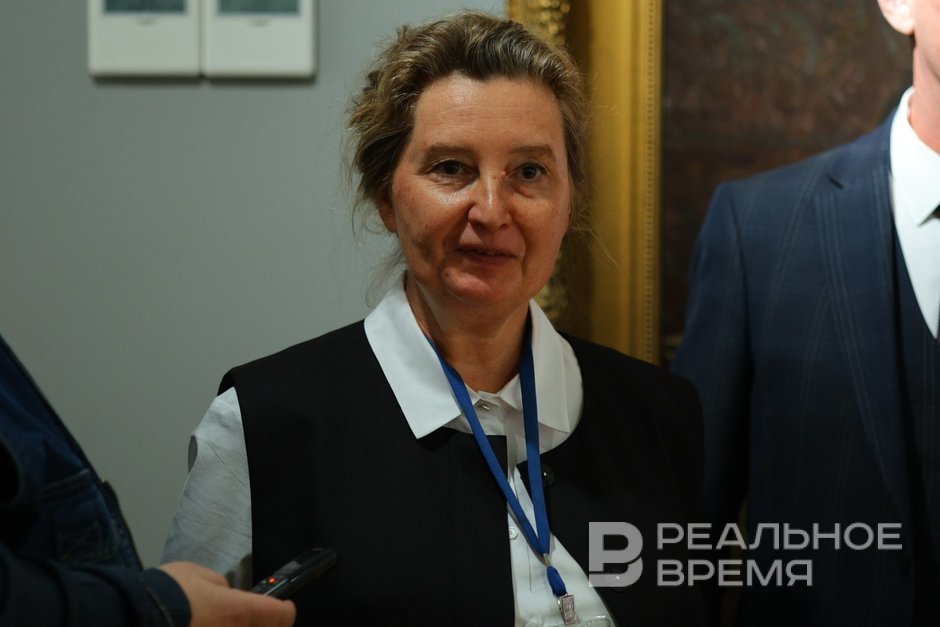
Besides, adds the head of the Main Building of the State Museum of Fine Arts of the Republic of Tatarstan, Eleonora Novikova, here there is also a study for “Birch Grove.” The artist actively painted studies, preparing for large paintings, while they remain independent, and not preliminary works, preserving all the features of the author's large style.
A little Repin
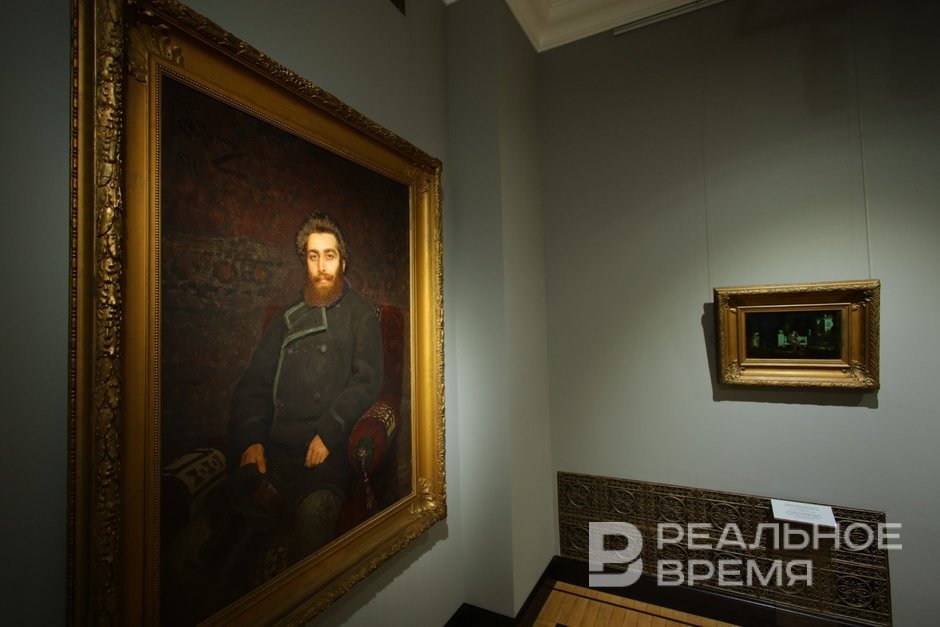
The author himself looks at the spectators from a painting by Ilya Repin — the artists became acquainted in St. Petersburg, where Kuindzhi not only lived but also did business — he had profitable buildings here. The portrait was painted in three days in 1877.
— An ottoman armchair, the magnificent tousled head of Absalom — as Repin put it, comparing him with the son of the Israeli king David, — describes the work Novikova. — And this soft, thoughtful and at the same time very tenacious gaze of the future most famous artist, because he burst into the history of art literally swiftly.
To the native of Mariupol, the son of a Russian Turk, in 1868 the Council of the Academy of Arts gives the title of free artist. Soon Kuindzhi becomes an ultra-successful artist, part of the Association of the Itinerants, and then renounces their ideas. In the 1880s begins a period of seclusion in the Crimea and trips to the Caucasus. This period ends in 1901, when Kuindzhi shows some of his paintings — during this time he creates more than 500 canvases.
— This is a man who strove not for a large format, but to create on the canvas that effect which they still cannot unravel, explains Sirro. — On them are so intertwined some physically hard-to-explain and painterly laws that only Kuindzhi could compose in his head and transfer to the canvas.
Three halls are devoted to Kuindzhi's work, and works of completely different periods end up next to each other, for example “Sunflowers” from the 1880s and the late “Flower Garden. Caucasus” of 1908. Both in large and in small paintings Kuindzhi depicts light authentically, so that one can quote Ivan Kramskoy: “I am a perfect fool before this painting. I see that the very light on the white hut is so true, so true, that my eye is as tired looking at it as at living reality: after five minutes my eye hurts, I turn away, close my eyes and do not want to look anymore.”
Before Impressionism, before Art Nouveau — and before the morning
Perhaps the two key paintings are “Rainbow” with its inexplicable light and anticipation of Impressionism, as well as “Night," one of the last in the master's work, in which one sees at the same time something tragic and reserved.
— It equates the artist to some extent with the phenomena of the new time, the beginning of the 20th century, which is called the era and stylistics of Art Nouveau, when artists pay great attention not so much to the plasticity of drawing as to form, says Novikova. — And form here is flat color spots. The same thing we can see, only in a harsher variant, in the paintings of Kandinsky.
Besides creativity, Kuindzhi was engaged in teaching, being a professor-head of the landscape workshop of the Higher Art School at the Academy of Arts. The theme of continuation, of the development of traditions is revealed in the fourth hall, where there are works from the funds of the State Museum of Fine Arts of the Republic of Tatarstan — these are Kuindzhi's students: Arkady Rylov, Alexander Borisov, Mikhail Latri, Konstantin Bogaevsky, Nicholas Roerich. An exhibition of the latter is currently running at the Gallery of Modern Art. And the fifth hall is devoted to Bogaevsky's autolithographs. They say that during Kuindzhi's lessons he could allow himself to play the guitar. The teacher allowed him to draw from memory — that is how the views of Cimmeria appeared (on its former territory the Crimean peninsula is now located).
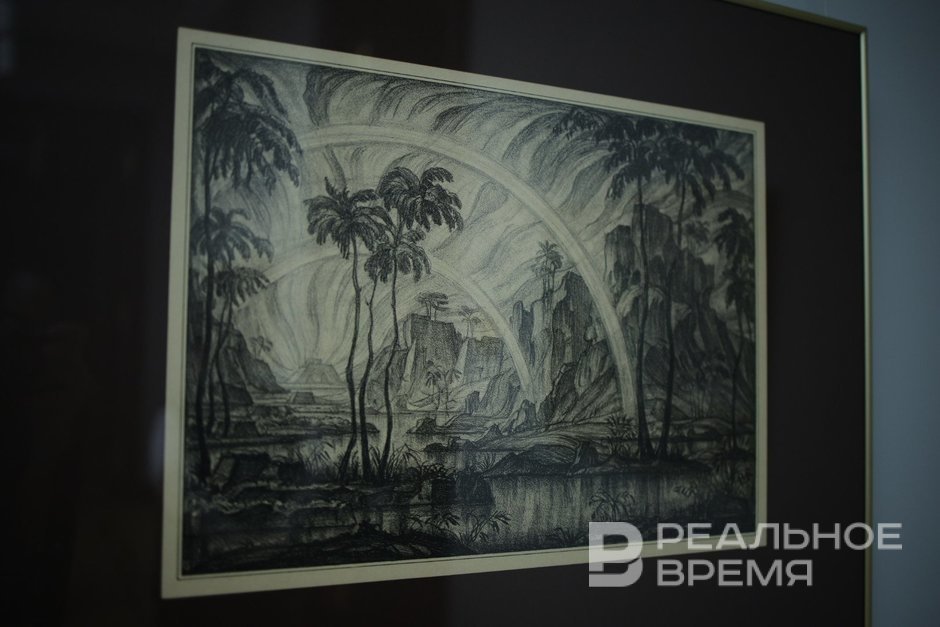
— Students are an inalienable part of his life, says Novikova. — And if not for the students, the Kuindzhi Society, we might have been short of some masterpieces that would have dispersed into private hands.
— Kuindzhi was very popular during his lifetime, his paintings cost very much, fabulously much, adds Sirro. — Young artists accomplish a small feat: all his heritage that was in their hands, they did not sell, although one could have earned big money on this. It was given to museums.