Gogol's neurotome, Trump's AI tsar: where else technology has managed to penetrate
Norway will ban wearing AI glasses, Musk will rename SpaceXAI because of Trump's decree, scientists have taught AI to understand mistakes from brain signals

In the past week several notable events occurred in the technology industry. OpenAI began marking ChatGPT texts with invisible watermarks, “GigaChat” finished writing the second volume of “Dead Souls," and Donald Trump appointed an “AI tsar.” Besides, scientists have taught a neural network to understand mistakes from brain signals, and Elon Musk plans to rename the AI division of SpaceX. About these and other news — in the material of “Real Time.”
OpenAI will begin marking ChatGPT texts with invisible watermarks
OpenAI will add invisible watermarks to the texts that ChatGPT and Codex generate. This is a requirement of the EU Artificial Intelligence Act. It provides that text created by neural networks can be recognized by machine means.
The technology received the name textGrain. It changes the statistical characteristics of the model's word choice, creating a signal imperceptible to the reader. A special tool then analyzes the text and determines whether there is such a trace in it. At the same time the watermark does not add hidden characters, extra spaces or unusual punctuation marks.
In OpenAI they note that the technology has limitations. The reliability of recognition depends on the volume of the text, and editing, translation or substantial reworking can weaken the signal. For API users the function is already available on a number of models; it can be enabled at will; by default it is switched off.
Norway will ban wearing AI glasses in public places
Norway is going to ban the wearing of glasses with built-in artificial intelligence in public places. To study the question the authorities will create a special commission with experts.
— We do not want to live in a society where people are worried about hidden audio recording, photographing and video filming in places where they are used to being without supervision, stated the Minister of Digitalization Torgeir Mikaelsen.

Such glasses outwardly hardly differ from ordinary ones, but inside they have cameras and microphones. They are produced by several large companies. In some US states they have already been banned because of risks to confidentiality, and in England and Wales — at court hearings. Norway will become the first EU country to introduce such restrictions. However, there will be no complete ban on the technology.
They will be allowed for private use and, possibly, for filming in tourist places. The restrictions will concern parks, museums, shopping centers and medical institutions. Special attention will be paid to the protection of children: kindergartens, schools and universities will fall under them.
“GigaChat” finished writing the second volume of “Dead Souls”
The neural network “GigaChat” from Sberbank wrote the second volume of Nikolai Gogol's “Dead Souls.” The book received the title “Dead Souls. Volume Two. Resurrection.”
Specialists of the bank worked on the text for more than a year together with historians, literary scholars, linguists and engineers. For training the model they used the complete collected works of Gogol, his letters, drafts, notebooks, works of contemporaries and biblical texts. The result was evaluated by 11 parameters — from lexicon and syntax to the grotesque and the construction of dialogues.

At Sberbank they noted that the resulting text is, of course, not Gogol, but it is created according to the laws of Gogolian narration thanks to the synergy of man and artificial intelligence. The book is already sold in bookstores and will soon appear on marketplaces.
Google limited free access to Gemini Pro
Google changed the conditions of access to the artificial intelligence models Gemini for users of personal accounts without a Google AI subscription. The company reported this in the help center.
After the innovations users can choose the models available to them — Flash-Lite, Flash and Pro — depending on the type of subscription. There also appeared the possibility to choose the level of load: low, medium or high. Google began to take into account the volume of computational resources that the user expends. The limits began to reset every five hours, until the weekly quota is reached. For paid Google AI subscribers higher limits are provided.
In Russia the Gemini web application is not officially supported. The country is not included in the list of regions where the service is available. At the same time Russian is among the languages supported by Gemini. The availability of individual functions may depend on the country, the type of account and the specific Google product.
The White House approved the candidacy of the AI tsar
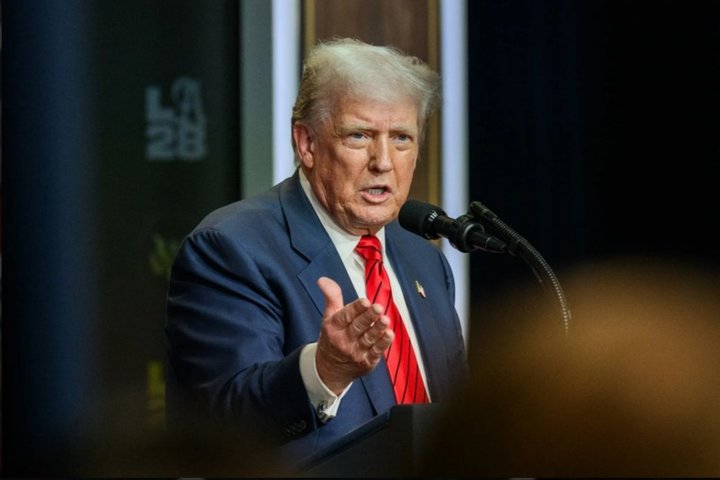
Donald Trump appointed the Director of National Intelligence Jay Clayton “artificial intelligence tsar.” He headed a new structure — the “Superintelligence Force.” The group also included Vice President JD Vance, Secretary of Defense Pete Hegseth, Secretary of the Treasury Scott Bessent and others. The external advisers became the investor David Sacks and former Secretary of State Condoleezza Rice.
Within 120 days Clayton's group must prepare a report on the risks and possibilities of advanced neural networks, as well as recommendations on regulating the industry.
Earlier the heads of Anthropic, OpenAI and xAI warned about the threats connected with their products. In their opinion, without external control AI can lead to extremely negative consequences. The developers spoke out for self-regulation, and not state control. Some observers considered that the companies simply want to avoid lawsuits.
Musk will rename SpaceXAI because of Trump's decree
The White House decision on “superintelligence” is already influencing companies. Elon Musk was the first to react. He will rename the AI division of SpaceX — SpaceXAI — to SpaceXSI. The abbreviation AI will be replaced by SI — from Super Intelligence.
— Yes, we will make this change. No more AI. SI. That is better, Musk stated. He did not name the timeframe of the renaming.
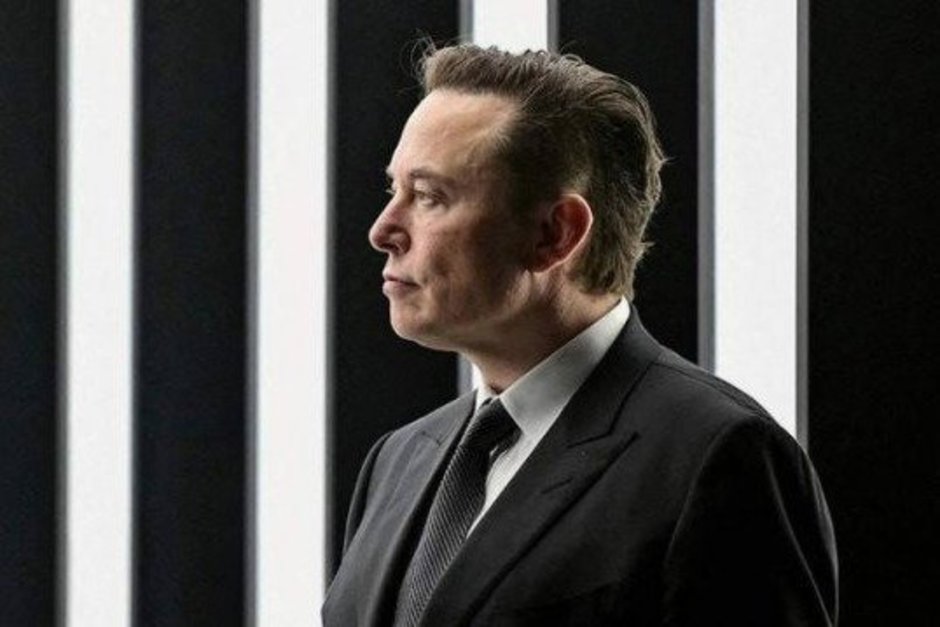
This became a response to Trump's decree prescribing that federal agencies use “superintelligence” and SI instead of “artificial intelligence” and AI in official documents and correspondence. At the same time there is no requirement to change previously adopted normative acts, contracts and historical documents.
Wikimedia found OpenAI AI agents on its resources
The Wikimedia Foundation, which manages “Wikipedia," discovered on its resources the activity of autonomous AI agents, presumably connected with OpenAI. This is stated in the organization's report.
The agents made test edits in the wiki “sandbox," and also changed the settings of the citation tool, in order, presumably, to use it as a proxy for obtaining data. Besides, they tried to hack the publicly available service for notes Etherpad and made millions of automated requests to the API of Wikimedia projects. There was no approval of the community for such actions.
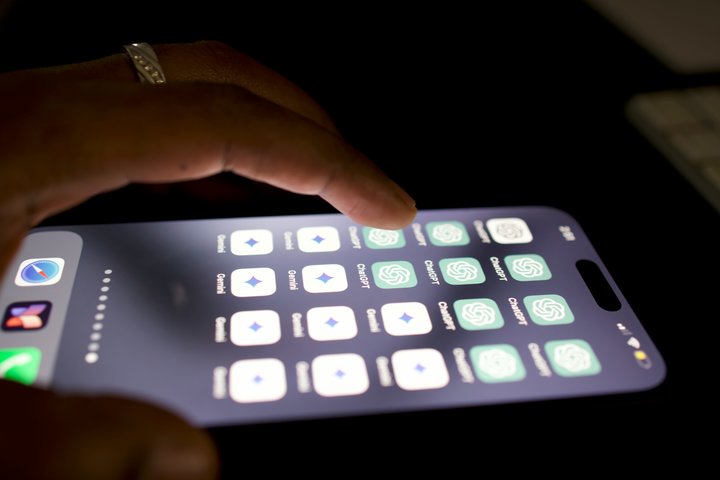
At Wikimedia they noted that the incident shows how AI agents can exhaust resources, disable servers and threaten the reliability of information.
Scientists have taught AI to understand mistakes from brain signals
Scientists from KAIST and Microsoft Research Asia created a neurointerface that allows AI to receive feedback about mistakes directly from the human brain — without words. The system based on electroencephalography reads characteristic patterns of brain activity and determines whether the AI made a mistake with the goal (RPE) or with the method (SPE) of achieving it.
The problem is that from one action it is hard to understand the intention: a person may take a cup in order to drink, to wash it or to pass it to another. For example, if an assistant brought coffee instead of water — this is a goal error, and if he went to the tap instead of the bottle on the table — a method error. The brain generates different signals for each case, and the algorithm learns to distinguish them.
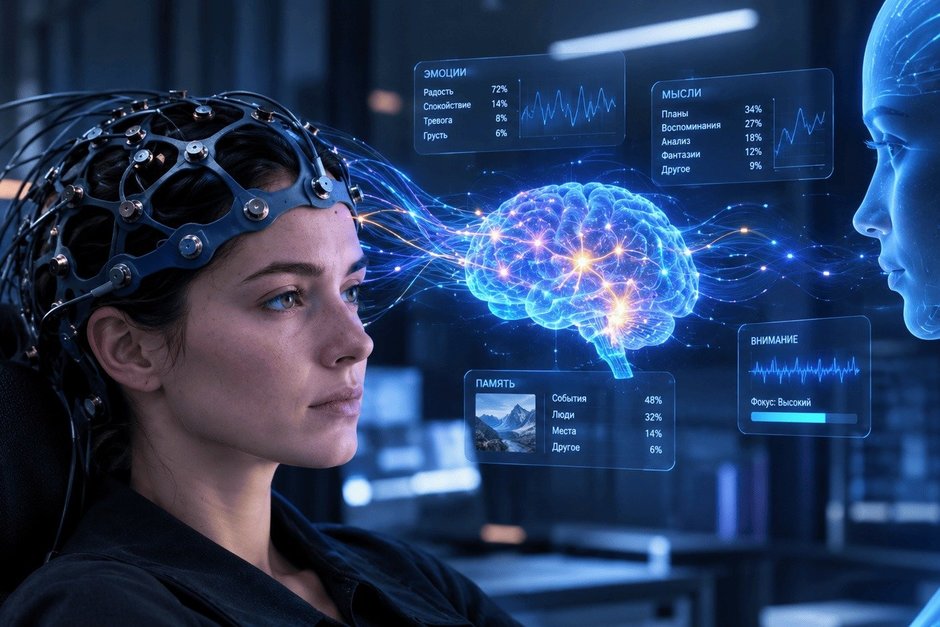
Having detected an RPE, the AI reconsiders the goal, and with an SPE it corrects the method. For now the system was tested only in simulations. In the future the technology can be applied in home robots, industrial manipulators, transport and rehabilitation devices.
— AI can go beyond conclusions about a person's intentions only from visible behavior and directly use the cognitive signals of the brain, summarized the head of the work, Professor Sang Wan Lee.