Chest, skeleton, pirates: how Stevenson assembled “Treasure Island” from other people's stories
Book of the week — the adventure novel by the British writer Robert Louis Stevenson “Treasure Island”

Today in the USA a new mini-series “Treasure Island” has been released, filmed based on the novel by the British writer Robert Louis Stevenson. This book, as well as its previous film adaptations, formed the images of pirates familiar to us. But this canonical work has its own peculiarity. Stevenson said that “Treasure Island” is a kind of “solyanka," assembled from other people's books. The literary reviewer of “Real Time” Ekaterina Petrova sorts out whether Stevenson was derivative or showed that literature never begins from a clean slate.
Four other people's sources of one novel
From 1881 to 1882 the novel by Robert Stevenson “Treasure Island” came out under the pseudonym of Captain George North in the children's magazine Young Folks, and already in 1883 it was published by the publishing house Cassell & Co with an indication of the author's real name. Another year later, in a letter to his friend and literary adviser Sidney Colvin, Stevenson told about the “influence” of other works on “Treasure Island”:
— “T. I.” came out of Kingsley's “At Last," from where I took the “Dead Man's Chest” — and this was the seed, — and out of the “History of the Famous Pirates” of the great Captain Johnson.
Ten years later, in 1894, Stevenson's essay “My First Book: Treasure Island” came out, in which the writer told a little more about the borrowings. For example, from the same Kingsley he took not only the chest, but also the memories of canoeing on the open sea and the map. Stevenson also admitted several reminiscences from Edgar Allan Poe, Daniel Defoe and Washington Irving.
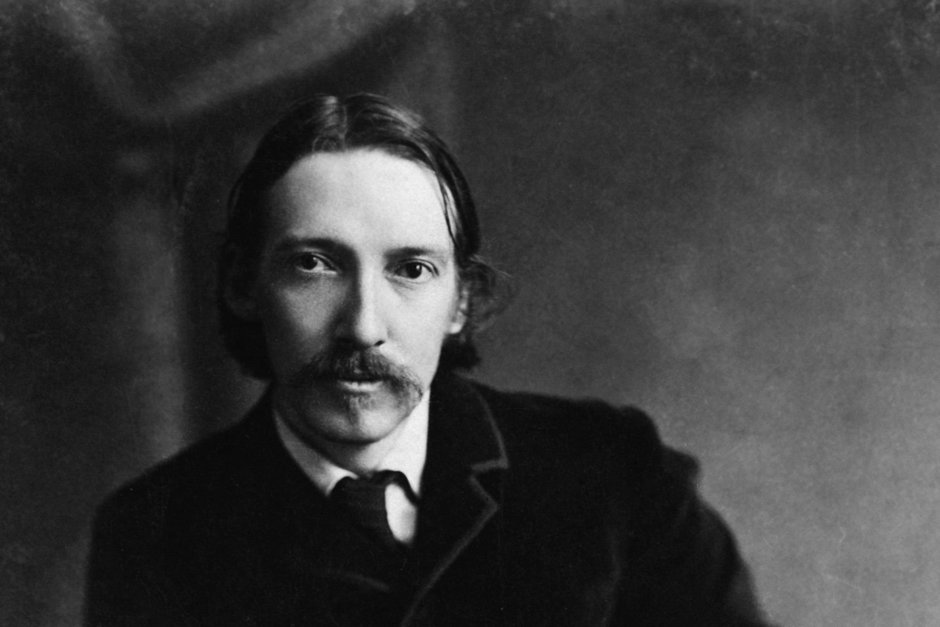
The book of the English writer Charles Kingsley “At Last: A Christmas in the West Indies” came out in 1871. These are travel essays written based on impressions from a trip to the Caribbean islands in 1869—1870. At the very beginning of the book Kingsley mentions the “Dead Man's Chest," whose name Stevenson also borrowed, calling it in the letter to Colvin the “seed.”
Charles Johnson became for Stevenson the main supplier of the factual material about the pirate culture of the 17th—18th centuries. His book “A General History of the Robberies and Murders of the Most Notorious Pyrates” came out in London in 1724. Researchers consider that Charles Johnson is a pseudonym behind which Daniel Defoe is hidden. The book collects the biographies of such pirates as Bartholomew Roberts nicknamed Black Bart, Stede Bonnet, Charles Vane and Edward Teach nicknamed Blackbeard, as well as two female pirates Anne Bonny and Mary Read.
Stevenson could have taken from this book the biographies of real pirates and transferred them to the novel, as well as models of behavior (cruelty, bravado, the pirates' code of honor, their habits and speech) and, of course, the atmosphere — the world of sea robbery of the 18th century.
“The Gold-Bug” — one of the most famous stories of Edgar Poe — first came out in June 1843 in the American newspaper Philadelphia Dollar Newspaper. The plot of the story unfolds around the impoverished aristocrat William Legrand, who finds a strange gold bug and an encrypted parchment. This is a classic detective-adventure novella about the search for pirate treasure. In “The Gold-Bug” the skull and the skeletons connected with it serve as a pointer of direction to the treasures; in Stevenson this role is performed by Flint's pointer.
— I gave one little island the name “Skeleton Island," not knowing well what for, simply for the sake of color, and already to justify this name, I broke into Mr. Poe's treasury and stole Flint's pointer arrow.
“Tales of a Traveller” (1824) — a collection of novellas and essays by Washington Irving. It included several cycles of stories, among them “Strange Stories of Ghosts” and “The Pirate Kidd.” As Stevenson writes in the essay of 1894, it was in Irving that he discovered the story that lay at the basis of the first chapters of “Treasure Island.” Billy Bones, his chest, the scene in the drawing room of the “Admiral Benbow” — “everything was there, and everything was the property of Washington Irving.”
— My conscience torments me only for the debt to Washington Irving, and not in vain, for, in my opinion, one does not often meet such obvious plagiarism.
Where influence ends and plagiarism begins
Literary plots on the whole revolve around a small set of repeating dramatic situations. In 1895 the French writer and literary critic Georges Polti reduced all known world works to 36 plots. According to a 2004 theory by the English writer and journalist Christopher Booker, in world literature and cinema there exist only seven basic plots. And the Argentine poet and publicist Jorge Luis Borges altogether reduced all the diversity of literature to four main plots.
A little more than a year ago at the Nekrasov Library in Moscow there was a curious discussion about the derivative and the original in literature. “The question is not 'about what' but 'how.' Each new generation of writers invents its own 'how,'" noted then Anastasia Shevchenko, literary reviewer, editor, producer of book projects at the “Alpina. Proza” publishing house. Derivative-ness in itself does not equal artistic failure. Here a large role is played by the author's intention: does he want the reader to recognize the borrowing, or does it perform a meaningful function. Stevenson openly wrote about his sources, not trying to pass off someone else's as his own. They became building material for a new adventure story.
An analogous situation with borrowings was with Alexandre Dumas and the book “The Three Musketeers.” “Several years before this, while engaged in the Royal Library in research for my 'History of Louis XIV,' I accidentally came upon the 'Memoirs of Monsieur d'Artagnan,'" Dumas wrote in the preface to the novel. The first volume of the “Memoirs” came out in 1700; the real author was the French writer Gatien de Courtilz de Sandras. He had once served in the company of the royal musketeers, and after retiring became a professional literary man specializing in forged memoirs and passing them off as genuine records of famous persons.
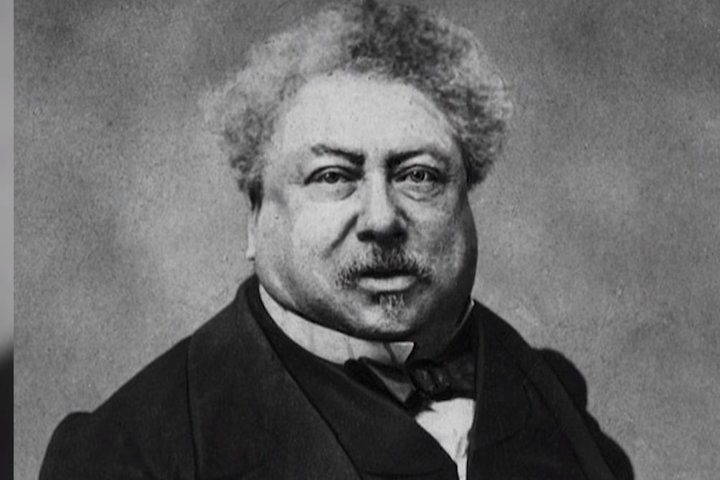
Dumas borrowed from the “Memoirs” the names of the main heroes (d'Artagnan, Athos, Porthos, Aramis, Milady), the starting situation, when the poor Gascon rides to Paris with a recommendation letter, this letter is stolen from him, and along with it the horse. The writer also used individual scenes from Courtilz's work: duels, missions to England and the intrigue with Milady. Here it is important to take into account that Dumas's novel is completely different from Courtilz's narration in composition and the precision of historical color (Courtilz, a contemporary of the events, precisely lacked it).
In the 20th century such borrowings were usually accompanied by a big scandal. In 1968 the novel of the Malian writer Yambo Ouologuem “Bound to Violence” came out; in that same year it was awarded the Renaudot Prize — the second most significant literary award of France after the Goncourt. For that time the book of a francophone author of African origin was met by critics unusually warmly. But in 1972 in the Times Literary Supplement an anonymous exposé article came out in which the author accused Ouologuem of plagiarism from the British writer Graham Greene and from the French novelist André Schwarz-Bart.
As a result the publication of the novel in paperback in the USA was stopped, and another 3,400 hardcover copies were recalled from stores. The American publisher estimated the total costs of the cancellation at 10 thousand dollars. The novel was withdrawn from sale in the francophone world for three decades.
André Schwarz-Bart, the author of the novel “The Last of the Just” (1959), from which, according to the accusations, Ouologuem borrowed episodes, not only did not join the persecution, but also tried to stop it. A journalist of the Swiss “Literary Gazette” was preparing material about the similarity of the two novels, but received from Schwarz-Bart a letter with a request not to publish the article. He wrote that the debates could provoke anti-African sentiments and harm the writer's career. “For the first time a francophone African literature is being born, free of white complexes, and one must not do anything to discourage it," added Schwarz-Bart. And in a letter to his publisher the writer admired Ouologuem's work:
— I am deeply touched, even shaken, that a black writer could lean on “The Last of the Just” to create such a book as “Bound to Violence.” Thus, Monsieur Ouologuem is not my debtor, but I am his.

By the way, Yambo Ouologuem became the prototype of T. C. Elimane from the novel of the Senegalese writer Mohamed Mbougar Sarr “The Most Secret Memory of Men," which was awarded the Goncourt Prize in 2021. According to the plot, in 2018 the young Senegalese writer Diégane Latyr Faye finds in Paris the legendary book “The Labyrinth of Inhumanity," which came out in Paris in 1938. The trace of its author, nicknamed by critics of the time the “black Rimbaud," is lost after a scandal over plagiarism. Diégane sets off on the trail of the mysterious T. C. Elimane in order to at any cost reveal the story of his fate. Intertextuality and its reverse side (plagiarism) become the heart of the novel “The Most Secret Memory of Men.”
— Is not the whole history of literature one solid plagiarism? What would Montaigne be without Plutarch? Or La Fontaine without Aesop? Molière without Plautus? Corneille without Guillén de Castro? Possibly the problem lies in the very word “plagiarism," writes Mohamed Mbougar Sarr in his novel.
What in “Treasure Island” belongs to Stevenson himself
Robert Louis Stevenson began work on the novel with the map of a fictional island. He drew it as entertainment during an illness in Scottish Braemar. The drawing so captivated the writer that from the drawn map characters began to appear, plots of adventures, and “among the invented forests the heroes of my future book began to stir," “their tanned faces and glittering weapons stuck out from the most unexpected places.” The map gave the setting and helped build the plot connections.
— I had not managed to come to my senses when a clean sheet appeared before me, and I was composing a list of chapters, Stevenson wrote in the essay of 1894.
The pirate as a literary type existed long before Stevenson. But in “Treasure Island” Silver is charming, calculating, capable of friendliness and cruelty at the same time; he knows how to persuade and change behavior depending on circumstances. His unpredictability complicates the image, when the division into heroes and villains is already not so unambiguous. Silver evokes in Jim both fear and sympathy. One wants to empathize with Silver. He more than once saves Jim's life, but behind the pirate's attachment is hidden cold calculation. This manipulativeness is an inalienable part of Silver's charm.
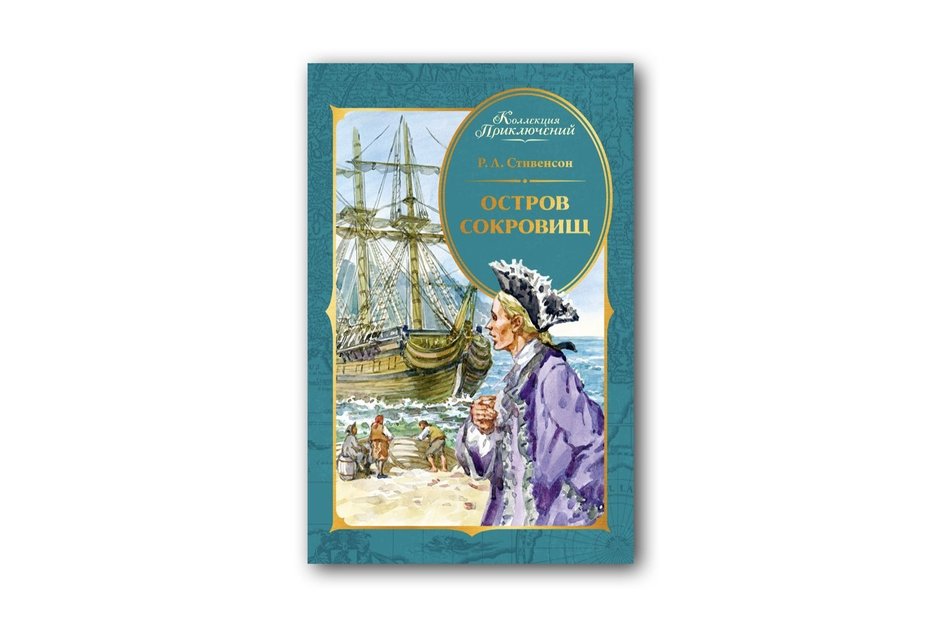
The narrator of “Treasure Island” is Jim Hawkins; the reader sees precisely his experience and subjective perception of what is happening. The limited perspective is a key source of tension. For example, we learn about Silver's conspiracy simultaneously with Jim, from his overheard conversation in the barrel. The result is an effect of unfiltered experience, when the reader together with the hero goes the path from ignorance to knowledge. Jim understands that now the life of all honest people depends on him alone. At this moment the child's perspective collides with the world of adult decisions. It is precisely the absence of an omniscient adult voice that makes “Treasure Island” so captivating.
The new six-episode series based on Stevenson's book is announced as a reinterpretation of the classic story. At the center of the updated synopsis are Jim Hawkins and his mother Bess, who receive Flint's treasure map. The biggest surprise for fans of the book may be the role of Bess in the series; here she is an important part of the story.
In the original Jim's mother is an episodic domestic figure whose function consists in handing the map to her son and further disappearing from the narrative. In the series she becomes an equal participant of the adventures. If before “Treasure Island” presented itself to us as the story of a boy who fell into the male world of pirates, now we will see the story of two people whom fate threw onto one ship.
Also in the series there appears a new character who was not in the novel — the British agent Aaron Graham. In the rest, the adaptation is faithful to the original work of Robert Stevenson.
“Treasure Island” survived a century and a half with the help of its key bright elements: pirates, a hidden treasure and a map with a secret. But only thanks to Stevenson's mastery, who assembled already familiar elements into a story, the novel turned out stronger than its separate parts and borrowed sources. Now the same process is continued by the series. Perhaps the eternal life of literature consists precisely in the fact that the story never ends as long as someone is ready to tell it again and again.
Publisher: “Makhaon”
Translation from English: Nikolai Chukovsky
Number of pages: 304
Year: 2026
Age restriction: 12+
Ekaterina Petrova — literary reviewer of the online newspaper “Real Time," host of the Telegram channel «Булочки с маком».