Slavic dances and Jalil in Chinese
The ship “GITISFEST. Theatre Volga Region 2026” arrived at “Sozvezdie-Yoldyzlyk”
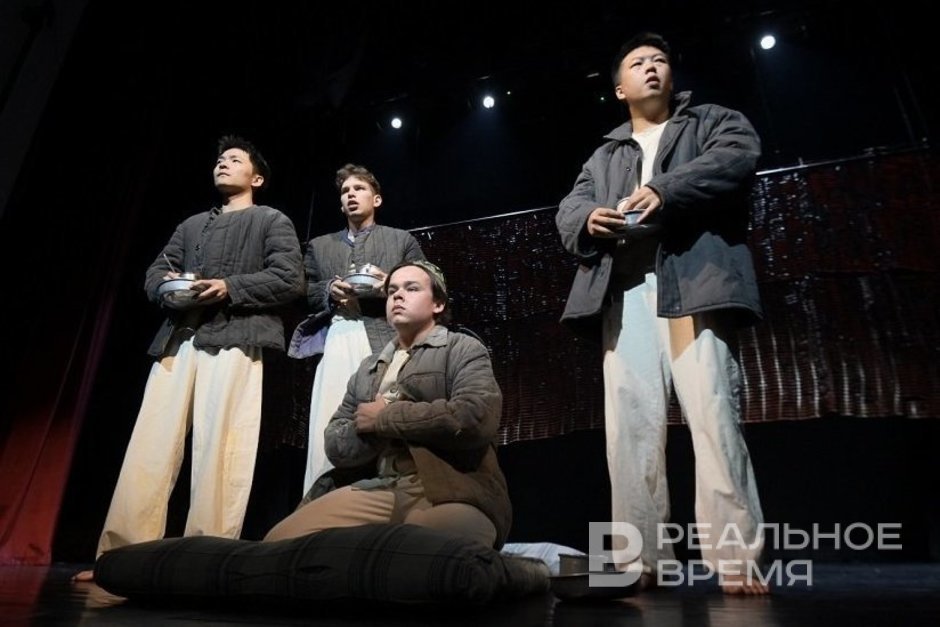
Participants of the festival-laboratory “GITISFEST. Theatre Volga Region 2026” arrived in Kazan. At “Sozvezdie-Yoldyzlyk," they presented sketches created during their journey. Among the participants were Kazan residents: actors from the “Apush” studio and students from the theatre college and the Institute of Culture. They worked together with colleagues from other regions, as well as from China and Kyrgyzstan.
“Apush” returns
One of the teachers, leading a group of schoolchildren from the bus stop, warned: the main thing is to check in for five minutes, then you can leave. But it seemed no one left.
Aliya Fayzrakhmanova recalled that her theatre service began here — until 2012, the cold, dilapidated building housed the Kariev Theatre, which later turned into the almost brand-new art residence “Sozvezdie-Yoldyzlyk.” Today, Aliya came to support her own. Among the participants of “GITISFEST” are 65 laureates of the “Theatre Volga Region” festival. And among them is the children's Tatar theatre studio “Apush," which Fayzrakhmanova directs.
Before the appearance of this studio, Kazan residents did not even make the top ten in “Theatre Volga Region," Aliya notes, but now they are consistently in first place. In addition to the festival winners, students from Russia, Kyrgyzstan, and China are also participating in the project, happily eating echpochmaki in the “Sozvezdie” canteen. In total, 146 participants arrived for “GITISFEST. Theatre Volga Region 2026," including actors, directors, artists, dancers, and singers.
— In my childhood, there were no such projects, — noted the Deputy Minister of Culture of Tatarstan, Damir Natfullin.
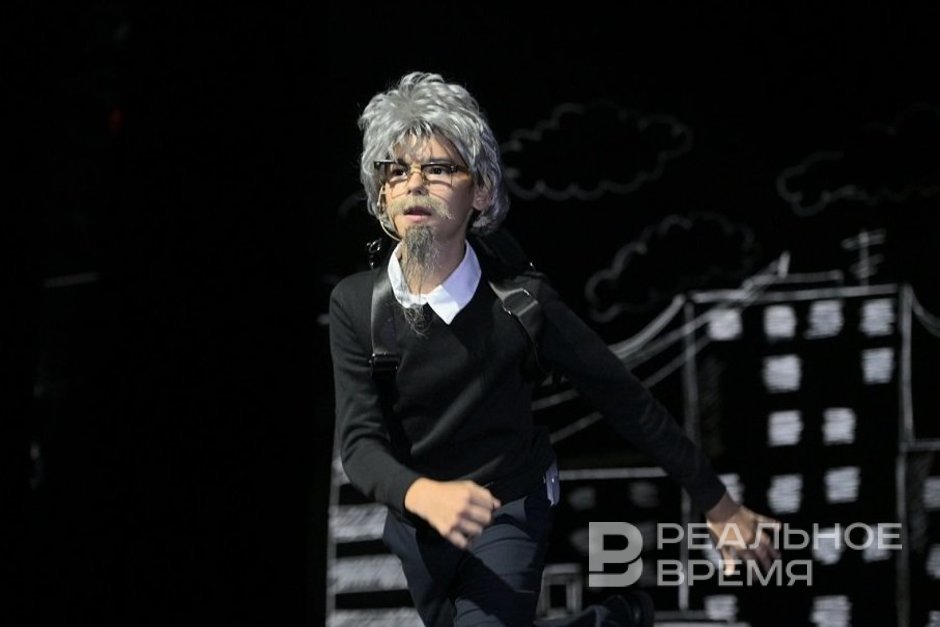
“Apush” opens the evening with a sketch of the play “The Tale of Lost Time” based on Evgeny Schwartz's play — a work by director Ekaterina Venediktova and production designer Elina Ozols.
The sketch about the boy Petya Zubov (voiced by Samat Valiullin, who lost his voice during rehearsals), who paid too much attention to games rather than studies, begins essentially with “Khærle kich, kaderle duslar, isænmesez!” — in addition to the main characters, the play features a host (Zulfat Akhkyamov). And the hero Vasya Zaitsev sings “Almagachlary.” The backdrop is decorated with chalk drawings, while, according to the plot, the young actors play gray-haired old men.
After the applause, student critics led by Grigory Zaslavsky go directly to the stage and share their opinions. The former rector of GITIS recalled productions by Cambridge University students of “The Reduced Shakespeare Company," where they also tried to retell famous plots as quickly as possible.
— It is very important not to lose that moment of tragedy when each of the young people realizes that he is someone else, externally and internally,— says Zaslavsky, and then adds: — We can see how you interact, and we would like a little more of that interaction, because you are truly surprisingly free for such a sketch. And after only a few rehearsals. It's great that you are so lively and wonderful. Thank you.
Like other productions, the Schwartz fairy tale was created on the ship “A.S. Popov” during a journey that began in Saratov. There, for example, they showed sketches prepared in just a few days of rehearsals based on Mikhail Bulgakov — “Diaboliad” and “The Crimson Island.” After that came Samara. Kazan is the third city on the route.
Two groups of completely incompatible actors
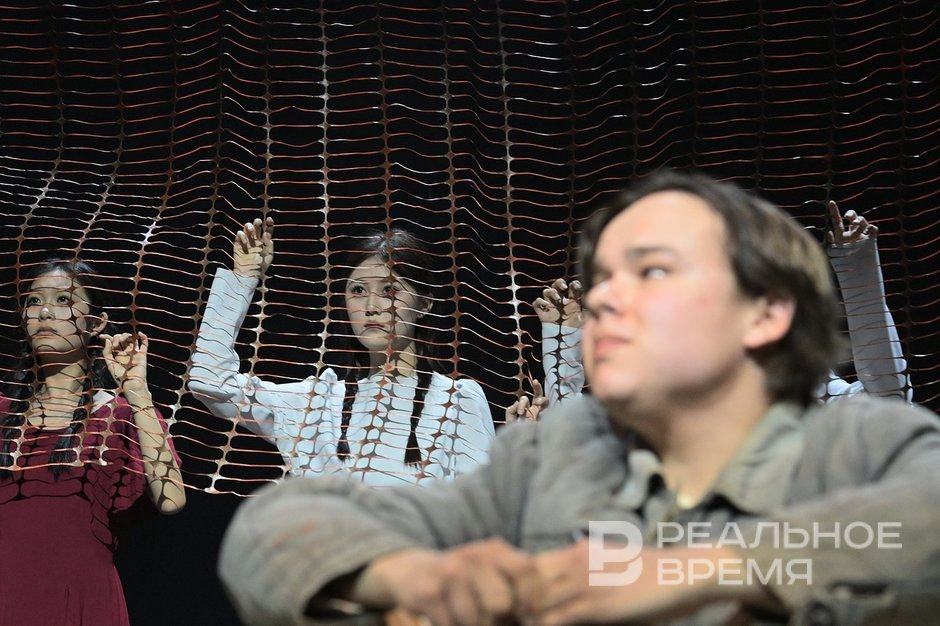
The sketch of the play “The Moabit Notebook," directed by Irakli Pataridze with production designer Maxim Filippov, is staged with students from the Shanghai Theatre Academy, the Kazan Theatre College, and the Kazan Institute of Culture.
Almost the entire text consists of Musa Jalil's poems. The Chinese are more responsible for the movement (and therefore the slender girls float into the poet's dream to the verses), while the Kazan participants handle the text. But closer to the end of the short performance, Chinese translations of the Hero of the Soviet Union's lines are heard — for some reason this is the most touching part of the performance: “Oh, sky with a winged soul! I would give so much for a single flap!..”
— Having received two groups of completely incompatible actors at your disposal, it seems to me that you managed to use the wonderful things that each of these groups could bring to this story, — notes Zaslavsky.
Dances based on folklore studies
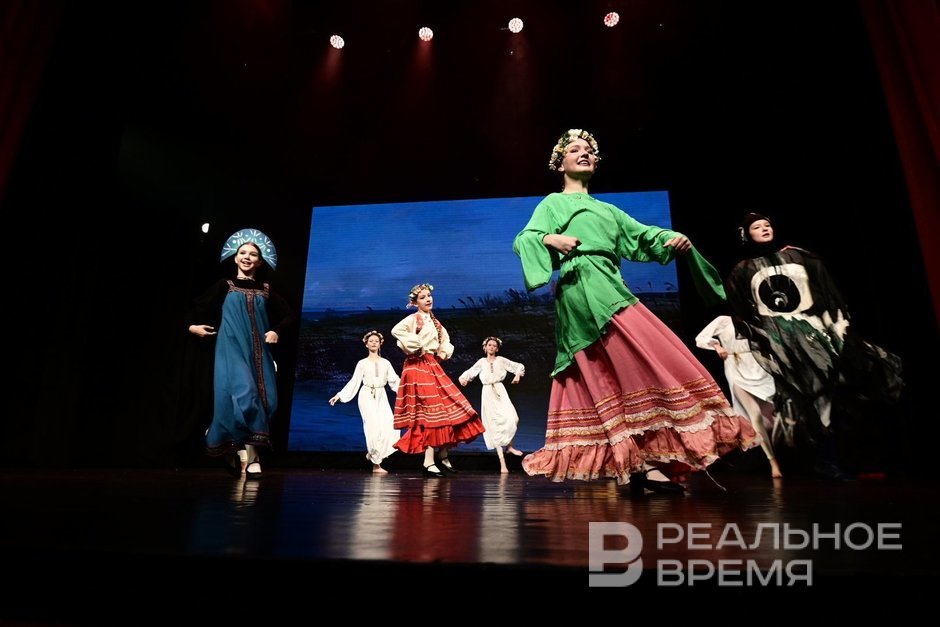
The evening concluded with a sketch of the choreographic performance “Under One Sky.” The work by director Anastasia Bezolyuk and production designer Polina Vylegzhanina is based on “Poetic Views of the Slavs on Nature” by Alexander Afanasyev. This work on Slavic mythology began to be actively republished in the post-Soviet era.
The sketch is performed by the exemplary ballet theatre “Raduga” from Izhevsk. Here the backdrop is drawn using AI, and four maidens in kokoshniks immediately flutter onto the stage to part of Alexander Glazunov's First Symphony, also called the “Slavic Symphony.” The seasons change, and after Mendelssohn's Fourth Symphony comes “The Wide Steppe," and then — suddenly — music by Estonian folklorist Veljo Tormis.
The critics' images are confusing, and they also ask to try using contemporary authors instead of classics. But everyone is pleased with Vylegzhanina's costumes, who, by the way, designed the light opera “Dead Souls” by Alexander Pantykin at the Zelenodolsk Musical Theatre.
After Kazan, the ship will head to Kostroma and Nizhny Novgorod. The journey will end on September 7. In total, the participants will show 12 sketches, including works by Nikolai Leskov, Mikhail Bulgakov, Nikolai Gumilyov, and Arkady Averchenko. They will also participate in 10 creative master classes from GITIS teachers and four thematic meetings with theatre critics.