Oleg Kuzmin: “Rubin is the first club where everything is super professional”
Ex-player and coach of the football team — on how he moved to Kazan after Spartak, Moscow, and Lokomotiv
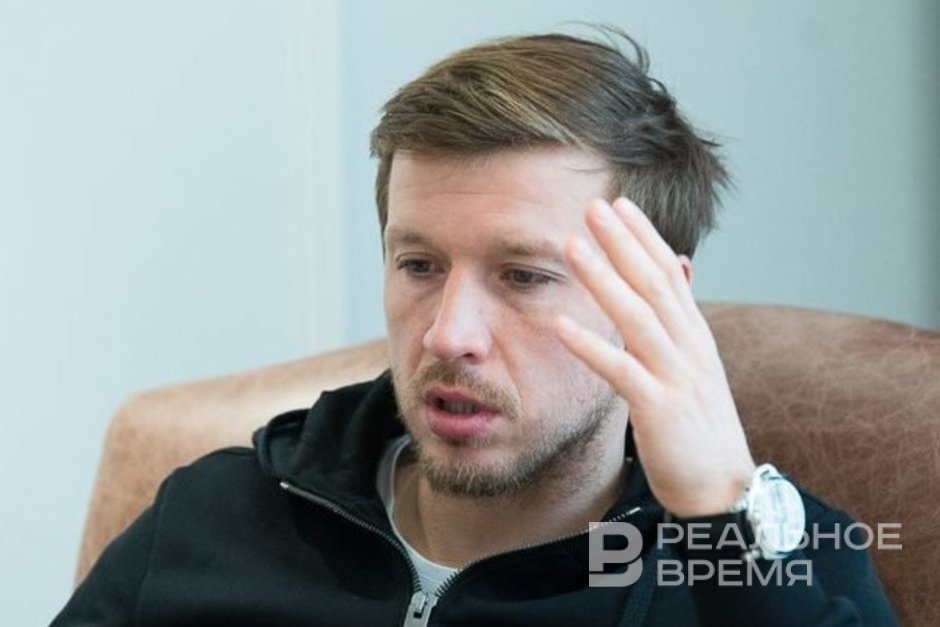
Ex-player and coach of Rubin Kazan, Oleg Kuzmin, has been living in Kazan for fifteen years, met his wife here, and considers the city his own. But his path to the local club was long: Spartak, Uralan, FC Moscow, Lokomotiv. He was invited to the Kazan team twice by Kurban Berdyev, which is very rare. Sergei Semak also invited him twice, but once to Rubin and once to Zenit. In an interview with Realnoe Vremya, Kuzmin shares not only his career turns but also personal details — from childhood walks in Sokolniki Park to the feeling that it was in Rubin that he first saw a truly professional approach to business, where every little detail matters.
“I lived on Preobrazhenka, next to the stadium that now bears the name of Starostin”
— Oleg, you were among those who took part in the World Youth Games in Moscow. Back in 1998, it was not only a prototype of the Youth Olympics but also the first major multi-sport event after the collapse of the USSR. Do you remember that tournament?
— Actually, I don't remember the group stage at all, who we played there (Latvia, Chile, Saudi Arabia — editor's note). I remember a tough match in the quarterfinals, I think against Georgia, when we were losing but managed to equalize and snatched a 3–1 win. The semifinal also didn't stick in my memory (we beat Qatar — editor's note). But I remember the final, full Luzhniki Stadium, when we beat Turkey in a tough match (in that squad, besides Kuzmin, future “Tatarstan player” Kirill Novikov, ex-coach of Neftekhimik, also played — editor's note).
— You started at Spartak. In Soviet times, when there were transportation issues, young athletes preferred to go to sports sections closer to home.
— In my case, that's exactly what happened. I was born in Sokolniki, lived on Preobrazhenka, next to “Almaz," which is now called the Spartakovets Stadium named after N.P. Starostin. That's where I started my journey, spending days and nights there.
— I can't help but quote the film “The Meeting Place Cannot Be Changed”: “He's rushing to Sokolniki, the bastard! There's somewhere to hide there!”
— Yes, you have to add “Gleb Yegorych.” And in my childhood, there was indeed somewhere to hide: Sokolniki Park. After elementary school, I moved to a sports school and studied opposite the ice palace, spending a lot of time in the park, including skipping classes. There's plenty of hiding places there.
“We were coached by Anatoly Korolev, the first coach of Titov and the elder Mele shin”
— Did you have a hockey alternative?
— I didn't even get into football by design, let alone hockey. Like everyone else, I kicked a ball around in the yard, and it so happened that my friend from the next building, whose father was a big Spartak fan, went to the sports school and suggested I join him for company. I thought, what difference does it make where I kick a ball. We started going, and everything was fine until I was moved to another group. The thing is, my friend was a year older — born in 1980 — and I was moved to my own age group. Our training sessions started at different times, it became boring to go alone, and I quit. I probably didn't go for four or five months, then my friend suggested trying again, especially since they had a new coach. And I arrived “with experience” and didn't show my birth certificate right away. I started training, and our coach from the 1981 age group was looking at me, remembering where he had seen me. I immediately lowered my head.
We trained, and at some point, they said to bring birth certificates. I had to disappear for two weeks, but football had already interested me, and since Lokomotiv was also nearby, I switched there. I started training with guys my own age. At that time, our coach from Spartak started asking where I had gone. I came home and suggested to my mom that she alter the numbers in my birth certificate. She, of course, refused, but the Spartak coach reassured me that if I was younger, it was fine, the main thing was not to be older. I returned to Spartak, and then Lokomotiv started calling me. In the end, until I graduated from the sports school, I played with partners a year older than me.
— Who coached you at Spartak in those years? Where did your friend, with whom you started going to the sports school, play?
— My friend is Sergei Mitin; he didn't become a footballer. And our mutual coach was Mikhail Belov, who, by the way, played for Rubin (1965–1966). Evgeny Vitalievich Golov, the director of the Kazan club, when I was signing the contract, remembered Mikhail Pavlovich. In the 1990s, he moved with his family to France, and his son Maxim plays hockey there. We still keep in touch. When I came with the national team, I helped them with tickets to our match. Belov was replaced by Sergei Dmitrievich Zimin, unfortunately, he passed away early, may he rest in peace. Then we were coached by Anatoly Fedoseevich Korolev, who had previously worked with the 1976 age group — that's Yegor Titov, Vladimir Dzhubanov, Alexei Mele shin, who became the first in 1996 in the youth championship squad under the leadership of Georgy Yartsev.
— The general manager of the Russian volleyball team, Roman Stanislavov, recalled that he trained with your age group, became the Russian youth champion, together with you and Alexei Zlydnev.
— I don't remember him, although if I see him, maybe I will. As for Alexei Zlydnev — yes, he was a star in our age group; he was the first to be taken to the main squad, back in 1996, when he was 16. Our goalkeeper was Andrei Sidelnikov, who played a lot in the Russian and Kazakh championships, plus for the national team of that country.
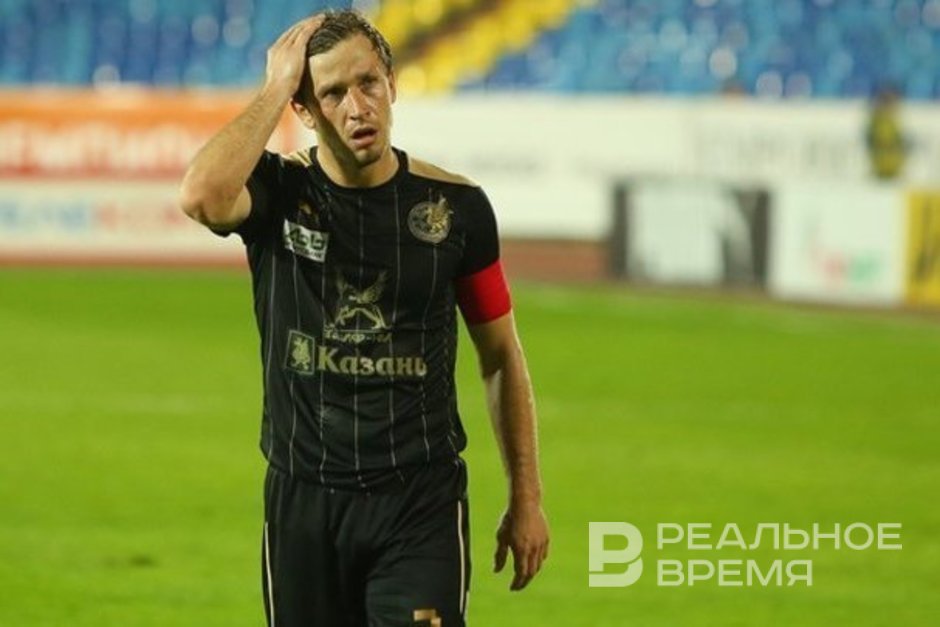
“My debut took place at my home stadium Almaz”
— When did you move to Spartak?
— In 1997, when I, a 16-year-old, was transferred to the reserve team. I remember that after graduating from the sports school, we were released for a month, which I spent at the dacha, relaxing. I returned home, packed my bags to go to a sports camp in Zheleznodorozhny. And in the evening, a call from Sergei Dmitrievich Zimin that tomorrow morning we were leaving with the reserve team from Sokolniki. I was shaking; I had done practically nothing for a month at the dacha, and here I was expecting something simply incredible — my first trip to Tarasovka, to the base of the invincible Spartak, where there were nothing but stars.
A week after that, I made my debut in a second league match against Khimki. At that time, reserve teams, those that had them, played together with everyone else in the second league, without the right to be promoted to the first division. (The reserve team tournament was only recreated in 2001 — editor's note). And so, at my home stadium Almaz, with Ruslan Nigmatullin in goal, Miroslav Romashchenko, Alexander Shirko, and instead of an uncle, Boris Pozdnyakov in defense, who had even been in the USSR national team in Soviet times and was 19 years older than me, I had to make my debut. It was only later that a youth championship was organized, and often players from the main squad were sent to the reserves for playing time.
— That's why the project Spartak-Chukotka was created, so that Spartak players who had outgrown the reserves could play in the senior team.
— Yes, I remember that team, because it was coached by Anatoly Shelest, and his son Taras is also from our 1980 graduating class. And they all played at the same stadium Almaz, which was familiar to me from childhood, which was renamed Spartakovets named after Igor Netto in those same years (now it bears the name of N.P. Starostin — editor's note).
“I've been living in Kazan for fifteen years now, I met my wife here”
— The Chukotka “Spartak” ceased to exist in 2000...
— And I made my debut for the main team that same year — it was the last round, when Spartak had already become champions ahead of schedule. We arrived in Vladikavkaz, and there were four reserves there, three of whom started, and I came on as a substitute for about 20 minutes at the end. Moreover, I even made it onto the roster for Champions League matches against Real Madrid and Arsenal, which we beat 4–1. After that, we went to Lyon, and they destroyed us, so I suffered twice at the hands of Lyon, the second time already as a Rubin player.
At the end of 2000, we went on vacation, and were supposed to go to a training camp with the main team in January. I was already getting ready for it when my other former coach from the sports school, Anatoly Fedoseevich Korolev, who was then the reserve team coach, after consulting with Romantsev, sent four Spartak players on loan to gain experience in the first division with Elista's Uralan under the guidance of Sergei Pavlov, who was Romantsev's assistant on the Russian national team.
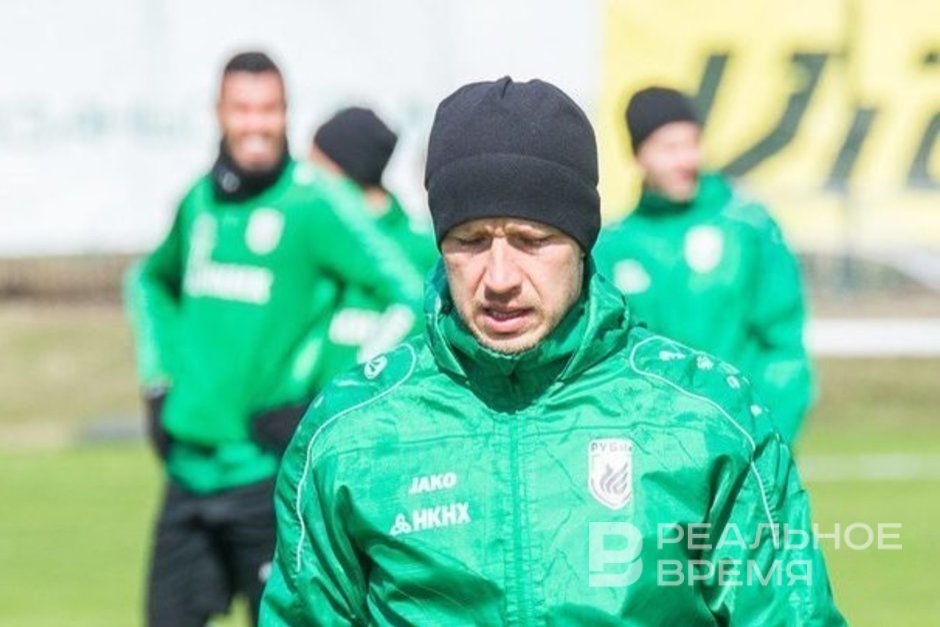
— At that time, Kalmykia was led by Kirsan Ilyumzhinov — he was also the president of FIDE, the international chess federation.
— Kirsan Nikolaevich didn't visit the club often, and it wasn't like he was constantly in Kalmykia. Well, in principle, everything required of a club president is to keep promises, which was done in Uralan.
“Slutsky said that in one season I 'sank' two teams”
— Closing the page of everyday memories about Elista, I remember that City Chess was built there.
— Yes, we lived there — it's like a city within a city. Elista itself is small, built in a straight line, with a stadium at one end, the central square and market in the center, and City Chess at the other end. Our road from there took 15 minutes to the stadium and back. Again, one street, like in Volgograd, with the difference that there the city stretches along the Volga for about 100 kilometers, while in Elista it's 10 kilometers maximum. Also, planes flew rarely to get away on weekends. There was only one flight to Moscow, and it was a small Yak-40, not even a Yak-42. Moreover, it was in the air for 3 hours 40 minutes — the same time it takes to fly from Moscow to Paris.
— And even against this background, Kazan was inferior to Elista at that time.
— Yes, and in football terms too. Suffice it to say that at the end of the season, we won promotion to the Premier League (as the top division began to be called from 2001 — editor's note), along with Shinnik. While I was dreaming of returning to Spartak, there was an option with Yaroslavl; I remember their coach Alexander Pobegalov called with an invitation. But I decided to stay in Kalmykia, where I was already known, plus the team had been promoted to the Premier League. In general, I think I made the right choice, having gone through a good school, watching experienced players, and learned a lot.
We played another season, and in 2003, Uralan was headed by Igor Shalimov, under whom I sometimes played and sometimes didn't, and from there I went on loan to Novorossiysk, while signing a new contract with Uralan.
— I'm starting to lose the thread of events. You left Spartak on loan to Uralan.
— Yes, but Elista had already bought out my contract after the first season. And already being under contract with Uralan, I went on loan to Novorossiysk. This gave Leonid Viktorovich Slutsky reason to say that in one year I “sank” two teams. That is, having started the season at Uralan, I moved to Chernomorets — and both left the Premier League.
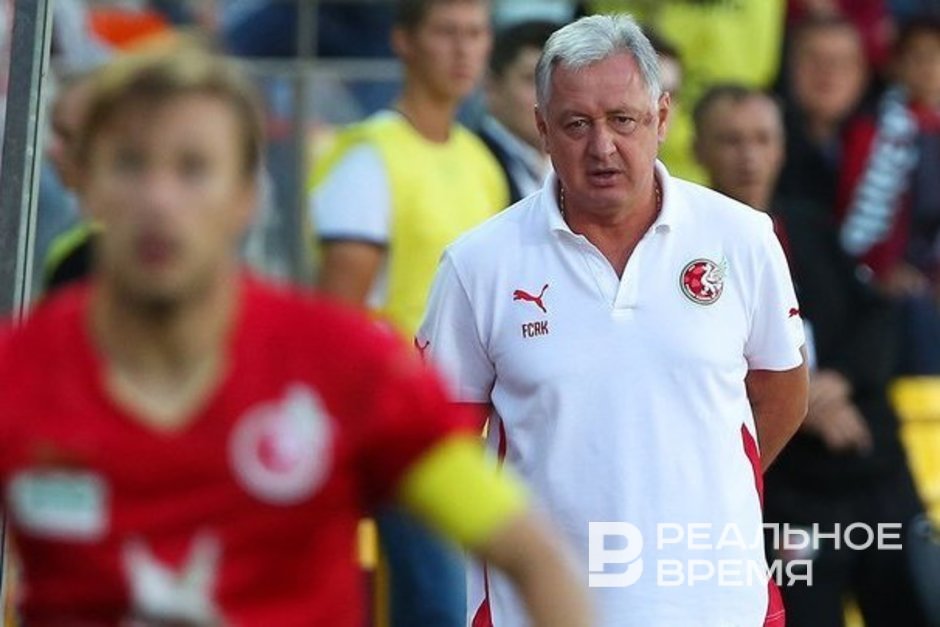
“In Elista, the boiling point reached such a level that we decided to boycott the match”
— Rubin was winning bronze in 2003; we even forgot what was happening in the lower part of the table...
— Leonid Slutsky appeared in our story as the coach who replaced Shalimov. With him, we started the 2004 season with the goal of returning to the Premier League. But already in May-June, I don't remember exactly, Kirsan Ilyumzhinov came to us and said that the team's funding was being stopped, and if anyone had an opportunity, they could leave for free, and the team would most likely cease to exist. As a result, many began to leave, those who found options, while we, the young ones, finished the season in the first division, gathering only for matches.
— Yes, I recall words about reorienting the team to develop local players; there were also Ovshinov, Uchurov, Shurgchiev.
— Yes, by the way, with Evgeny Ovshinov, we had even managed to play for the Russian youth national team under the guidance of Leonid Pakhomov. Besides these youngsters, our captain Volodya Kazakov, Oleg Veretennikov stayed, but in general, it was bleak when we gathered nine or ten people for matches. There were paired games, and I remember in Bryansk we lost 0–6, having two fewer players; even the local fans started cheering us on at the end. From there, we flew to Kaliningrad, and there the boiling point reached such a level that we decided to boycott the match. We were already playing 4-on-4 before the game because there were no more people, plus fatigue had set in from playing without substitutions and short-handed, and we had to play like that again.
The last straw was that we were refused dinner, explaining that it hadn't been paid for. Our coach was a local coach, Eduard Bogdanov, who often paid for the team's meals out of his own pocket. Slutsky, who by then was coaching the reserve team at FC Moscow, recommended me to General Director Yuri Belous, who arranged the transfer.
— You returned to your hometown after four years of wandering.
— Yes, and soon I realized that the head coach, Valery Petrakov, didn't really need me since I was taken without his knowledge. And I came with the condition that I would train with the main team and play for the reserves, proving my right to a place in the lineup. That's how it turned out; at the end of the championship, about five rounds before the end, when there were many injuries and suspensions, I was put in the game, albeit not in my position. But I played quite well in the first match, scored against Spartak in the second, and played the end of the championship from start to finish. The next year, 2005, I started as a first-team player, as Petrakov was replaced by Slutsky in the summer, who had worked in Elista since 2002 and had invited me to Moscow himself.
I ended up spending four and a half years there. Ask anyone, I'm sure they'll all say it was an amazing time, a super team and atmosphere, an ideal training process. It's a pity we couldn't get to the medals with Moscow. Although sometimes there was a feeling that we had already won something. There was a case, I don't remember what year, when at the end of the season we had a banquet, which was attended by a German who held a high position at Bayer. And so we were sailing along the Moscow River, dinner, music. We docked, disembarked in the park, and there was such a fireworks display that the German was surprised, saying he couldn't even imagine how we would celebrate a championship if we celebrated fifth place like that. But the most we could achieve was reaching the Russian Cup final, where we lost to Lokomotiv in extra time, and finishing fourth in the national championship in 2007.
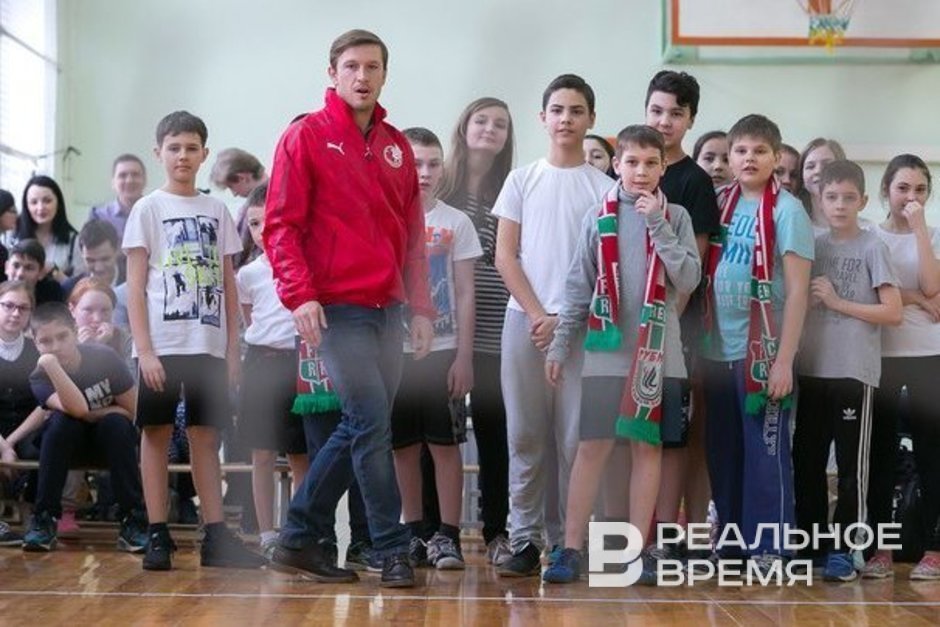
“Knowing Kurban Bekievich, I didn't believe there would be a second invitation”
— Oleg, how did your career develop after FC Moscow?
— From Moscow, I moved to Lokomotiv, although Rubin also invited me at the same time. This happened in 2009.
— You returned to the team whose sports school you briefly attended as a child.
— At that time, I chose to stay in Moscow; probably, this is the only moment when I made the wrong choice, although in the end, I still ended up in Kazan. And at Lokomotiv, there was such a period, I wouldn't say it was successful, rather difficult, when after the atmospheric Moscow, I moved to a team where I found a squad divided into Brazilians, other foreigners, and Russians.
Moreover, Rashid Mamatkulovich Rakhimov, who had invited me to Lokomotiv, left his post, and Yuri Pavlovich Semin, who returned to the team, didn't see me in the lineup. When the next season, 2010, began, it was already clear that they weren't counting on me much, expecting the signing of Roman Shishkin.
— How did you move from Lokomotiv to Rubin?
— I called my agent, German Tkachenko, and said I didn't want to stay at Loko. Literally two days later, he offered: “Are you going to Kazan?” It was unexpected. After that case when I refused the transfer, I didn't believe there would be a second invitation, knowing Kurban Bekievich. I thought if I refused once, he wouldn't call again. At that time, instead of me, they took Vitaly Kaleshin, also from FC Moscow.
“Semak invited me to Zenit, but I refused him twice”
— In Kazan, you immediately won your first medal, a bronze in the national championship, in addition to the gold from the World Youth Games.
— Probably yes, although in the championship squad of Spartak in 2000, I managed to play 32 minutes, but I have neither a medal nor a sense of myself as a champion. At Rubin, there were also European matches, then the Russian Cup and Super Cup. Although there was a period when I was invited to Zenit, and I refused him twice. The first time, probably in September 2012, during a break for national team matches. After the weekend, I was returning to Kazan, and Kurban Bekievich called me, explaining that the club had an option to bring Alexander Bukharov back from St. Petersburg, but Zenit wanted to take me. I remember arriving at the airport in such a stupor, thinking that Rubin would play in European competitions, and Zenit's Champions League roster was already full, so I would only play in the championship. I explained all these thoughts to Berdyev, and he replied that he understood and was glad I was staying because the team needed me. In the end, St. Petersburg took Renat Yanbayev.
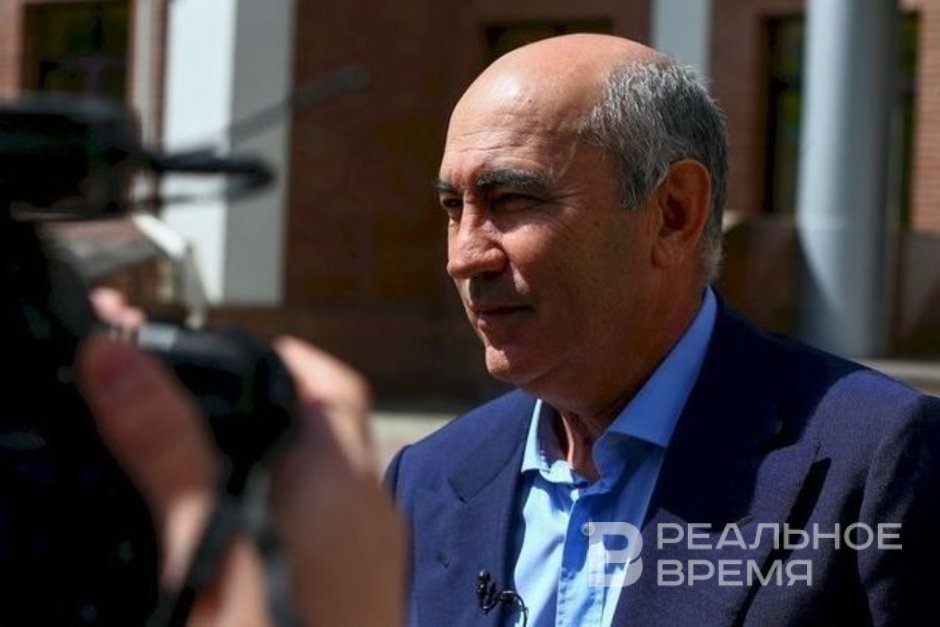
And later, Semak, who was on Zenit's coaching staff, called me, asking if I wanted to try my hand at Zenit. But I also replied that I had grown attached to the city and was satisfied with everything in the team, and he agreed, saying he understood.
By the way, even before the move to Rubin, Semak had invited me to Kazan. In the end, it turned out that I arrived in August 2010, and Sergei left a week later. When I arrived, I was even placed on the third floor of the base in the same room as him. I said: “Well, you're a real champ, you call me yourself, and then you leave for St. Petersburg.” Besides me, Carlos Eduardo and Obafemi Martins appeared in Kazan, and we took a fitness test under the guidance of Pavel Petrovich Cherepanov on the first day. I remember walking onto the field, and Martins was so powerful, one of his legs was probably like two of mine. In the end, I decided to run after him and probably showed my best result.
— Russian Kuzmin, Brazilian Eduardo, Nigerian Martins — three newcomers from three continents.
— Yes, it's interesting, but the main thing is that two equal squads were assembled here, training sessions were very intense, and probably Rubin is the first club in my career where everything is super professional, everything was structured, no small details overlooked. And this allowed us to compete for medals.
— We already mentioned winning the Russian Cup.
— It all started with Yekaterinburg in the Round of 16, but I didn't take part in that match. Bekievich left me in Kazan due to the tight schedule. That was probably the first trip to the Urals at the start of the Cup, because all other times we started in the Far East or Siberia, playing in Krasnoyarsk, Khabarovsk, Vladivostok. In the Round of 16, there was a match in Perm, in which I also didn't play, but I took part in the rout of Lokomotiv in the quarterfinals. The match took place in Grozny and ended 4–0 in our favor, and in the semifinals we beat Rostov 2–0. I was completely calm about the final, scheduled for May 9. That's my birthday. And it so happened that at that time, Dynamo had become a “sweet bun” for us. I was confident we would win, despite the fact that Dynamo's squad was stronger than ever: Voronin, Dzsudzsák, Samedov, Kurányi. I think Noboa had already transferred there too.
But we had a trump card that few knew about. I remember before the final, we had a pre-match training session, after which Kurban Bekievich gathered everyone and said that it would be cloudy on match day and we needed appropriate boots. And our Roman Eremenko had played his whole life in Adidas, old classic model, with 13 studs. When Berdyev said the boots should have “metal studs," Eremenko got a little sad, like, what to do, I need metal studs, but I don't have them. And then he saw boots in the trash that Igor Lebedenko had thrown away because they were old. Eremenko pulled them out, tried them on, they seemed fine. He decided to take them just in case. In the end, he played in them and scored the winning goal (Lebedenko also scored for Rubin in the victorious Cup run, in Perm, when he opened the scoring against the local Amkar, possibly in the same boots — editor's note).
“I can only say good things about Rustem Saymanov”
— Thanks to this victory, Rubin qualified for the Europa League, and I remember in the match against Atlético Madrid, when Pablo Orbáiz scored into an empty net, you were the first to run up to congratulate him.
— Well, that might be because I came on about ten minutes before the end of that match and released all my unspent energy in that sprint. And, if you look carefully, I was the first at the very beginning of the counterattack, but I just didn't believe that Roman Eremenko would make such a convenient pass.
— How can you explain your long career?
— I don't know, perhaps my professional attitude to football at Rubin helped. I arrived in Kazan at 29 and encountered how everything was clearly structured there. Other factors can also be taken into account — body features, diet and sleep patterns, attitude to the matter; in football, there are no small details. When I had already finished and had a rest, and had sat at home long enough, Rustem Fidaevich Saymanov called me and invited me to the club, saying: “Let's try, you'll watch from the outside how and what.”
By the way, I can only say good things about Saymanov. This man did a lot for me, and when there was a period after an injury at 36 or 37, he offered me a two-year contract, and on good terms. He always treated me well, and I tried to reciprocate. And after our first conversation, literally a couple of days later, Rustem Fidaevich called back, saying that Bekievich was also inviting me to his coaching staff.