Jealousy, infidelity, manipulation, and passion in early 20th century Bengal
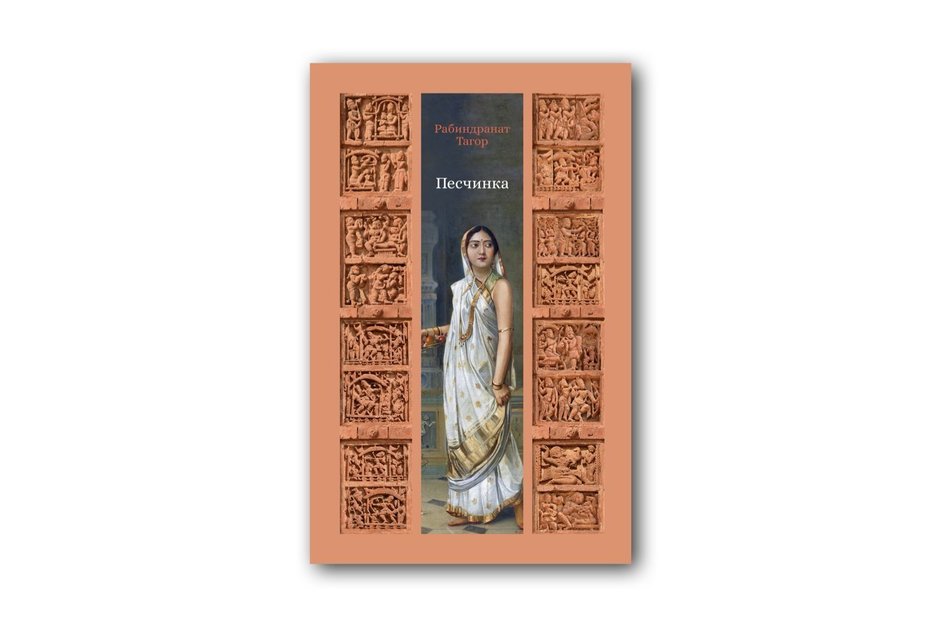
This week's book: the novel “A grain of sand” by Nobel laureate Rabindranath Tagore

This week, on May 7, marked the 165th anniversary of the birth of poet, writer, and Nobel Prize in Literature laureate Rabindranath Tagore. To mark this date, a four-day festival “Tagore — Poet of Peace and Humanism” opened in Bangladesh. In Dhaka, a play “The Still World” was performed, an exhibition of Tagore's drawings was organized, and a prize in his name was awarded. In Shilaidaha (the place where Tagore wrote many of his texts), a three-day memorial program was organized. Simultaneously, in Stratford-upon-Avon, UK, next to William Shakespeare's house, the annual Tagore readings took place. And literary columnist Yekaterina Petrova of Realnoe Vremya discusses the writer's first major prose work — the novel “A Grain of Sand” — and how it stirred up Bengali society with the image of a “new heroine” in literature.
REVOLUTION IN BENGALI LITERATURE
Rabindranath Tagore wrote “A Grain of Sand” in 1901, first for the magazine “Bangadarshan," and two years later published it as a separate book. This novel is an example of Tagore's foresight and his subtle understanding of human psychology. It was in “A Grain of Sand” that the writer first attempted to reveal the secrets of the human heart, rather than just a sequence of events.
Today, “A Grain of Sand” reads almost like a contemporary psychological drama. Tagore builds the plot around desire, jealousy, and emotional dependence. He shows how the novel's heroine, Binodini, simultaneously seeks freedom and destroys others' lives, how Mahendra turns attraction into obsession, and how Ashalata (Asha) tries to preserve herself within others' games. Binodini embodies both social morality and contradictory passions. And Tagore grants her agency. For Bengali literature at the beginning of the 20th century, this approach seemed almost scandalous.
Tagore generally rarely fit the role of the “classic” created later by school curricula. He was born in Calcutta in 1861 into a family at the center of the Bengal Renaissance. His grandfather, Dwarkanath Tagore, supported reform movements; his father, Debendranath Tagore, was a member of the Brahmo Samaj society; and his older brother, Satyendranath Tagore, became the first Indian to serve in the colonial administration of British India. Tagore himself wrote poetry from childhood, translated plays, composed music, and drew. In the late 1870s, he went to study in England but did not complete his education and returned to India.
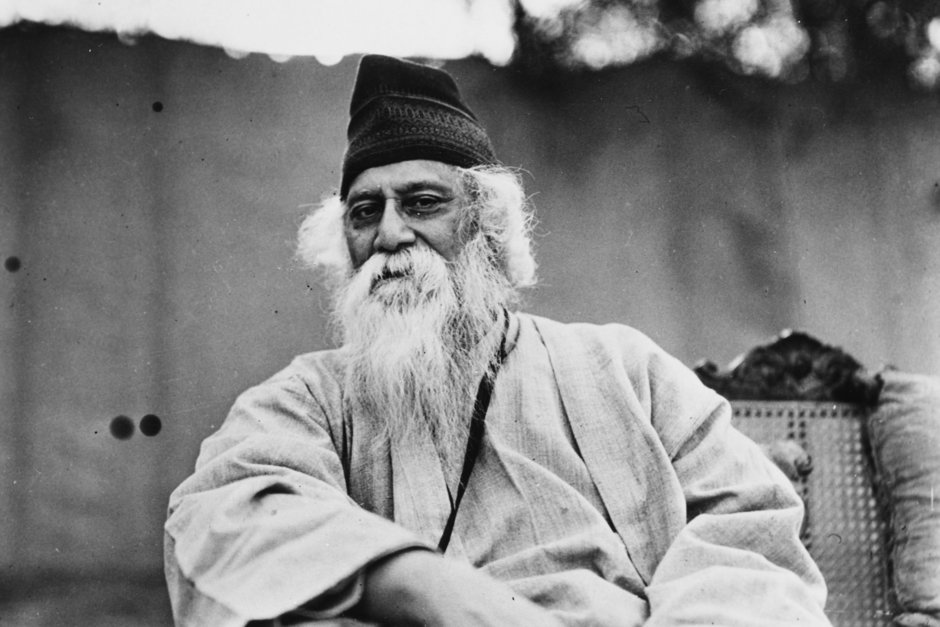
It was Tagore who liberated Bengali literature from rigid Sanskrit canons and introduced colloquial language into it. In 1913, he received the Nobel Prize for his poetry collection “Gitanjali," becoming the first non-European laureate in history. The Nobel Committee praised his “deeply sensitive, fresh, and beautiful verses.” Two years later, the British Crown awarded him a knighthood, but in 1919, Tagore renounced it following the massacre of civilians in Amritsar.
Simultaneously, the writer created his own educational system. In 1901, Tagore opened a school in Shantiniketan, later transforming it into Visva-Bharati University. The writer sought to combine Indian tradition and European education. At the same time, Tagore never limited himself to literature alone. He wrote the lyrics for the national anthems of India and Bangladesh, composed over two thousand songs, staged plays, and at the age of sixty, began seriously pursuing painting.
Tagore did not oppose East and West but sought to connect different cultural traditions without national insularity. This openness is particularly evident in “A Grain of Sand.” At the turn of the 19th and 20th centuries, Bengali society was discussing women's education, widow remarriage, and women's right to independence. At this time, schools for girls were already opening in Calcutta, and reformers debated the role of women in the family and society. Tagore transferred these conflicts into literature. He was one of the first in India to depict a woman not as a symbol of virtue but as a person with complex desires, ambitions, and internal contradictions. This is why Binodini seems contemporary even over a hundred years after the novel's publication.
A THORN IN THE EYE
When Rabindranath Tagore began publishing “A Grain of Sand” in the magazine “Bangadarshan," readers immediately noticed: he was writing not about external events but about people's hidden motives. Later, Tagore himself called the novel a turning point for Bengali literature. He abandoned a simple chain of incidents and focused on the inner lives of his characters. He placed at the center of the plot the young widow Binodini, the married couple Mahendra and Asha, and the family friend Bihari. From this entanglement grew a love quadrilateral that gradually destroyed the peace of the household.
Mahendra initially refused to marry Binodini, even though his mother had already arranged the match. Later, Bihari also rejected the proposal. Binodini was married off to someone else, but she was widowed almost immediately. A few years later, she entered Mahendra's household and saw the life she considered her lost destiny: a young husband, a loving wife, a wealthy home, the attention of family. Tagore did not build the novel around a single intrigue. He showed how jealousy changes people's behavior. The novel's very title — “A Grain of Sand” — signified irritation, a foreign presence within close relationships. Asha and Binodini even called each other by this word, like a thorn in the eye. Tagore described Binodini's desire in particular detail. She envied Asha's marriage and compared herself to her:
— Such a household! Such a tender husband! — she thought. — And I could have managed this household! I could have turned this husband into my slave! Would the household be in such a state then? Would this man be like this? And in my place is this simpleton, this doll!
For a Bengali novel at the beginning of the 20th century, such an intonation sounded unusual. A widow in that society was expected to renounce jewelry, pleasures, and new love. Mahendra's relatives — Rajlakshmi and Annapurna — lived exactly like that: in religious discipline and self-restraint. Binodini did not want to accept this role.
AN INCONVENIENT HEROINE
Tagore made Binodini an educated woman. She read books, knew English, knew how to run a household, and easily subjugated those around her. At the same time, Binodini was jealous, manipulated people, provoked Mahendra, and sought Bihari's attention. The writer portrayed the widow's sexual desire not as a vice or punishment but as an ordinary human feeling. The novel essentially raised the question of a woman's right to satisfy physical desires.
At that time, the law already permitted widow remarriage, but society still perceived it as shameful. Even Bihari, who wanted to marry Binodini, faced this prohibition. Binodini herself refused marriage and told him:
— To marry a widow!... In a fit of generosity, you might have said anything, but if I let you keep your promise, I would ruin you.
Binodini breaks the conventional pattern from the very first chapters of the novel. Tagore makes her neither a martyr nor a seductress in pure form. He constantly reminds us: Binodini is educated, can hold a conversation, understands music and housekeeping, and her mind attracts Mahendro no less than her appearance. At the turn of the 19th and 20th centuries, Bengali literature constantly told of violence, humiliation, and suicide among widows. Against this backdrop, Binodini appeared an almost impossible character. She did not resign herself to her role and did not wish to feign submission.

Tagore deliberately contrasted her with Asha. Asha received almost no education and trusted everyone around her. Binodini, conversely, understood how relationships between people worked and knew how to use this knowledge. When Mahendra left home, it was Binodini who composed letters on Asha's behalf. These letters gradually turned into her own voice. Through this correspondence, Tagore showed the difference between Asha's naivety and Binodini's intellectual freedom. Asha did not understand the hidden hints and emotions that Binodini embedded in the text.
Because of this duality, Binodini appears surprisingly modern. She is both a victim of the system and a person who causes pain to others. She refuses to play the role of the “ideal woman” that Bengali society expected of a widow. Tagore even juxtaposes her with two other widows — Rajlakshmi and Annapurna. They live by strict ascetic rules, while Binodini chooses a different path. At the end of the novel, she rejects both Mahendra and Bihari.
Because of this, the novel bears little resemblance to the classic melodramas of the late 19th century. The writer constantly shifts attention from actions to the characters' internal responses. Tagore himself later wrote that in “A Grain of Sand," he was interested not in a chain of events but in the inner side of a person. This is precisely why the book is closer to the modern psychological novel than to the traditional family works of its time.
VERY TOXIC RELATIONSHIPS
Tagore almost immediately removes the idea of “true love” from the novel and shows dependence, where each character tries to prove their own worth. Mahendra obsessively watches Binodini, is jealous of her towards Bihari, and simultaneously demands Asha's attention. At the same time, he himself perceives women as confirmation of his own exceptionalness. In one scene, Mahendro literally revels in the thought that women have voluntarily given themselves to him forever. Tagore does not mask this self-absorption with romantic gestures. Mahendro constantly confuses love with the desire to possess.
Binodini quickly understands the rules of this game. She alternately attracts and repels Mahendro. She interferes in someone else's marriage, provokes jealousy, and tests how far Mahendro is willing to go for her. Their relationship is sustained by emotional tension. Even Binodini herself tells him:
There was a time when you thought you loved Asha. Then you thought you loved me. But you love only yourself.
At this moment, the novel unexpectedly begins to sound very contemporary. Tagore shows a constant struggle for control, attention, and power. Today, Mahendra and Binodini's relationship would be described as gaslighting or a toxic attachment. Mahendra justifies his own actions with “love” and “duty," although in reality, he tries to maintain control over both women. He uses Asha as a space for self-affirmation and turns Binodini into an object of desire and competition. At the same time, Binodini does not build a healthy connection either. She constantly tests others' feelings, provokes conflicts, and uses emotional closeness as a tool of influence.
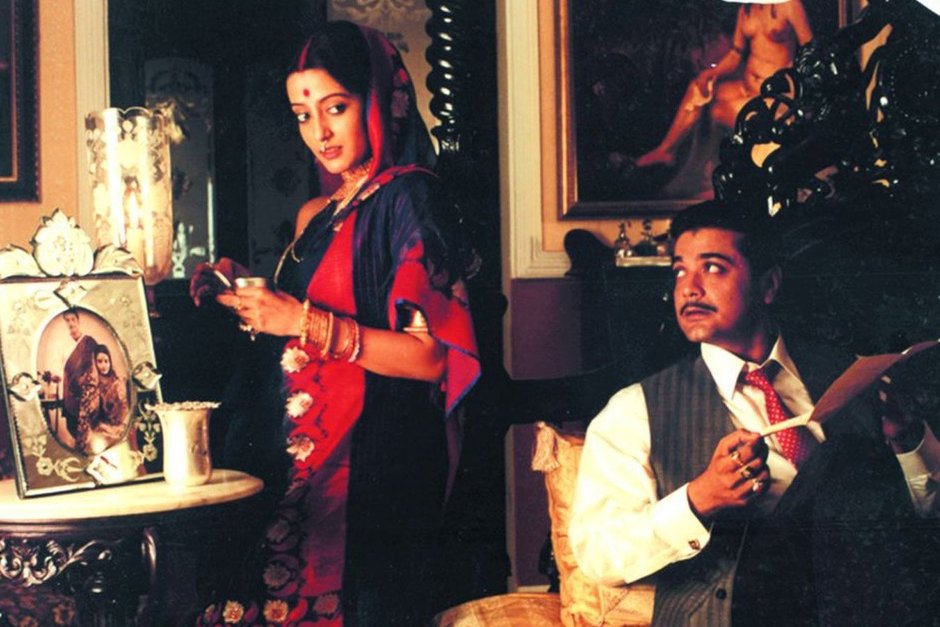
Tagore shows with particular precision how emotional dependence destroys everyone. In toxic relationships, people replace trust with manipulation, control, and emotional dependence. It is precisely this model that Tagore dissects in detail back in 1903. His characters hide emotions, orchestrate tests of feelings, create conflicts, and fear losing power over one another.
Rabindranath Tagore wrote not just a story of infidelity or forbidden love. He analyzed how power, loneliness, social taboos, and emotional immaturity cripple relationships between people. The Encyclopedia Britannica includes the novel among the key texts of the Bengal Renaissance and calls Tagore one of the leading figures of 20th-century world literature.
Publisher: Azbuka
Translation from Bengali: Elena Brosalina, Inessa Tovstykh
Number of pages: 320
Year: 2025
Age rating: 16+
Yekaterina Petrova is a literary columnist for the online newspaper Realnoe Vremya and hosts the Telegram channel «Булочки с маком».