Medieval dentistry, brain-threatening microplastics, “Dyson minds”
Interesting science news of the week
In Scotland, the oldest dental bridge in the country has been found — it was likely made of gold in the 15th century. Up to six grams of microplastics can accumulate in the human brain — roughly the size of a plastic spoon. Aliens might be building post-biological supercomputer civilizations around black holes. Brazilian scientists have figured out how to destroy influenza and coronavirus using an ordinary ultrasound machine. A minor planet with a global gaseous atmosphere has been found near Pluto.
GOLD TEETH IN MEDIEVAL SCOTLAND
We don't know reliably how people treated their teeth in antiquity. The oldest known filling remains a 6,500-year-old tooth found in Slovenia with beeswax inside. As for dentures, information is currently inaccurate and very incomplete. A silver dental bridge from the Levant made 300 years BCE is still the first reliably dated find of its kind.
What about Europe in the Middle Ages? Medieval writers described barbers who extracted diseased teeth. There were also attempts at orthopedics, not only functional but also aesthetic. This is evidenced by the lower jaw of a man who lived approximately in the 15th century in medieval Aberdeen, Scotland. It was found during excavations of an ancient church. Two front teeth are connected by gold wire, forming a bridge across the socket of a lost tooth. Characteristic grooves on the tooth roots indicate that there was a denture there, which the owner wore for quite a long time during his life. The denture itself, unfortunately, has not survived. Scientists believe the main reason for its installation was to improve the aesthetics of the smile.

There was no dentistry profession in medieval Scotland. The technique of making the gold wire suggests it was crafted by a jeweler. From this, scientists conclude that not only barbers worked on teeth, but also representatives of other interesting professions.
MICROPLASTICS ACCUMULATE IN THE BRAIN AND CAUSE DAMAGE
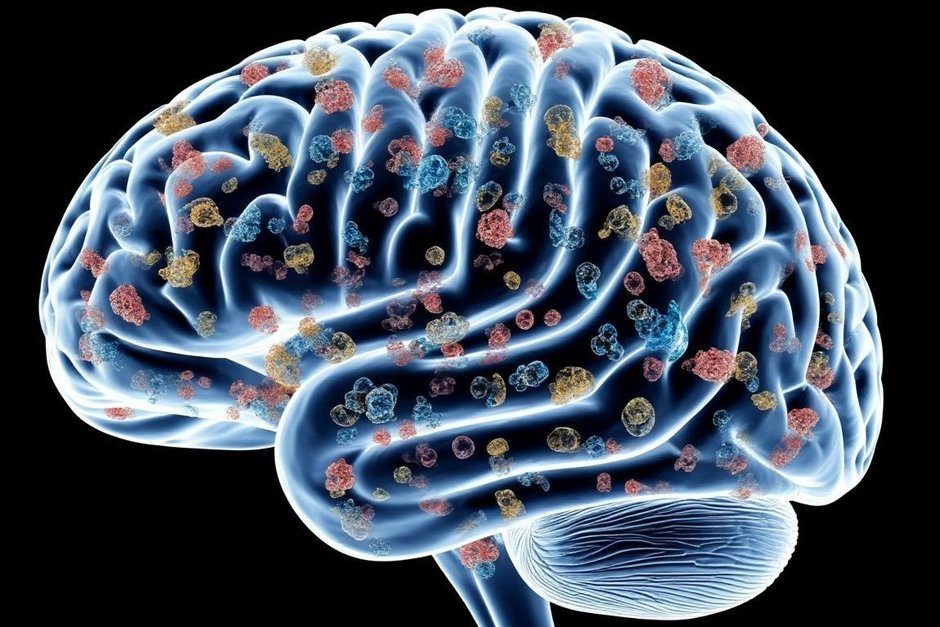
This week, an article was published outlining the problem of microplastic accumulation in the human brain and suggesting ways to combat this worrying phenomenon. Accumulates plastic particles much more actively than, for example, the liver or kidneys. Over the past eight years, postmortem autopsies show that the concentration of microplastics in the brain has increased on average by one and a half times — by 50%.
Experiments on mice show that tiny polystyrene particles ended up in the brain two hours after the mice ate them. This means that the small size of the particles allows microplastics to cross the blood-brain barrier. We often consume food from plastic packaging, and tiny plastic particles remain on it. Recently, data was published that up to six grams of microplastics can be collected in the brain of a modern person (that's about the weight of a regular plastic spoon).
But there are ways to combat such accumulation. Therapeutic apheresis is a procedure where blood is drawn from a vein, separated into components, passed through a filter that binds certain substances, and then returned to the circulatory system. In an experiment by German scientists, this method successfully cleared human blood of microplastic. However, if it has already left the bloodstream and settled in cholesterol plaques or brain tissue, apheresis will not help.
COULD “DYSON MINDS” BE POWERED BY BLACK HOLES?
Back in the 1960s, American physicist Freeman Dyson suggested that an extraterrestrial civilization could surround a star with a system of satellites connected into a sphere to harness its energy. If Dyson spheres exist, they could be searched for by their excess infrared radiation, which defies any other explanation. The idea was later expanded: such satellites might not be connected into an energy station but into a supercomputer. This gave rise to the notion of so-called post-biological civilizations — not little green men or sentient moss, but distributed computing systems of cyclopean scale.
Recently, a study was presented at a SETI conference (the American agency for the search for extraterrestrial civilizations), the authors of which wondered: what if a Dyson sphere is built around a supermassive black hole, which exists at the center of every galaxy? That would be a much more serious energy source, ideal for a superintelligence.
But how to find such a “Dyson mind”? Earthly scientists suggest that perhaps it doesn't want to be detected. This means it can mask its energy as natural astrophysical processes.
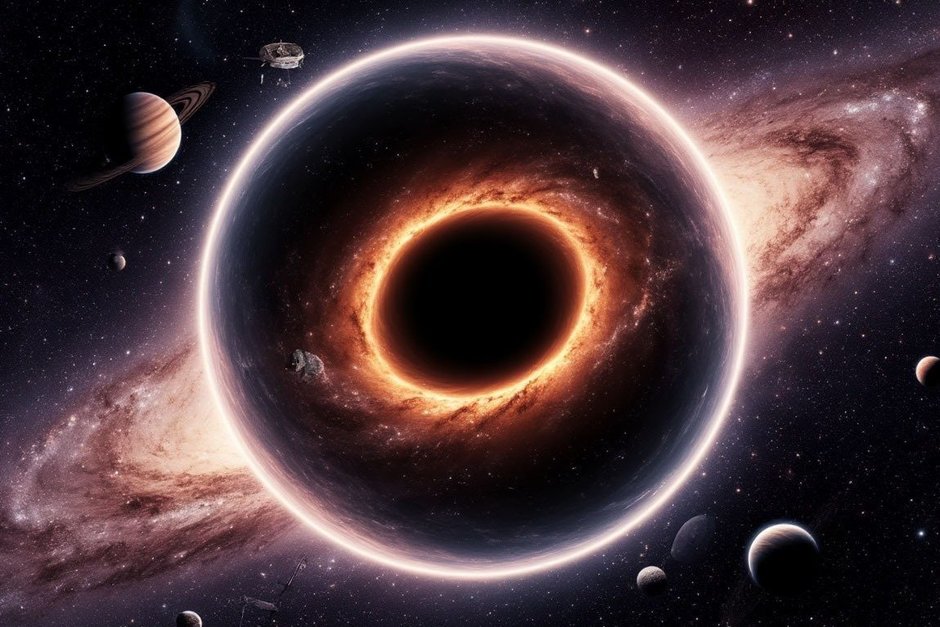
Another scenario is the opposite: a superintelligence proud of its strength, demonstrating its power so that everyone fears it. In any case, the main diagnostic sign is excess infrared radiation. There can also be secondary signs: brightness fluctuations, anomalous emission spectra, eclipses, or changes in the galactic center's structure. Scientists propose searching for such anomalies in data from two powerful space telescopes — the James Webb Space Telescope and the Event Horizon Telescope. Perhaps we just haven't noticed them yet.
CORONAVIRUS AND INFLUENZA CAN BE DESTROYED BY ULTRASOUND
Physicists and doctors from the University of São Paulo (Brazil) have published an intriguing article describing the use of a standard ultrasound device as a virus killer in the body. In classical medicine, the fight against viral diseases uses pharmacological methods, but viruses mutate quickly, learn to evade the immune system, and become resistant to drug treatment. Viruses are easily destroyed by physical disinfection (e.g., ultraviolet light), but such methods cannot be used in living organisms because they damage not only the virus but also the host's cells.
Addressing this problem, the Brazilian scientists tried working with standard medical ultrasound scanners. They have low acoustic wave power and high frequencies (3–20 megahertz). Petri dishes containing suspensions of live coronavirus and influenza virus (strain A, H1N1) were treated with ultrasound, then their structure was examined under electron and atomic force microscopes. At the end of the experiment, they attempted to infect a culture of live monkey cells with the treated pathogens.
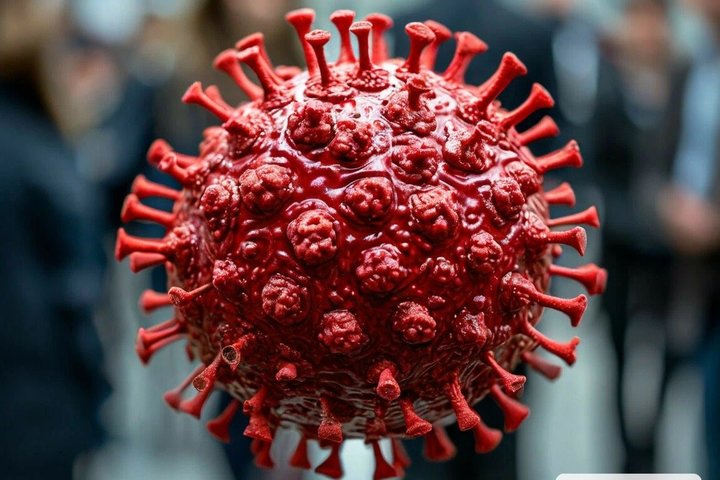
During the experiment, after 5–30 minutes of ultrasound at 7.5 megahertz, the viruses lost their shape and disintegrated into fragments. Their lipid envelope ruptured, releasing the nucleic structure. After such treatment, the Wuhan strain simply stopped penetrating cells. The Brazilian scientists concluded that the virus was destroyed by acoustic resonance. Mammalian cells, however, ignored this frequency — microscopic studies showed that the cellular structures of irradiated monkey liver cells retained normal morphology and suffered no damage.
This means that viruses can be fought mechanically, without pharmacology. The Brazilians' experiment opens new horizons for medicine.
A MINOR PLANET WITH A GASEOUS ATMOSPHERE FOUND NEAR PLUTO
A small planet, only 500 kilometers in diameter, located near Pluto, has turned out to be the fortunate possessor of a genuine gas atmosphere. This is very strange, as celestial bodies with diameters less than 1,000 kilometers typically cannot hold onto a gas envelope — their gravity is insufficient. Moreover, for trans-Neptunian objects (those beyond Neptune's orbit), the presence of a gas envelope has never been recorded — aside from Pluto, with its atmospheric pressure 100,000 times lower than Earth's.
Now, Japanese astronomers have published a paper describing a minor planet that doesn't even have a name, only a classifier number: (612533) 2022 XV93. On January 10, 2024, it passed between Earth and the disk of a distant star. Several Japanese telescopes observed this transit and saw clear traces of a global (i.e., closed and continuous) atmosphere on the dwarf planet!
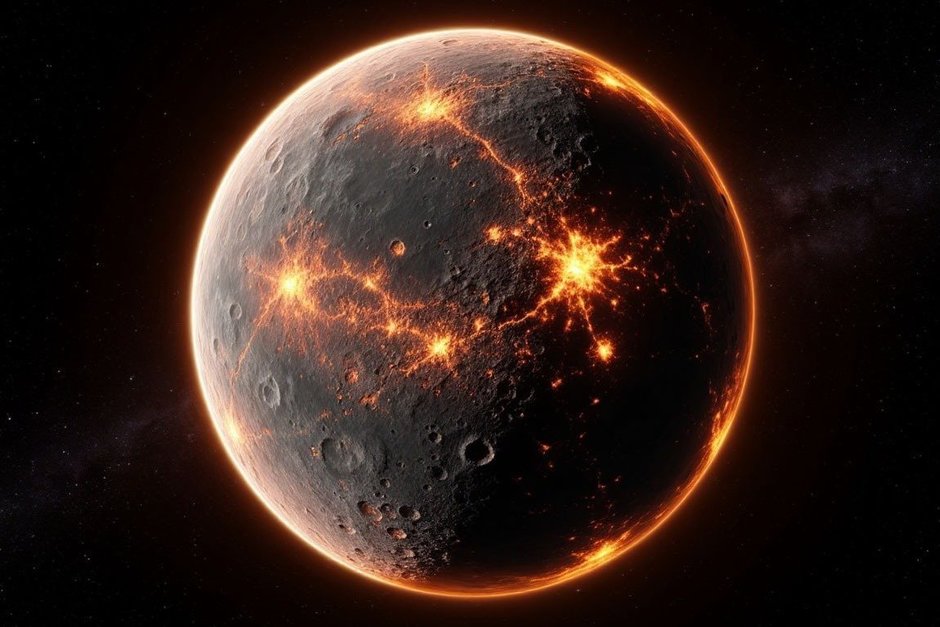
True, it is of course very rarefied — the gas pressure there is 5–10 million times lower than on Earth. Nevertheless, the gases are evenly distributed, making it a fully-fledged global atmosphere. Why has this happened? How is it even possible?
Astronomers have two explanations. First, if another object recently struck the minor planet, the impact released a large amount of energy, temporarily melting nitrogen or methane ices. These then formed a global gas envelope. The second explanation is cryovolcanism — geological activity in the interior, causing gases to constantly erupt onto the surface.