The most scandalous book about the fashion industry
This week's book: Lauren Weisberger's novel “The devil wears Prada”

This week, the film “The Devil Wears Prada 2” was released worldwide — a sequel to the cult adaptation of Lauren Weisberger's novel of the same name. And although it is not of great artistic value, the work became the most scandalous book in the fashion industry. Literary columnist Yekaterina Petrova of Realnoe Vremya explains how Weisberger wrote this novel, who the prototypes of the main characters were, and why the book has been discussed for two decades.
Dream job
Andrea Sachs is a Brown University graduate who moves to New York dreaming of working at The New Yorker. She tries to seize any opportunity in journalism and lands a job as Miranda Priestly's junior assistant at Runway magazine, even though she knows almost nothing about fashion. Colleagues immediately tell her how lucky Andrea is:
A million girls would kill for this job.
But the work quickly shatters her illusions. Instead of editorial tasks, Andrea runs errands that have nothing to do with the profession: from urgently finding tickets to sourcing rare books for her boss's children. Andrea effectively becomes Miranda's personal slave. Gradually, the protagonist loses touch with her loved ones: her boyfriend Alex grows tired of her grueling schedule, her friend Lily turns to drink, and her family demands attention. The climax occurs in Paris, when Andrea learns that Lily is in a coma after an accident. The heroine initially chooses work but then refuses to carry out another of Miranda's orders, telling her boss to go to hell. Andrea realizes she is becoming more and more like Miranda herself and breaks free from the unhealthy relationship with her job.
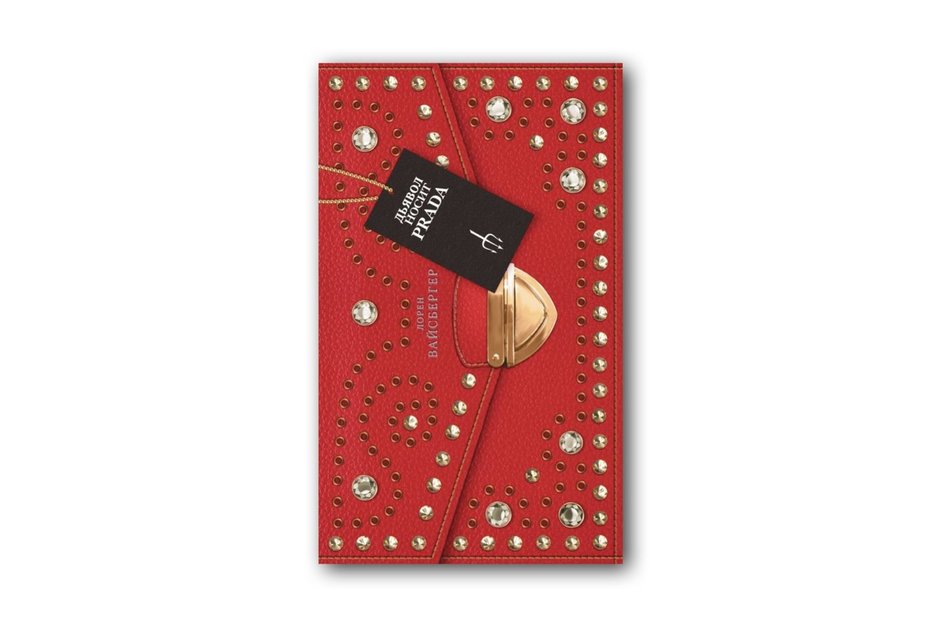
At the conceptual level, the novel combines a workplace drama and a coming-of-age story. Weisberger attempts to show the protagonist's transformation: from the ultimate fashion outsider to someone who adopts others' values. But this transition works unevenly. Andrea simultaneously evokes sympathy and irritation. She is kind and sweet, yet constantly displays a sense of superiority and snobbery similar to what she herself condemns.
The novel's structure is also questionable. The bulk consists of the repetitive routine of errands, making the narrative feel monotonous. The reader quickly understands how terrible it is to work at Runway, and subsequent scenes merely vary the already familiar formula. Consequently, the climax shifts to the very end, and the denouement feels rushed and condensed. This imbalance reduces tension, although the material itself suggests tighter dramaturgy.
At the same time, the book has obvious strengths. Weisberger accurately captures the details of the environment and its culture of appearance and status. Secondary characters — Alex, Lily, Nigel — help show how working at Runway affects not only Andrea but everyone around her. “The Devil Wears Prada” was supposed to be a critique of the fashion industry but simultaneously follows the formula of popular fiction: the heroine lands her dream job, loses herself, and then gives it up for “real” values. The result is more of a vicious roman à clef that cannot withstand serious reading.
Andrea, aka Lauren
Lauren Weisberger was born in 1977 in Scranton, grew up in Pennsylvania, graduated from Cornell University, and immediately chose the media environment for her professional development. After university, Weisberger moved to New York and became an assistant to Anna Wintour, the editor-in-chief of American Vogue. Lauren worked there for about a year and later described this period as “a year of being screamed at.” At first, she didn't understand where she had landed. “I had no idea what I was getting into... after starting, I thought: where am I?” Weisberger told of her feelings. Colleagues and Wintour constantly pointed out her inappropriate appearance and behavior, and the atmosphere of the editorial office demanded total submission.

Weisberger began writing the novel as an exercise in a creative writing course and did not have grand plans. “I wasn't trying to create a cultural phenomenon... I was just writing about what felt true to my experience," Lauren noted in an essay for Vogue magazine. She worked on the manuscript gradually, showed it to her teacher, then to an agent, and the book quickly found a publisher. The novel “The Devil Wears Prada” was published in April 2003. It was immediately dubbed a roman à clef, as it offered an insider's look at an editorial office, renamed “Runway," where real industry figures were easily recognizable.
Success came immediately. The book spent six months on The New York Times bestseller list and was translated into dozens of languages. In 2006, 20th Century Fox released a film adaptation starring Meryl Streep and Anne Hathaway, which grossed hundreds of millions of dollars at the box office. Weisberger noted that the film turned her “story into something glossy and big.” She later continued the series: releasing the sequel “Revenge Wears Prada” in 2013 and another book in the series, “When Life Gives You Lululemons," in 2018.
The parallels between the author and the heroine are obvious. Like Andrea, Weisberger entered the industry with journalistic ambitions and faced the reality of assistant work. “I recognize myself in Andrea, like in an old photograph... the features are familiar, but I want to explain my decisions," the writer commented on the similarity with her heroine. Weisberger also noted that Andrea lives in a world of “very simple choices," whereas in reality, changes happen gradually and imperceptibly.
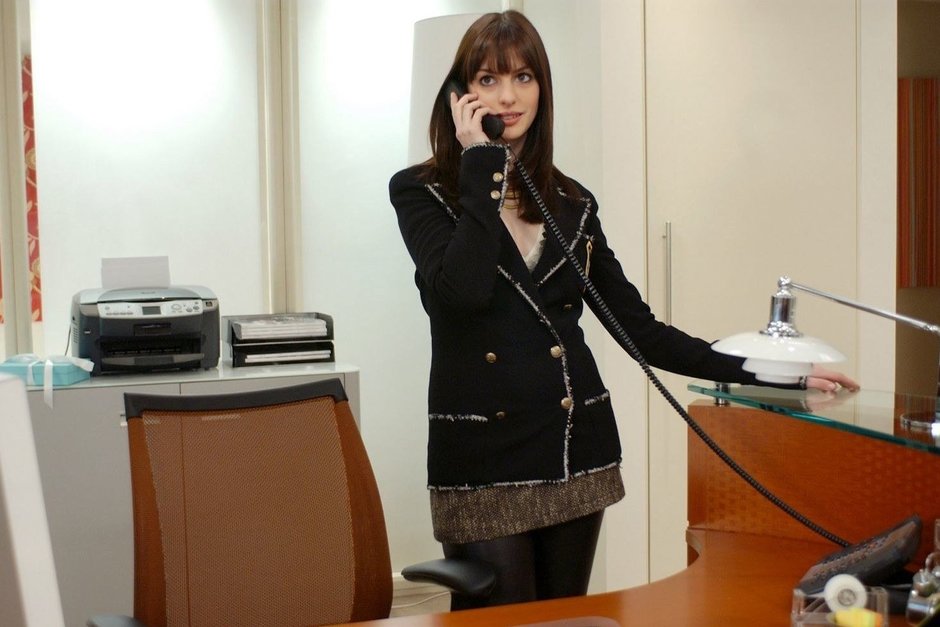
Weisberger wrote several more novels, started a family, and changed her lifestyle. “For over twenty years, people have been meeting my twenty-something version... while I've become a more complex and less confident person," the writer said. For a time, she traveled across the United States in an RV, and now lives with her family on a boat, combining this with writing, editing, and daily chores. “Now I think not about a handbag, but about how to find fresh vegetables," Weisberger noted.
“Nuclear Winter” in Prada
Behind the gloss, there are always specific people, and “The Devil Wears Prada” barely hides their silhouettes. The prototype for Emily Charlton was quickly found. Stylist Leslie Fremar said that she was the basis for the image of the nervous and demanding assistant. The phrase that a “million girls would kill for this job” belongs to her. Fremar indeed said this to Weisberger and sincerely believed it, while Weisberger, according to her, did not really want to work at Vogue.
Nigel, conversely, has no single obvious prototype. His image is composed of editors and stylists from the industry. This was confirmed by Weisberger herself, who noted that she drew not only on personal experience but also on friends' stories. However, many in the fashion industry saw in Nigel an image of André Leon Talley — the creative director and news editor of Vogue, where he worked until 2013.
The novel's center of gravity is Miranda Priestly. She dictates impossible demands, gives no time to fulfill them, and then berates her subordinates like children in a daycare centre. The novel records her habits with almost protocol-like precision: from the temperature of her latte to the list of newspapers on her desk and the people whose calls she accepts. Weisberger said that while working, “it felt like I knew everything about Miranda... except why she was so important.”
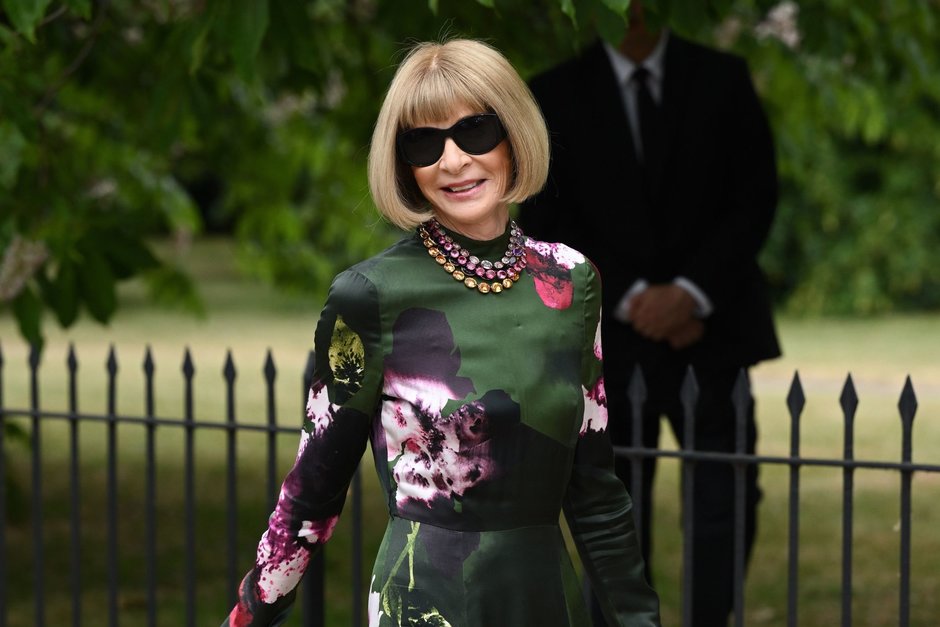
The comparison to Anna Wintour arises almost automatically, although the author herself denies it. Wintour led American Vogue from 1988 to 2025 and was considered one of the most influential figures in fashion. Like Priestly, she is British, runs a magazine, and is known for her tough management style, which earned her the nickname “Nuclear Winter.” Critics noted similarities down to her manner of speaking, clothing size, and distance from subordinates. But Weisberger herself emphasized that she assembled the character from various sources, not from a single person.
Upon learning of the book, Anna Wintour told a colleague: “I can't remember who that girl is.” Later, she remarked in a New York Times interview: “I always enjoy a good work of fiction. I haven't decided yet if I will read it.” After the film starring Meryl Streep was released, Wintour changed her tone and admitted the film was “very entertaining and funny," and that she made fashion “entertaining, glamorous, and interesting.” However, she never directly confirmed the resemblance to the character, leaving it “up to the audience.”
The fashion industry initially reacted much more harshly. Editors at Vogue and other publications criticized the novel and the film adaptation for being superficial and caricatured. Kate Betts wrote that the author “understood almost nothing” about the pressure and isolation of that work. Rumors swirled that designers were afraid to participate in the film, lest they sour their relationship with Wintour. Later, industry insiders argued about the costumes, calling them a “caricature” of real style. Yet, over time, attitudes softened, and many industry participants began to perceive the film as part of their own history.
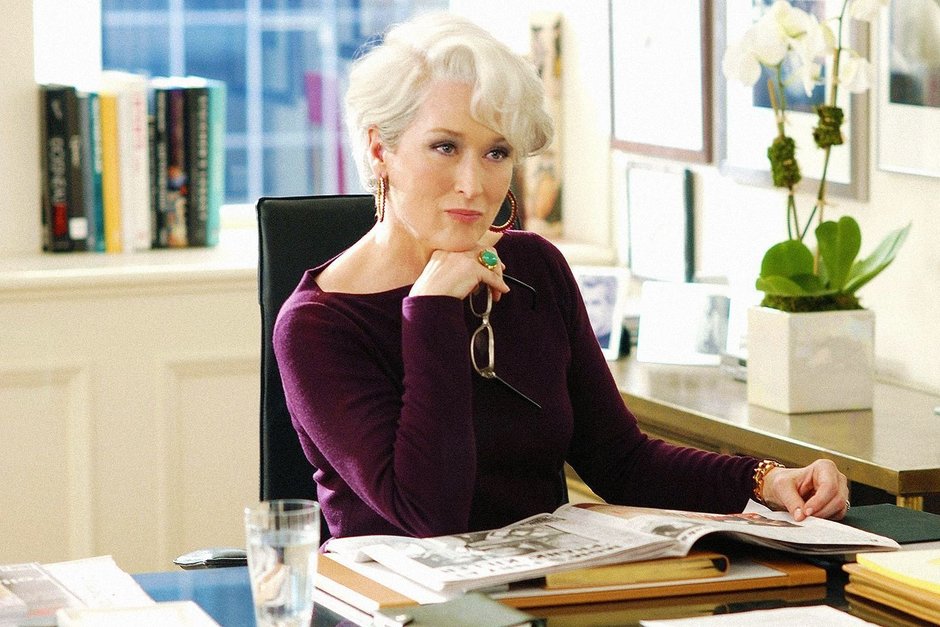
Over time, the novel transcended its professional milieu and established itself as a cultural marker of the era. “What I wrote in my twenties is not only still relevant but is once again becoming a trend," noted Weisberger. The story has not disappeared; it continues to exist. It is quoted, turned into memes, and rebooted. The commercial success of the book and the film, along with their constant presence in popular culture, have turned “The Devil Wears Prada” into an enduring image of the glossy industry of the early 2000s, with its power, fears, and internal rules. And also a cautionary tale for Zoomers.
Publisher: AST
Translation from English: Tatyana Shabaeva, Mikhail Malkov
Number of pages: 448
Year: 2017
Age rating: 16+
Yekaterina Petrova is a literary columnist for the online newspaper Realnoe Vremya and hosts the Telegram channel «Булочки с маком».