Zhiganov’s “Zyuhre” in lobby, modern no-set version
Albina Nugmanova opened the Gabyashi Festival with the first “adult” ballet by Nazib Zhiganov, performed right in the lobby of the “Moskovsky” Cultural Center.
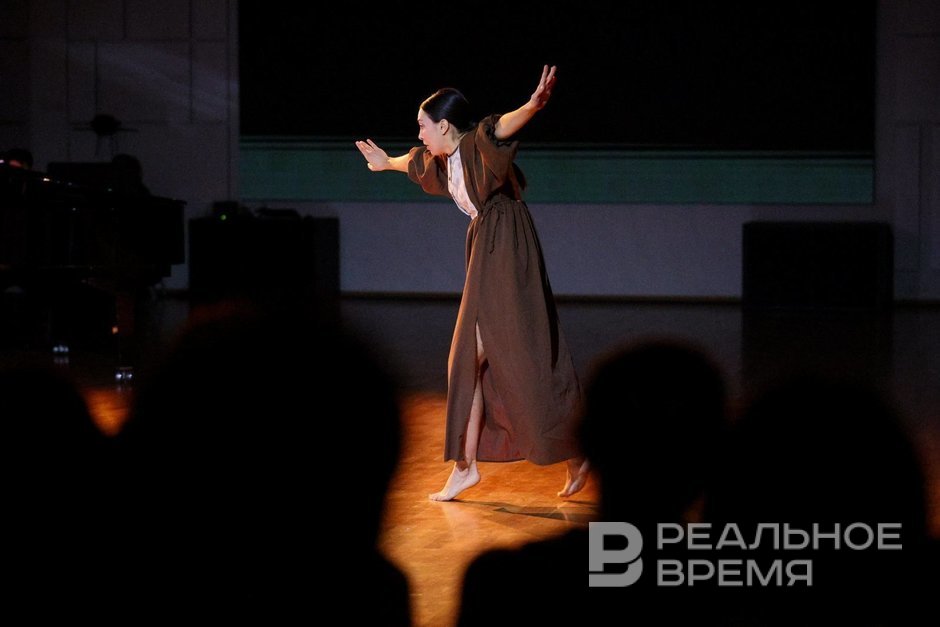
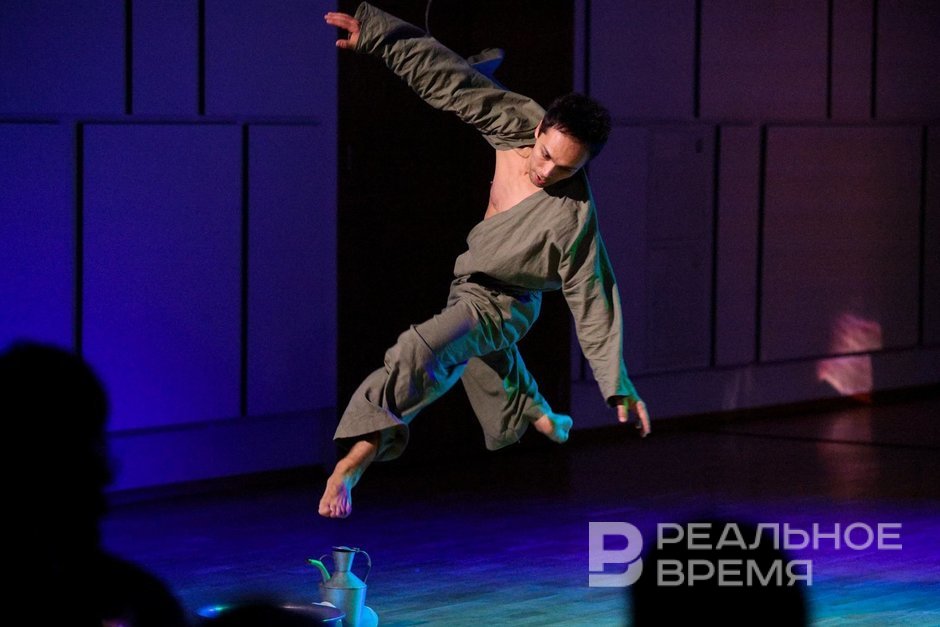
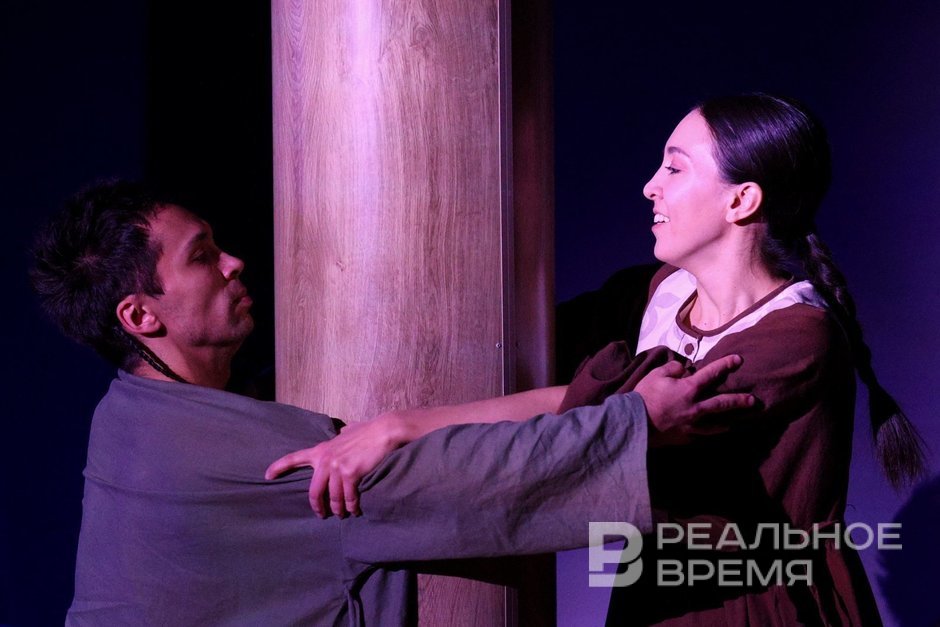
The second season of the Sultan Gabyashi National Music Festival began with an experimental production at the “Moskovsky” Cultural Center. Director Albina Nugmanova presented her version of the ballet “Zyuhra” (12+). Right in the lobby, Saida Kadyrova and Arthur Aminov danced the main roles, blending folk dance, contemporary, contact improvisation, and hip-hop. The production was dedicated to the 115th anniversary of composer Nazib Zhiganov and the 100th anniversary of the ballet's first performer, the founder of the Kazan ballet school, Ninel Yultyeva.
Festival of Desperation
Last year, the festival took place with a “material base.” Its main organizer, Aydar Niyazov, conductor of the non-state Orchestra of National Music, won a grant in the “Uz Telem” competition for projects studying the Tatar language. Music by classics and contemporaries was performed at several concerts.
In December 2025, Ilgam Baitiryak's symphony-ballet “Sarvinaz," inspired by Salih Saydashev's ballet “Gulnara," was shown at the “Moskovsky” Cultural Center. Saida Kadyrova won the "Üz Telem” grant for it; she had previously worked in the Song and Dance Ensemble of the Republic of Tatarstan and on the “Development Workshop of Tatar Dance 'Äydä Bas'" project. The main roles were performed by students of the Kazan State Institute of Culture, and Kadyrova invited Ninel Mochalova, former soloist of the Jalil Tatar Opera and Ballet Theatre and associate professor at the Department of Choreographic Art of the Institute of Culture and rehearsal teacher for the State Song and Dance Ensemble of the Republic, as choreographer.
“Sarvinaz” turned out to be a classical ballet, while on the sides of the stage and even sometimes in the auditorium, two alter egos of the main characters — Regina Khafizova and Arthur Aminov — danced in a mode of contemporary improvisation.
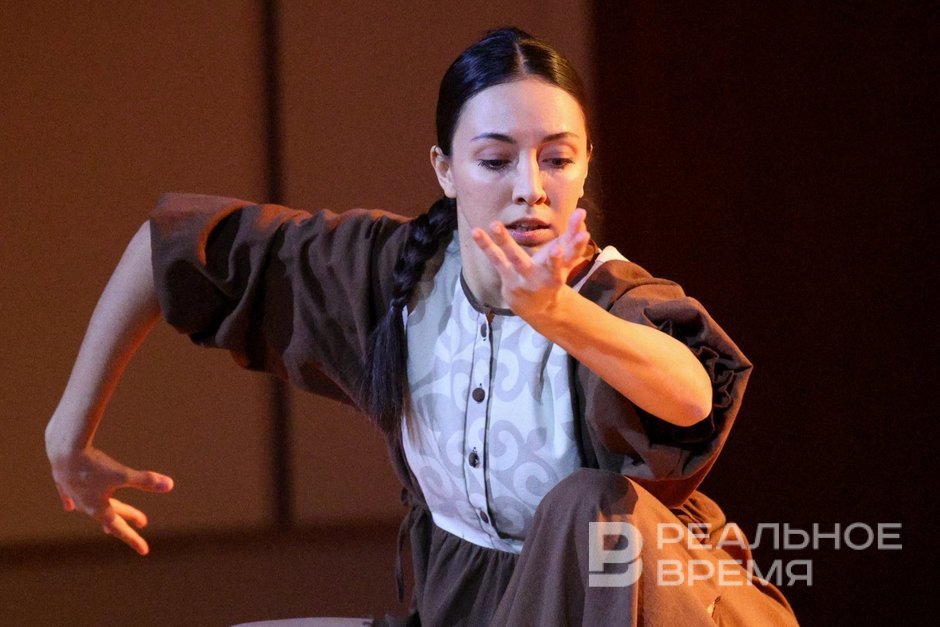
In “Zyuhre," Saida Kadyrova dances herself — precisely with Aminov. Instead of an orchestra — a piano played by Tatyana Sennikova. Instead of the elongated hall of “Moskovsky” — its lobby. Instead of a curtain — blinds on the windows go up and down.
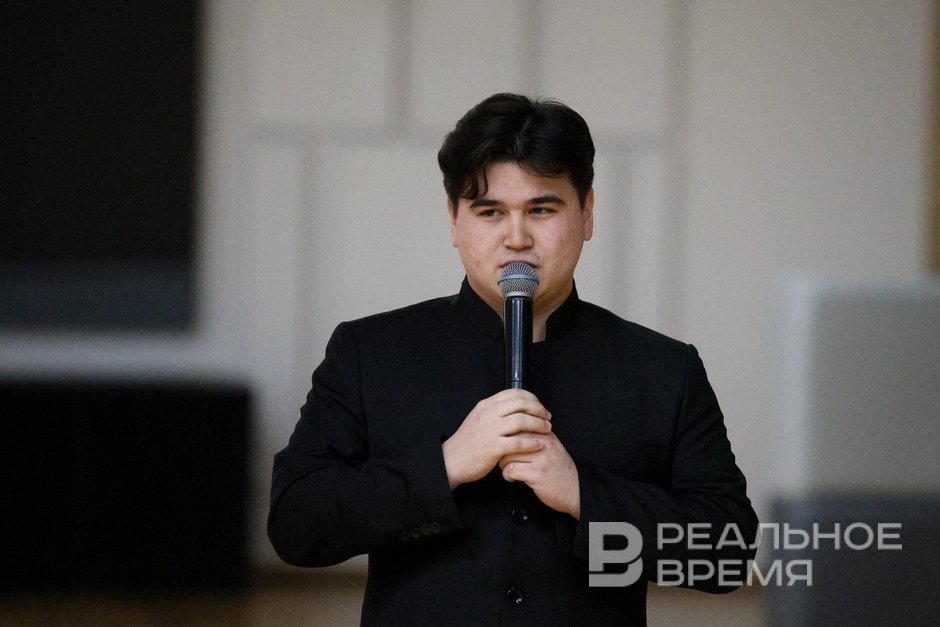
Overall, says Niyazov, this year's festival is dedicated to friendship and cooperation. He also calls what is happening a “festival of desperation," pointing out that “Moskovsky” itself invested a lot in the search for grants. Essentially, the creative team worked on pure enthusiasm, while Niyazov also invested his own funds into “Zyuhre.” This year's festival program is determined intuitively. It is known that a gala concert is expected in May. Furthermore, evenings dedicated to singer Vafira Gizzatullina and composer Sara Sadıkova are planned. An idea was born to stage “Su Anası" (The Water Witch), possibly in the format of a one-person show against a waterfall backdrop.
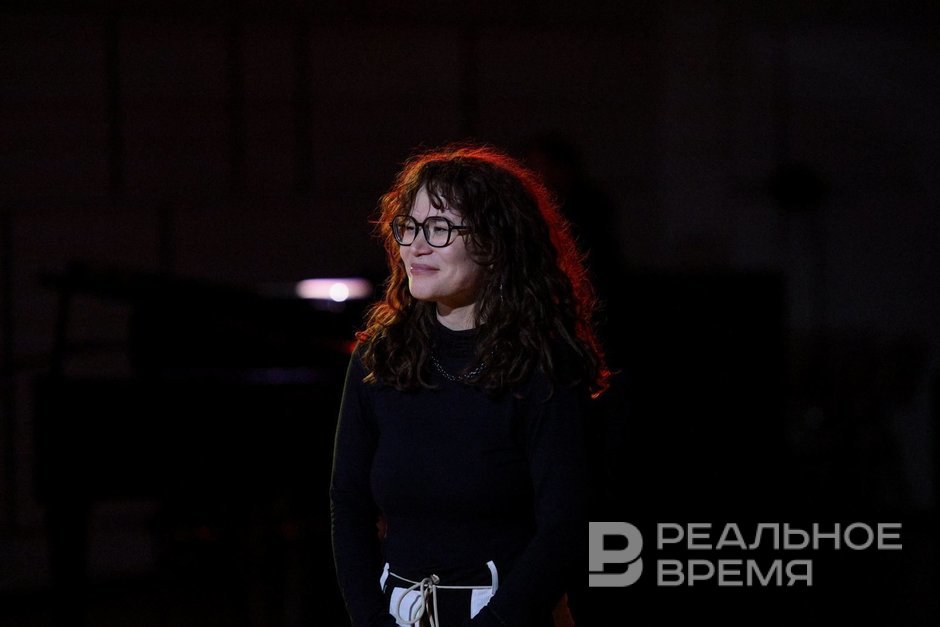
The ballet's director was Albina Nugmanova, an actress at the Kariyev Theatre, actively working in the field of modern dance trends, who had previously collaborated with the Orchestra of National Music.
— At first, I had doubts: are you sure? — she recalls a conversation with Niyazov. — I work with contemporary forms, you understand it won't be a ballet. He says: that's exactly what I want. Initially, a duet was planned, as the production is very extensive, with many characters, many actions, and additional themes. I realized I didn't want to do it in full; Aydar made a 40-minute piano reduction, and we rehearsed to a recording. And for dancers, I wanted personalities.
Nugmanova points out that Saida Kadyrova is a rare example of a dancer who can combine a folk background with performativity. And with Arthur Aminov, Nugmanova went through a casting for the play “Balballar," which will be shown after the premiere at the Almetyevsk festival “Avazdash” at the Kamalov Theatre. Leningorodsk choreographer Aminov, who works with the show ballet Crystal, participates in it.
— Albina set us tasks, which we performed by improvising, — says Kadyrova. — Gradually, like a necklace, she strung them together, assembling the story. At the same time, there were very small choreographed pieces in the ballet. Mostly, it was all improvisation, but within the framework of the tasks set by the director.
Between Folk Dance and Hip-Hop
— I saw these huge windows, and the ending immediately came to my mind. That is, I started from the opposite. In the rest, it was a joint search, — says Nugmanova. — I understood I didn't want to follow the plot, I turned to the fairy tale of Zyuhre itself. The ballet is based on questions and sensations evoked by the story itself. For example, it seems to me that the main male character, Nur, is most likely a product of Zyuhre's imagination.
The performance begins with the heroine's slow entrance, leisurely pouring water from a pitcher into a basin — it seems like an homage to the miniatures from Parajanov's “The Color of Pomegranates.” The choreography of the performance is not fixated on one method: folk dance and broken movements of modernity can combine here.
When Aminov appears on stage, he adds hip-hop plasticity. Sometimes the characters' movements resemble irony over Soviet sculptural heritage, emphasized by the music transitioning from variations on folk song themes to pathos.
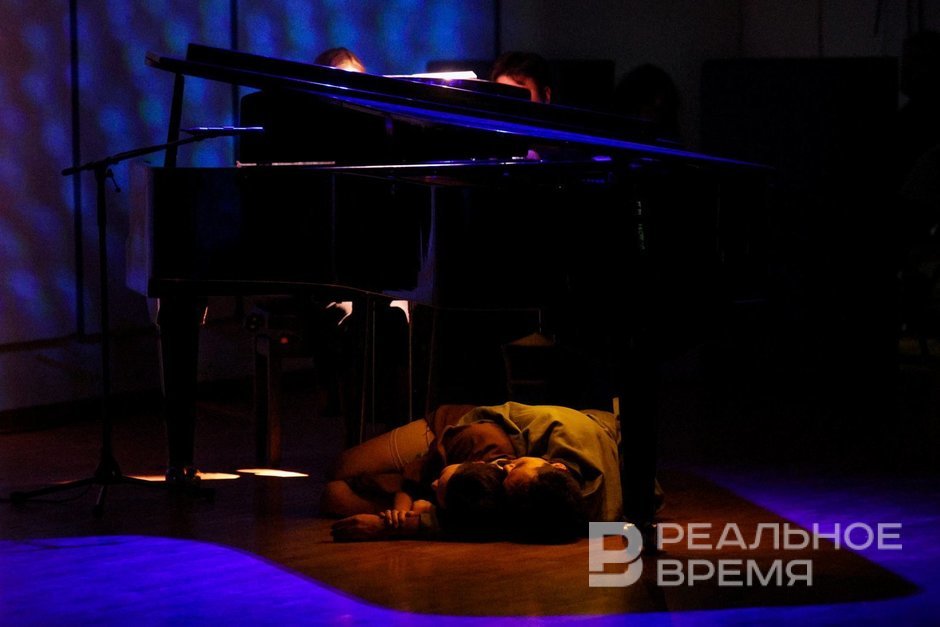
The characters fall, support each other, stage a struggle, fall asleep under the piano, Nur opens the door and runs outside, and soon Zyuhra rushes after him. The blinds go down.
At this moment, one recalled the play “Tan Vakıtı" (“Dawn”) by Nurbek Batulla, based on the poem of the same name by Sagit Ramiev, staged in this same hall in 2018, in which Nugmanova participated: at the end, the characters ran outside and continued to have fun there, and then the audience joined them.
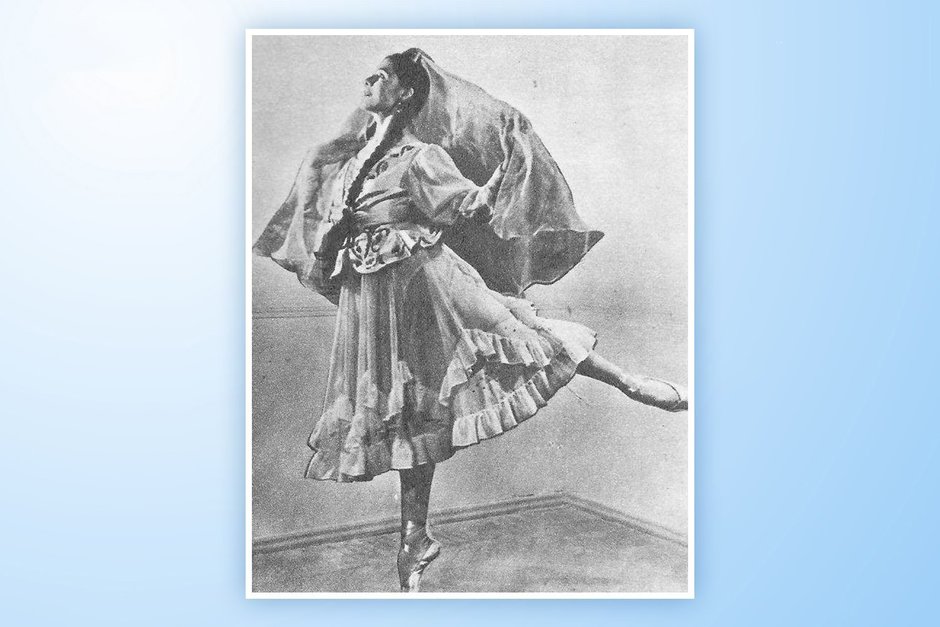
Ninel Yultyeva — 100
On March 8, 1945, the first Tatar ballet "Şurale” by Farid Yarullin was shown in Kazan. And in 1946, the ballet “Zyuhra” was staged (choreographer — Faizi Gaskarov).
This is Zhiganov's first “adult” ballet; earlier he wrote a children's one called “Fatih.” The title role in “Zyuhre” was danced by 20-year-old Ninel Yultyeva.
She was born in Ufa, studied in Leningrad at the Vaganova Choreographic School. When the war began, she had nowhere to return: her father, writer Daut Yultyev, was shot; her mother — in the camps. She worked in the Ufa Opera and Ballet Theatre and slept on its second tier. And later she came to Kazan — and made her debut in “Zyuhre," becoming the prima ballerina and artistic director of the ballet troupe. When the new opera house building opened in 1956, “Swan Lake” was shown. Yultyeva not only danced in it, she was its director.
Later she taught and also worked abroad: in Cairo and Caracas. She was the artistic director of the Kazan Choreographic School. She died on November 23, 2014. Shortly before her death, a documentary about her was filmed: the authors directly call her “the founder of the Kazan choreographic school.”
Her friend, writer Răbit Batulla (both his sons graduated from the school), at a daytime meeting dedicated to the ballerina's 100th anniversary, recalled that she called herself “Dinosaur Ninel Yultyeva.” And that means, Batulla elaborates, that she was a “dragon.” She also called herself “The Lone Wolf from Volkova Street.” And wolves in Tatar and Bashkir fairy tales are always good animals. That is how many remember Yultyeva — not only as an excellent dancer and teacher but also as a person full of optimism.
Yes, Yultyeva's 100th anniversary on her birthday, February 3, was held in an intimate setting at the school. As explained at the Jalil Opera and Ballet Theatre, the Chaliapin Festival is currently taking place here, so the 100th anniversary of Ninel Dautovna will be celebrated a little later, “but the events will also be worthy.” In particular, a performance in her memory is expected in the spring.