American Expansion: Indians, Vietnam, Indonesia, Iraq
«Real Time» has selected seven books about the foreign policy of the United States and how it was formed.
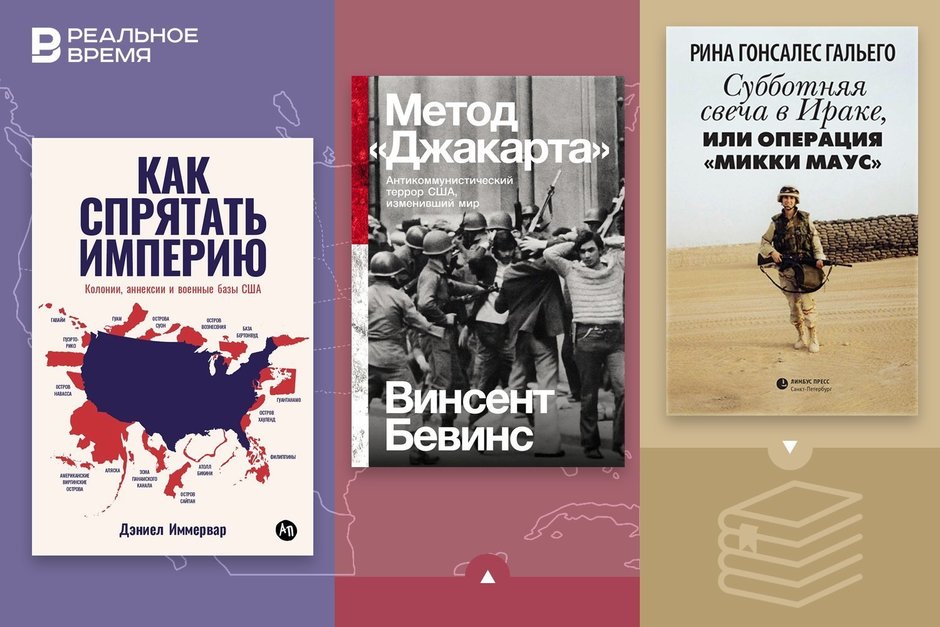
Lately, the United States has constantly reminded the world of itself as a force accustomed to acting far beyond its own borders: a special operation in Venezuela, Donald Trump’s threats regarding Greenland, and discussions about the future of the Gaza Strip. Many statements seem eccentric, but in fact they fit into the long and quite systematic tradition of American foreign policy. To understand what it is based on — from Indian wars and hidden empires to Vietnam, Indonesia, and Iraq — the literary reviewer of «Real Time», Ekaterina Petrova, has selected seven books that will help to examine American expansion.
Zbigniew Brzezinski, Brent Scowcroft. «America and the World. Conversations about the Future of American Foreign Policy», AST (16+)

This is a conversation between two heavyweights who know American foreign policy from the inside. Brzezinski and Scowcroft, former national security advisers, a Democrat and a Republican, deliberately put aside partisan flags and discuss the main thing: why the United States have lost the world’s trust and how to live in a reality where power no longer works directly. The book is structured as a series of conversations moderated by Washington Post journalist David Ignatius. The authors analyze the key issues of American foreign policy in the late 2000s: Iraq, the consequences of unilateral decisions, the rise of China, the return of Russia, nuclear proliferation, the Middle East, the crisis of alliances, and fear as a tool of politics. One of the central ideas of the book is that not only the world is changing, but the very nature of power is changing. Military power no longer guarantees a political result. Unilateral actions undermine trust. The rhetoric of fear destroys alliances. In these рассуждениях, it is easy to recognize criticism of the policies of the George W. Bush administration, but the authors look beyond: the problem is systemic, not personal.
It is also important where the authors disagree: Iraq, NATO, Russia, Iran. Scowcroft is cautious, Brzezinski is tougher. But the basic consensus remains: the United States needs partners, diplomacy, and the ability to take into account the regional context, not the reflexes of the Cold War. Both authors were among the few representatives of the establishment who publicly warned about the risks of invading Iraq in 2002–2003, including long-term occupation, the growth of anti-American sentiment, and the strengthening of Iran. Almost all of this came true. «America and the World» is a snapshot of the responsible center of American foreign policy thought. The book is useful not only for understanding the United States but also for understanding how the people who make decisions at the very top think.
Ivan Kurilla*. «Americans and Everyone Else: The Origins and Meaning of US Foreign Policy», «Alpina Publisher» (18+)
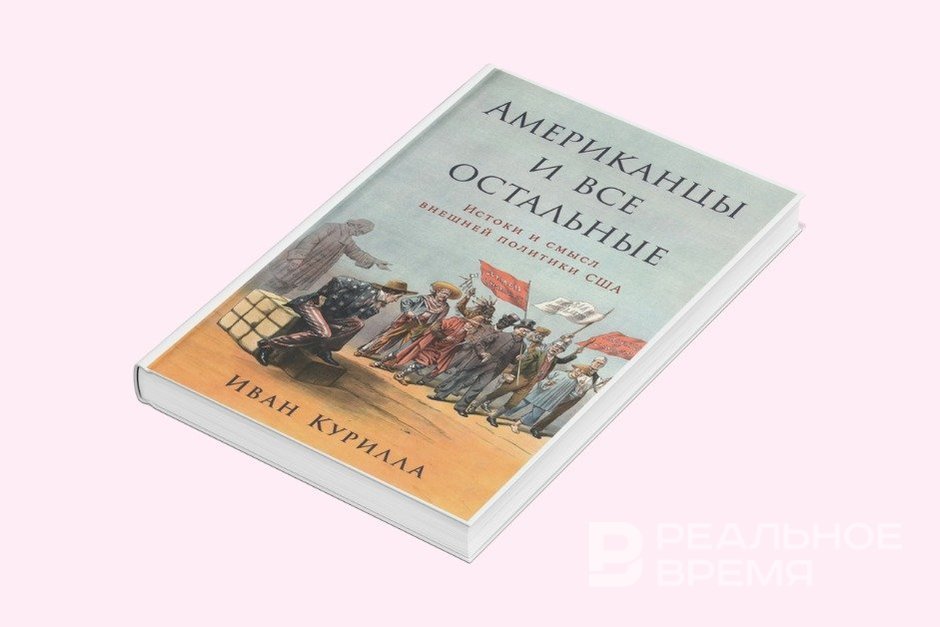
Ivan Kurilla* in the book «Americans and Everyone Else» analyzes what American foreign policy is based on and why it repeatedly reproduces the same moves. The main focus of the book is American identity. Kurilla* shows how the United States from the very beginning built its self-image through contrast with «others». First, it was the British Empire, then the Indians and supporters of slavery, later the USSR, and today China and Russia. The image of the enemy here is not a side effect but a systemic element. Without it, the American «we» begins to crack from within. The author explains how isolationism gave way to expansionism and idealism to pragmatic calculation, not displacing it but merging with it. The United States simultaneously believe in the universality of their values and act extremely rationally. Hence the constant tension between mission and interests, between moral rhetoric and tough politics.
Separately, Kurilla* talks about the Civil War: not as a war «for slavery» but as a war for the right to secede from the state. This shift changes the view on the American attitude towards self-determination. Before the war, the United States supported any separations, after the war, they became sharply cooler to this idea. The policy of principles turned out to be tied to their own experience. In addition, Kurilla* writes a lot about how the outside world sees America and why supporters and opponents of the United States often agree on one thing — the belief in America’s omnipotence. Only some consider this a blessing, others — the source of all evils.
*recognized as a foreign agent by the Ministry of Justice of Russia
Max Hastings. «Vietnam. The History of a Tragedy. 1945–1975», «Alpina non-fiction» (16+)
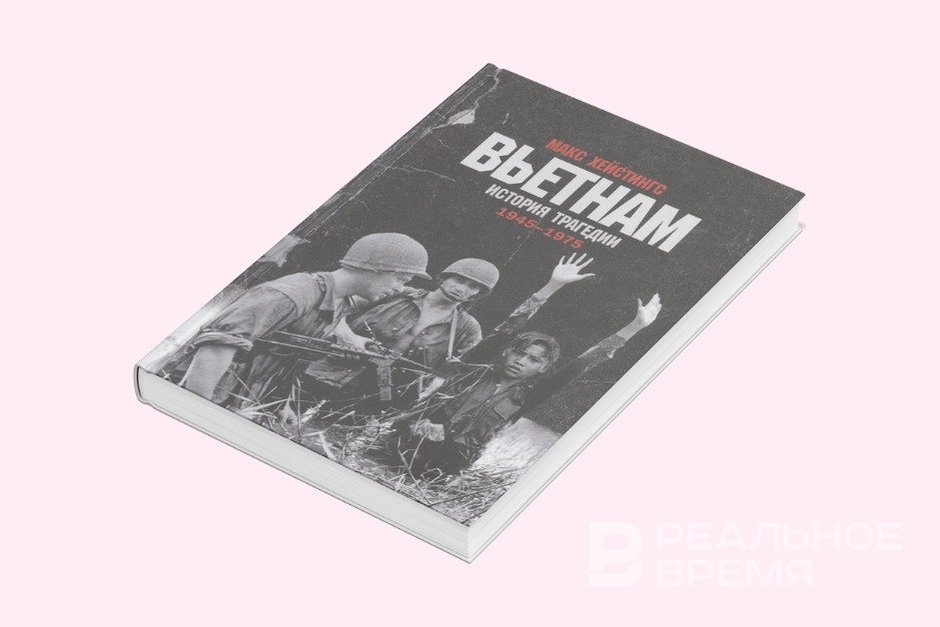
This is one of the most sober and harsh books about the war that the United States lost without ever understanding why they entered it. Max Hastings analyzes Vietnam as a 30-year catastrophe of a country caught between ideologies, imperial ambitions, and the Cold War. Hastings tells the story from 1945 — from the collapse of the French colonial project — to the fall of Saigon. Battles, politics, economics, propaganda, corruption, internal Vietnamese conflicts, the role of China and the USSR. Dien Bien Phu, the Tet Offensive of 1968, carpet bombing of the North, chemical warfare with defoliants, the massacre at Dai Do, where US marines were almost wiped out in a day. This is a chronology of a war of attrition. The key idea of the book is that the United States tried to compensate for the political weakness of South Vietnam with military force. It didn’t work. Neither the number of troops, nor the tonnage of bombs, nor technological superiority could replace a legitimate state and a clear goal.
The American command often acted грубо and blindly, committing war crimes and systemic mistakes. But Hastings also writes harshly about North Vietnam and the Viet Cong — about terror, mass executions, ideological cruelty, and complete disregard for human lives. This is a book about people in the war. The author shows the war from below, through dozens of private stories, without absolving political elites from responsibility. According to his estimate, about two million Vietnamese died — forty times more than Americans. Therefore, he calls Vietnam primarily a tragedy of Vietnam, not the United States. Hastings himself worked as a war correspondent in 11 conflicts and was personally in Saigon in 1975 during the days of its fall. He saw this war with his own eyes.
Peter Cozzens. «And the Earth Will Weep: How America Took Away from the Indians», «Alpina non-fiction» (16+)

This book is about how American expansion was carried out in practice. Peter Cozzens analyzes the Indian Wars of the second half of the 19th century as a long, exhausting campaign of the state against many scattered societies. The author tells the story chronologically — from the Great Plains to the Rocky Mountains. He shows how the federal government, the army, and settlers step by step pushed the indigenous peoples off the land. Through treaties that were immediately violated. Through reservations. Through punitive raids and «winter campaigns». Through direct massacres — Sand Creek, Piegan, Camp Grant, Wounded Knee. Cozzens says that the war was neither «genocide by plan» nor a struggle between good and evil. Washington did not set an official goal to destroy the Indians, but consistently deprived them of the opportunity to live as before. The army acted brutally and often criminally, but there were officers within it who openly sympathized with the Indians. The tribes, in turn, were not a united front: they fought among themselves, entered into alliances with the army, and were themselves recent conquerors of the Great Plains.
Cozzens also debunks myths created by both Hollywood and the counterculture of the 1960s–1970s. His book is a conscious polemic with «Bury My Heart at Wounded Knee» by American historian Dee Brown. There are fewer slogans and more cold analysis: demography, logistics, the state of the army, the economics of resettlement, political decisions of the White House. After the Civil War, the United States had 35 million inhabitants and about 250 thousand Indians. The outcome was predetermined. Peter Cozzens is not only a historian but also a retired diplomat with 30 years of experience, a laureate of the main award of the Association of American Diplomatic Service. Perhaps that is why the book reads like a study of how state policy on the periphery turns into a long war and why external expansion always begins with internal decisions.
Daniel Immerwar. «How to Hide an Empire. Colonies, Annexations, and Military Bases of the USA», «Alpina Publisher» (16+)
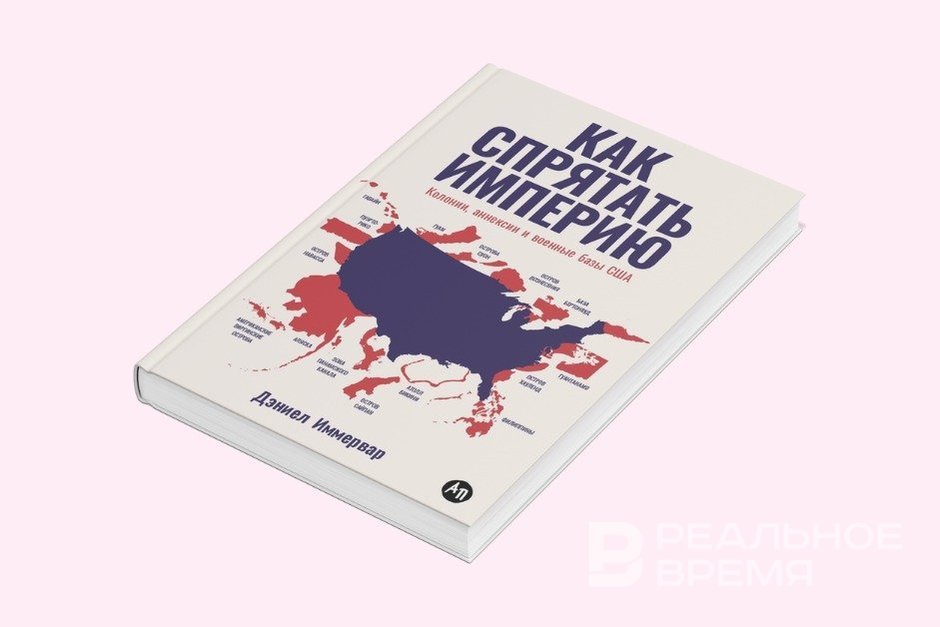
Daniel Immerwar in the book «How to Hide an Empire» states that the United States is an empire. It’s just that this empire has long learned to disguise itself. The book tells the story of the United States beyond the «logo map» — the usual 50 states between Canada and Mexico. Immerwar shows how the United States in the 19th and 20th centuries captured, bought, and annexed territories: the Philippines, Puerto Rico, Guam, Hawaii, Alaska, dozens of islands in the Pacific Ocean and the Caribbean. Many of them were needed not for settlement but for resources, logistics, and control. People, if possible, were left out of the picture. The key idea of Immerwar is the rejection of the idea that American imperialism ended after World War II. It just changed form. Instead of colonies — military bases. Instead of direct control — standards, technologies, logistics, and control of supply chains. Immerwar calls this a «pointillist empire»: hundreds of points on the map connected by infrastructure and the army. Today, the United States has about 800 foreign military bases. All other countries in the world have about thirty. The author details why America voluntarily abandoned the formal empire after 1945. Not out of humanitarianism. Technology made land less important. Synthetic materials replaced raw materials, aviation and communications reduced distances, and oil remained the only resource that still adhered to the old logic of capture. Hence — the Middle East, Venezuela, and endless «temporary operations».
The book contains a lot of hard facts: suppression of uprisings in the Philippines, medical experiments in Puerto Rico, racism as a factor of foreign policy, World War II as the most destructive war «on American territory» — if you count the colonies. By the way, in 1945, more than half of the people under the US flag lived not in the states but in occupied or colonial territories. And this explains a lot.
Vincent Bevins. «The Jakarta Method», «Alpina non-fiction» (16+)
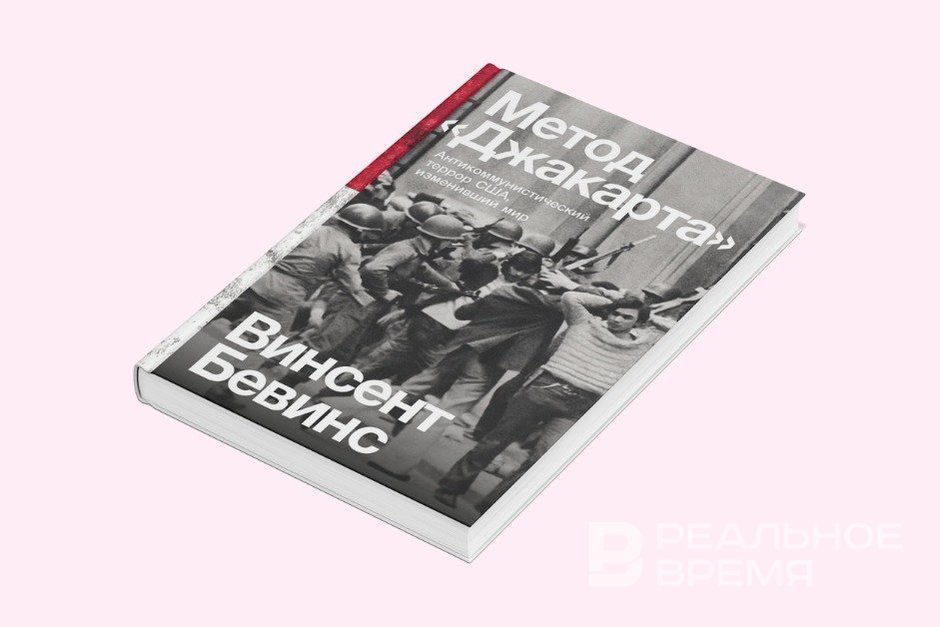
Vincent Bevins examines one specific case: the mass killings in Indonesia in 1965–1966 and shows how it turned into an exportable model of global policy. «Jakarta» became a code word for the destruction of leftist movements by the hands of local allies with the support of Washington. In Indonesia, up to a million people were killed in a few months: members of the Communist Party, trade union activists, teachers, peasants, and simply «suspicious» people. The United States did not send troops. They provided lists, trained the military, provided diplomatic cover, and applauded the result. The Communist Party of Indonesia — the third largest in the world — disappeared almost instantly. The country резко changed its political course, and for Washington, it was a success. The same logic was then applied in Brazil, Chile, Guatemala, El Salvador, and the Philippines. Mass terror instead of «boots on the ground». Coups instead of reforms. Killings as a way to structure the political field. The book details how the «Jakarta Method» fit into the broader system of the Cold War, where the fate of communism as an ideology was not at stake, but the question of controlling the post-colonial world was.
This book is a journalistic investigation compiled from archives, declassified documents, interviews with survivors and diplomats. The author connects big numbers with specific stories of families who have been silent for decades because silence was a condition for survival. The book raises the question: if this is how the current world order was built, can it be considered morally neutral? And another, more unpleasant question: if this method worked once, why not repeat it?
Rina Gonzalez Gallego. «Saturday Candle in Iraq, or Operation «Mickey Mouse», «Limbus Press» (16+)
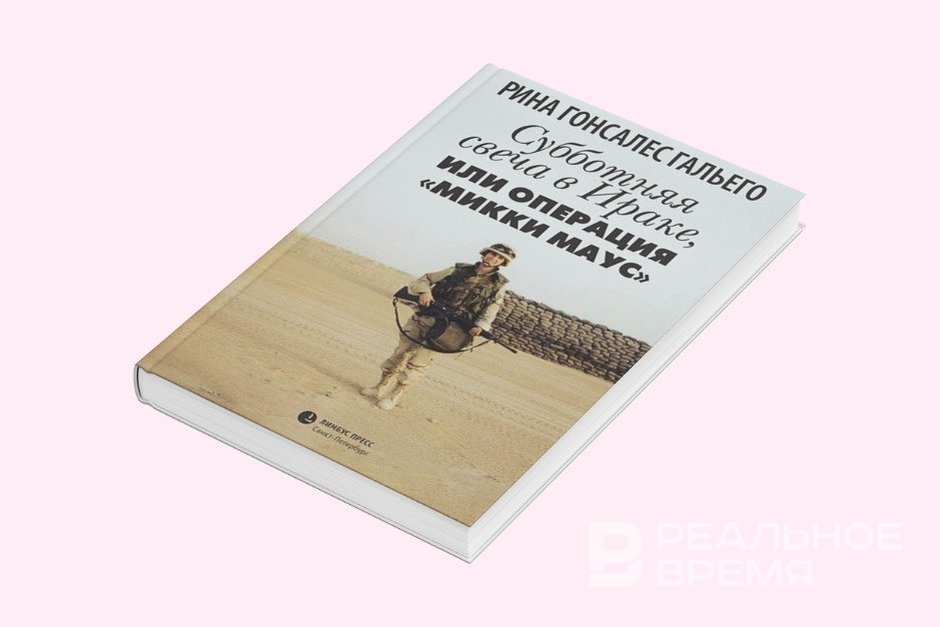
This book is about what the American war in Iraq looked like from the inside of everyday life. Rina Gonzalez Gallego served in the US Army as a military lawyer and wrote 22 short stories about people who found themselves inside a large operation. The format is sketches of an eyewitness. Soldiers, officers, wives, doctors, lawyers, Iraqi children, families on both sides of the ocean. Here, the wives of the fighters raise money and buy additional armor for army jeeps. Here, a soldier is tried for «looting» — he sent a saber that was used to attack him back home. Here are letters between a husband and a wife that are cut off by a notification of death. Here is a girl in Iraq for whom the American base is the only place where she is not beaten or touched. The book hardly talks about battles. Instead, it details the infrastructure of war: legal proceedings, discipline, army bureaucracy, religion, everyday life, fear, and a strange mix of humanism and official coldness. War here is a mode of operation with contracts, complaints, shifts, and very human fatigue.
It is important to understand that this is a view from within the American system of values. Gallego does not doubt the righteousness of the mission and does not question the invasion itself. For her, Iraq is a place of service, not an object of reflection. Rina Gonzalez Gallego wrote the book in Russian. She is from the post-Soviet space, lives in the United States, and is married to Ruben David Gonzalez Gallego, a winner of the Russian Booker Prize.
Ekaterina Petrova is a literary reviewer of the online newspaper «Real Time» and the host of the telegram channel «Buns with Poppy Seeds».