What to read: the Islamic Revolution, Persian swearing, underground life and tea parties in Iran
Real Time has compiled a list of 10 books that offer insights into the inner workings of Iran.
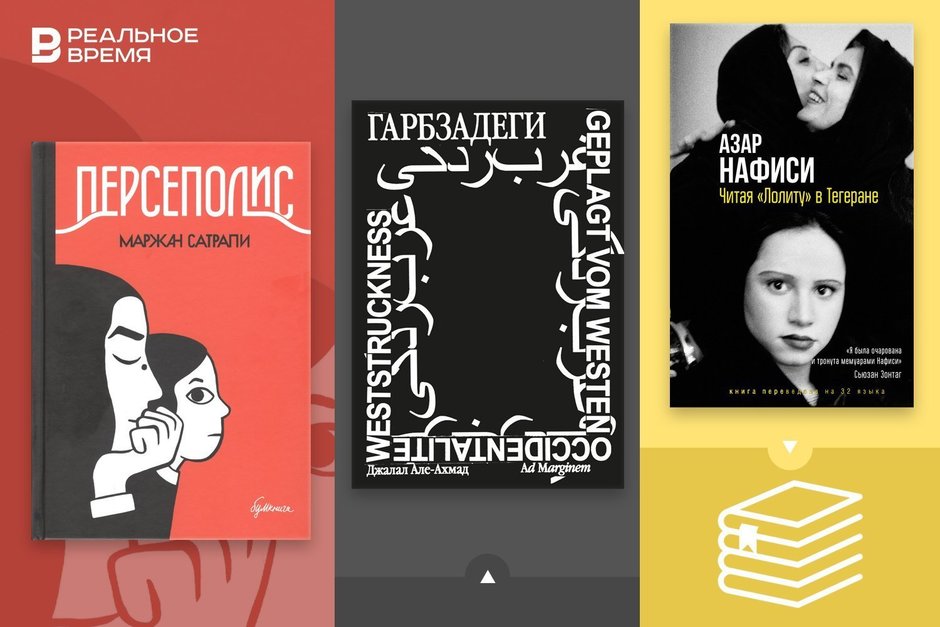
Since the beginning of 2026, Iran has once again been engulfed in mass protests. Strikes, street clashes, riots in the regions, harsh crackdowns, and near-total silence from official sources. To understand what is really happening and why the country is boiling over again, news summaries are not enough. Ekaterina Petrova, the literary reviewer for Real Time, has compiled a list of books that dissect Iran from the inside: politics, everyday life, family, prisons, emigration, and literature. These texts explain how the system works, where public loyalty and private life exist in different dimensions, and why Iran cannot be understood without its contradictions.
Nikita Smagin*. Everyone’s Iran, Individuum (18+)
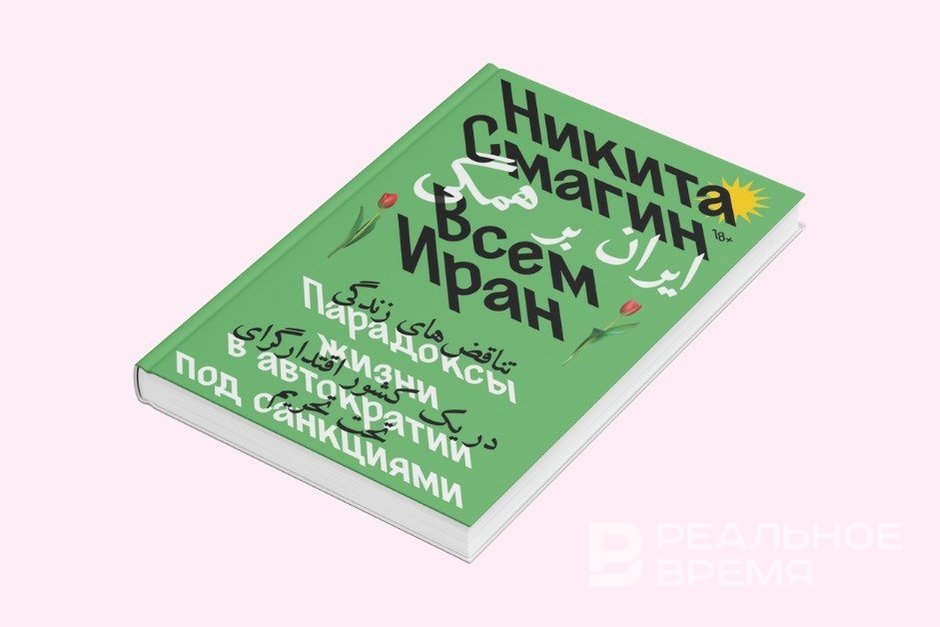
Everyone’s Iran by Nikita Smagin* is a rich and detailed explanation of what life is really like in the Islamic Republic under sanctions. Smagin* lived in Iran for several years and wrote a book from within the system. He examines how the Iranian authorities work: a lifelong supreme leader, real competitive presidential elections, the eternal confrontation between conservatives and reformists, and the regular failures of attempts to reach agreements with the West. At the same time, there is a social state with free education, health insurance, cheap mortgages, and a high proportion of women in universities. The book is built on contradictions. Apostasy is prohibited in the country, yet there are many atheists. Anti-American slogans are part of the ritual, while iPhones, raves, and underground parties are part of everyday life. There is media censorship, yet there is also a strong auteur cinema that regularly wins awards at Cannes and the Oscars.
The author does not smooth out the edges. The book includes «honour killings», brutal crackdowns on protests, the «gasoline riots» of 2019, and the protests of 2022 following the death of Mahsa Amini. Smagin* records facts, conversations, fear, and anger, and notes that no Iranian best practices can simply be transferred to another country. The book ends with a dictionary of Persian swear words, because, according to the author, it is impossible to seriously talk about politics with Iranians without it.
*Recognised as a foreign agent by the Russian Ministry of Justice
Jalal Ale-Ahmad. Gharbzadegi, Ad Marginem (18+)
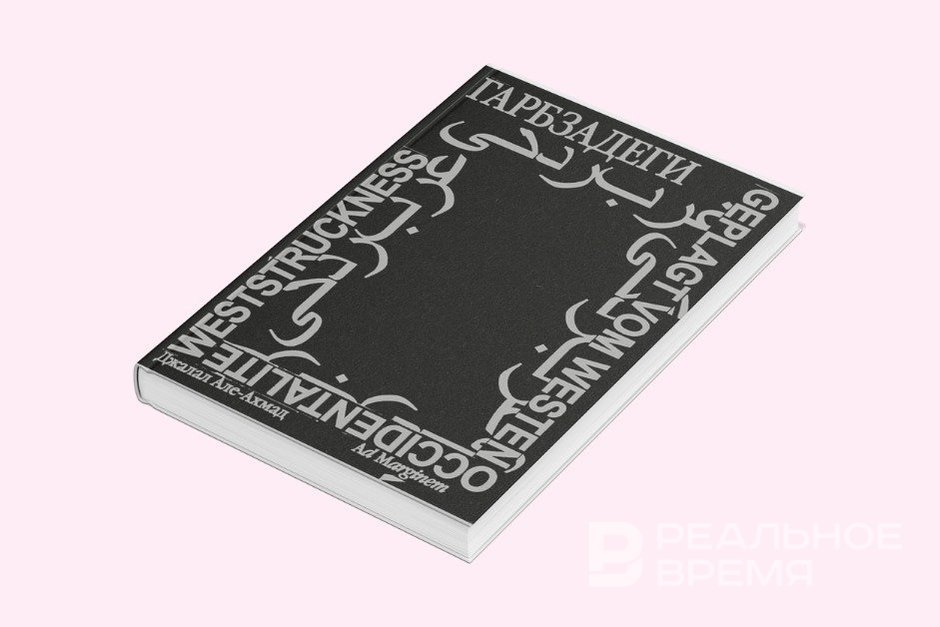
Gharbzadegi by Jalal Ale-Ahmad is a short and angry essay on how Iran found itself trapped in someone else’s modernisation. It is a politico-cultural diagnosis of the country in the early 1960s. The key concept is «gharbzadegi», literally «afflicted by the West». Ale-Ahmad describes Iran as an economically dependent periphery: the country supplies raw materials, imports ready-made technologies, ideas, and lifestyles, and loses its agency. The West is presented here as a system: industrially developed states that produce, and the East that consumes. The author includes not only the USA and Europe but also the USSR in this category. The criticism is not directed against progress as such. Ale-Ahmad attacks blind copying, the «machination» of life, the transformation of a person into an appendage of technology and the market. He is particularly harsh on intellectuals who look at their own country through the eyes of Western experts and trust them more than themselves. For the author, this is the main symptom of the disease.
This essay initially existed as a report for a cultural council, but due to its scandalous nature, it was refused publication. The first edition was published almost clandestinely, the magazine that printed fragments was closed, and the second edition was banned by censorship. During the author’s lifetime, the book did not become a hit in Iran, but later it turned into one of the key texts that influenced the rhetoric of Iranian politics and the very concept of national identity.
Ramita Navai. The City of Lies, Bombora (18+)
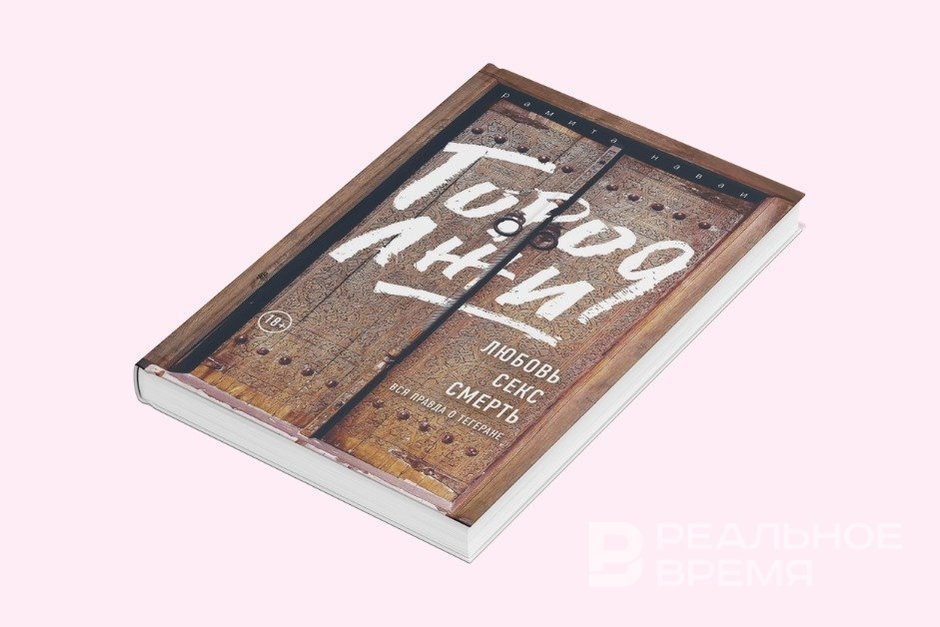
The City of Lies by Ramita Navai is an analysis of what everyday life in Tehran is really like, where lying is not a vice but a basic survival skill. Navai builds the city from eight stories, moving along Vali Asr Street — from the wealthy north to the poor south. A Basij guy who beats people to hide his sexuality. A prostitute who became a star of homemade porn. A religious family father who flies to Thailand for sex. A political killer. These are typical figures of a system where public piety and private life exist in parallel worlds. The book describes in detail how the laws of morality work: bans on sex, alcohol, and «improper» behaviour do not destroy demand but simply drive it underground. This leads to a cult of plastic surgery, underground parties, фиктивные marriages, secret abortions, and an economy of hypocrisy. Family honour, religion, and fear are tools of social control here.
Navai is a British-Iranian journalist who worked as a correspondent for The Times in Tehran. She lost her accreditation for «inconvenient» texts and then began to gather material as a private person, from conversations and observations. The City of Lies won the Debut Political Book of the Year award and at the same time received criticism for the fact that the truth in Iran can often only be told through masks and collective images.
Rebecca Law. The Long Road to Tehran, Individuum (18+)
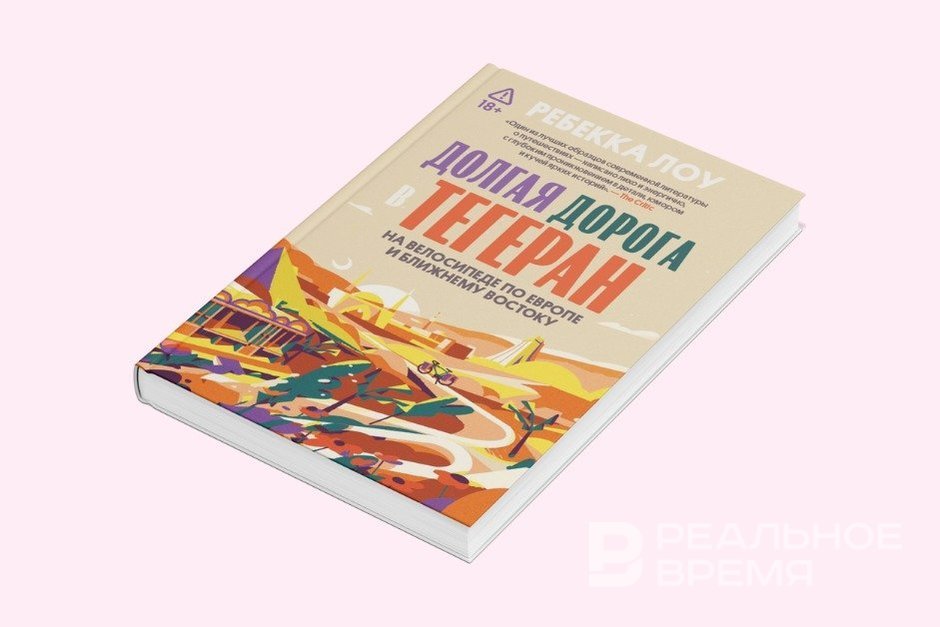
The Long Road to Tehran is a report from a distance of 11 thousand kilometres, which British journalist Rebecca Law uses as a way to talk about politics, violence, borders, and everyday life in the Middle East, with the final point in Iran. In 2015, against the backdrop of the Syrian war and the migration crisis, Law set off from London to Tehran alone, with almost no preparation. Along the way, there is Europe, Turkey, the Middle East, deserts, dictatorships, checkpoints. She spends the night with random people, lives through Couchsurfing, visits refugee camps, meets activists, doctors, religious conservatives. She records everything: sexism, навязчивые harassment, fear, fatigue, bureaucratic absurdity, as well as generosity, sense of humour, and the willingness to help that constantly saves her life. Law does not противопоставляет «ordinary people» to «bad politics» and does not pretend that the media are all lying. On the contrary, she shows how politics directly shapes everyday life: what you can say, how to dress, who to fear, and who to trust. Iran in this route is a logical conclusion to the conversation about a region where private life is always connected with the state.
Sepideh Golan. The Baking Circle of Evin Prison, Eksmo (18+)

The Baking Circle of Evin Prison by Sepideh Golan is not a memoir in the usual sense and certainly not a cookbook. It is a document about the lives of women in one of the most famous Iranian prisons, compiled from facts, bodily experiences, and sixteen sweet pastry recipes. Golan describes Evin without generalisations or slogans. Surveillance cameras. Interrogations. A secret abortion in the corner of a prison toilet. Long hours in solitary confinement. Humiliations that become routine. And alongside this, there are cupcakes, pies, cookies. Each recipe is tied to a specific woman and her story: a political prisoner, an «ordinary» convict, a mother, an activist, a victim of the system. Baking here is a way to fix memory, solidarity, and the right to pleasure where there should be none. Golan wrote the book inside the prison and secretly passed it out — on scraps of paper, through photos and messages. After her release in 2023, Golan publicly removed her hijab and called for the overthrow of the supreme leader. A few hours later, she was arrested again. She is still in Evin.
Marjan Kamali. In the Land of Tea Cups, Inspiria (16+)

In the Land of Tea Cups by Marjan Kamali is a novel in which Iran is shown through the lens of a family, everyday life, and everyday conflicts. The story revolves around Mina, an Iranian woman who grew up in Tehran and matured in New York, and her mother Daria, for whom her daughter’s happiness is still measured by a successful marriage. Half of the book takes place in America: tea on Sundays, potential suitors, Excel spreadsheets with pros and cons of the candidates, an MBA that doesn’t bring joy. The second half is about returning to Iran after a fifteen-year break: different rules, different fears, relatives who have stayed behind, a city that seems familiar but lives by new laws. Kamali delicately shows how the revolution and war change everyday мелочей: clothing, conversations, ideas of «normal», the boundaries of what is acceptable. The book examines the conflict of generations within an Iranian family in exile. The father and sons quickly «Americanise». The mother and daughter get stuck between cultures. For Daria, Iran is a lost professional life and unfulfilled ambitions. For Mina, it is a place where she can finally understand who she is and what she wants, вне the expectations of family and society.
Azar Nafisi. What I Didn’t Say, Livebook (16+)
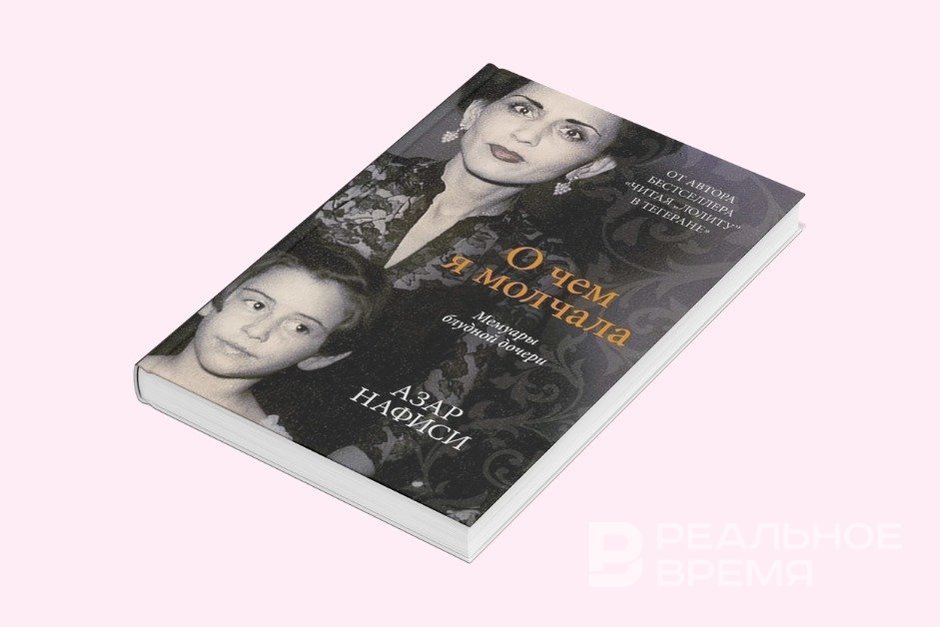
What I Didn’t Say is Azar Nafisi’s second book. It contains a lot of talk about family, power, and the price of silence. These are the memoirs of the daughter of the Iranian elite, who grew up within a privileged but toxic family against the backdrop of the country’s collapse. Nafisi describes her childhood in the house of the mayor of Tehran, the arrest and imprisonment of her father, his departure from the family, and destructive relationships with her mother — a smart, politically active, but жёсткая and oppressive woman. At the same time, there is the взросление of the heroine, studying abroad, an early marriage as a way of escape, divorce, return to Iran, the 1979 revolution, the collapse of hopes, pressure from the new regime, and eventually emigration. This book is about the mechanisms of power: how they work in the family, marriage, and the state. And how the habit of silence — at home or in politics — maims no less than direct violence. The text of the book grew out of a personal list «What I Didn’t Say», which Nafisi began to keep immediately after the Islamic Revolution — as a way of resisting internal censorship.
Marjane Satrapi. Persepolis, Boomkniga (18+)
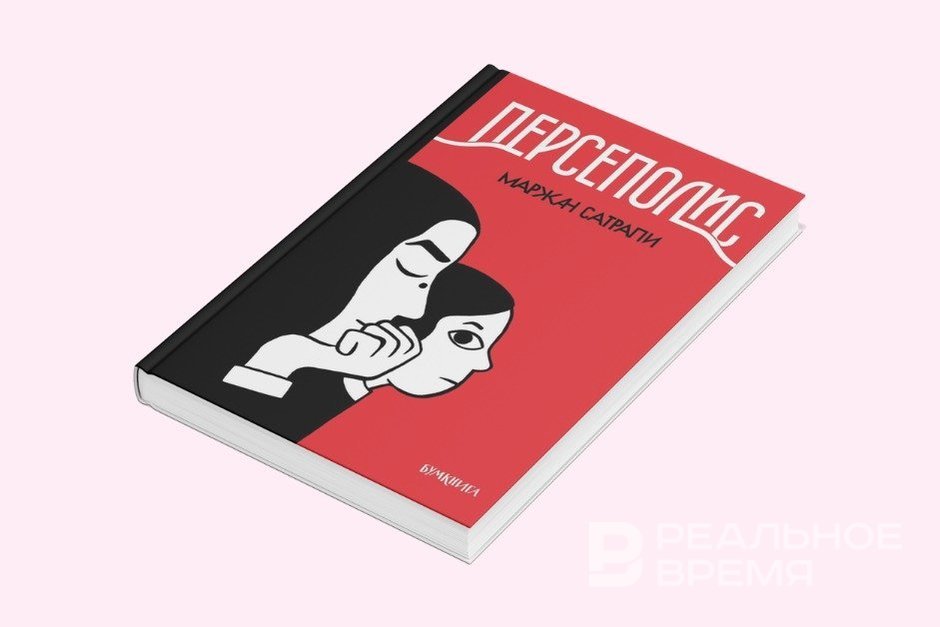
Persepolis by Marjane Satrapi is a graphic novel in which the history of Iran is told through the private life of one family and the взросление of a girl who is too young to face revolution, war, and state violence. The book begins with Satrapi’s childhood in Tehran: the fall of the Shah, the euphoria of the Islamic Revolution, the rapid turn to repression, the mandatory hijab, the war with Iraq, executions, prisons, the cult of martyrdom. All of this is seen through the eyes of a child from an educated family with left-wing views. It is this angle that makes the text particularly powerful: complex political processes are shown through school lessons, family conversations, fear for loved ones, and first attempts at resistance. Then there is the вынужденный departure to Europe: Austria, loneliness, cultural gap, poverty, depression, street life. Then the return to Iran, where the regime has become жёстче during the years of absence: control over clothing, relationships, the body, private life. Studying, secret parties, marriage, divorce, and the final departure to France.
Satrapi shows a key aspect of Iran: the radical разрыв between the public and the private. At home, there are parties, alcohol, irony about the authorities. On the street, there is fear, censorship, and rules, the violation of which can cost you your life. After Persepolis, the political reality of the country becomes clearer than after a dozen analytical texts. This чёрно-белый graphic novel has sold over 2 million copies, and attempts are regularly made to ban it in American schools. In 2007, Satrapi herself directed an animated adaptation of the film, which won the Cannes Jury Prize and was nominated for an Oscar.
Sadeq Hedayat. The Blind Owl, Azbuka (18+)
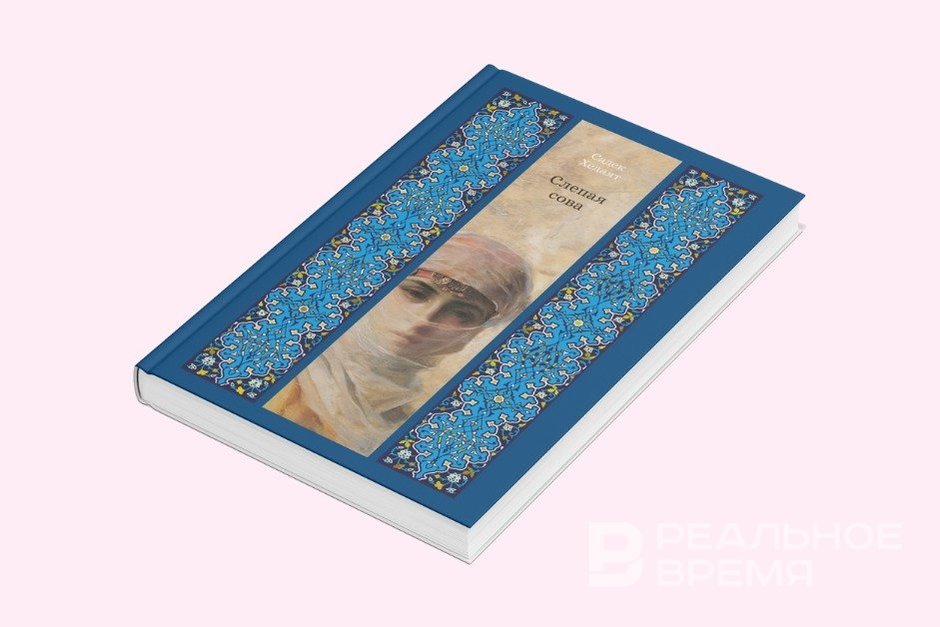
Almost all modern Iranian prose, in one way or another, grew out of the work of Sadeq Hedayat. Formally, The Blind Owl is the confession of an unnamed narrator. But in fact, it is an analysis of the психики of a person who no longer distinguishes reality from delusion. The hero lives in a замкнутом space, drinks, smokes opium, writes to his shadow, and constantly returns to one image: a woman, a flower, an old man. The plot breaks into two parts. In the first, there is the mystical figure of the «woman with empty eyes», death, a dismembered body, a suitcase. In the second, there is marriage, hatred, jealousy, humiliation, the murder of a wife. All the characters rhyme with each other, change masks, merge. In the end, only the narrator’s voice and the feeling of a circle from which there is no exit remain. This is not a book about Iran as a country, but a very accurate text about the state of society. Isolation. Distrust of the world. The feeling of a тупик. It is no coincidence that Hedayat is read both politically and экзистенциально — the text withstands both interpretations.
The Blind Owl was first published not in Iran, but in Bombay — about 50 copies, with the note «Printing and sale in Iran are prohibited». Hedayat was sure that censorship would not allow the book to pass. He was right. Today, it is the most famous Iranian novel of the 20th century and one of the first модернистских texts in the Persian language.
Azar Nafisi. Reading Lolita in Tehran, Livebook (16+)
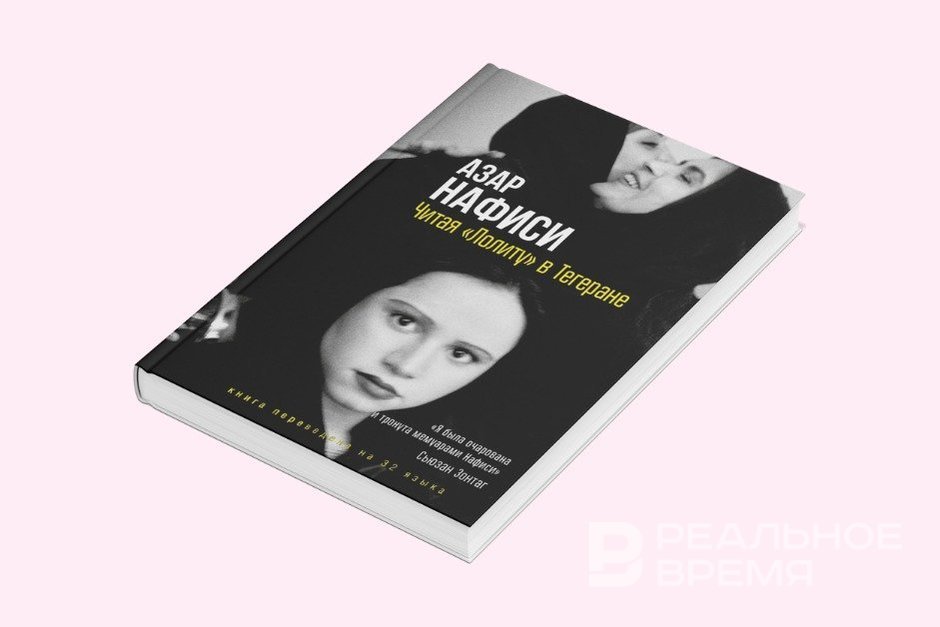
Azar Nafisi has written a dense non-fiction book about life inside the Islamic Republic. Reading Lolita in Tehran is the memoirs of a professor who returns from the USA to Iran on the eve of the revolution, loses her university, job, and the right to teach freely, and eventually goes underground with her students. After the ban on «Western» literature, Nafisi gathers seven former students at her home. Once a week, they read Nabokov, Fitzgerald, Henry James, and Jane Austen. Without headscarves. With the risk of denunciation, arrest, and prison. Discussing books becomes a way to talk about power, violence, choice, and personal boundaries — topics that cannot be discussed publicly. The book is structured like a course of lectures: four parts — «Lolita», «Gatsby», «James», «Austen». Each part is about a specific stage of Iranian history and a specific type of pressure. «Lolita» here is about the assignment of someone else’s life. «Gatsby» is about the revolution as a destroyed dream. «James» is about the страх of uncertainty, which totalitarian systems hate. «Austen» is about women’s choice in a world where everything has already been decided for you. Nafisi writes about the mandatory hijab, purges in universities, the war with Iraq, prisons, interrogations, emigration. And she shows how ideology invades everyday life: clothing, vocabulary, gestures, even the way books are read.
The book was published in 2003, remained on the New York Times bestseller list for over 100 weeks, and was translated into more than 30 languages. And in 2023–2024, a film was made based on it, which unexpectedly turned out to be relevant again — this time against the backdrop of women’s protests in Iran.
Ekaterina Petrova is a literary reviewer for the online newspaper Real Time and the host of the Telegram channel «Macaroon Buns».