Tatarstan residents triple their overdue mortgage debt
Over the past year, the volume of overdue housing loans in the republic has risen from 1.9 to 5.7 billion rubles

The total mortgage debt of Russians has reached a record 19.9 trillion rubles. But experts are alarmed by the volume of overdue housing loans, which has doubled nationwide over the year to 179 billion rubles, and in Tatarstan has even tripled — reaching 5.7 billion rubles compared with 1.9 billion a year earlier. More on what this means, how likely a mortgage bubble is to emerge, and what else is happening in the real estate market as interest rates begin to fall — in the report by Realnoe Vremya.
“Demand will persist in November and December”
The housing market in Kazan and Tatarstan is experiencing noticeable activity. October proved to be a record month for the secondary market, Rosreestr RT reported, adding that further growth in transactions is expected given the traditional increase at the end of the year. In total, 16,371 property rights transfers based on sales contracts (DCP) were registered for the month, by 15.5% more than in September. Transaction numbers increased across all segments in the republic, with the largest growth in apartments:
- Residential premises — 6,233 (+23.6%)
- Individual houses — 1,466 (+13.6%)
- Land plots — 7,915 (+10.4%)
- Non-residential premises — 757 (+13.2%)
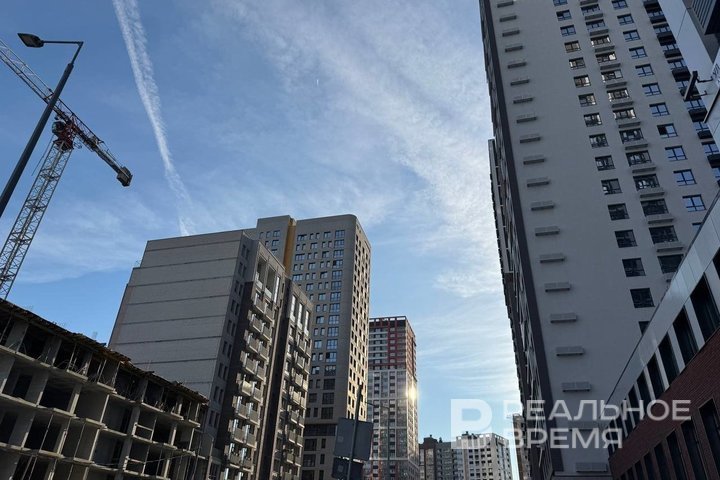
Mortgage transactions have also risen significantly, according to the agency’s report on the Open Tatarstan portal. In October, 7,003 housing loans were issued in the republic (+13%), including 2,666 in Kazan (+18%).

Mortgage arrears in Tatarstan have tripled
Over the past year, Russians’ mortgage debt has increased by nearly 700 billion rubles, reaching a record 19.9 trillion (+3.5%), according to the Central Bank. The regulator reported that this autumn, twice as many housing loans were approved compared with the beginning of the year. Citizens have had time to accumulate funds and are ready to make larger down payments.
Tatarstan residents increased their housing loans to 683 billion rubles over the year, up 33 billion (+5%) from a year earlier. Meanwhile, experts point to other worrying trends. Overdue mortgage debts have grown sharply both nationally and in the republic. Nationwide, overdue debt doubled from 83 billion to 179 billion rubles, while in Tatarstan it tripled — from 1.9 billion to 5.7 billion rubles.
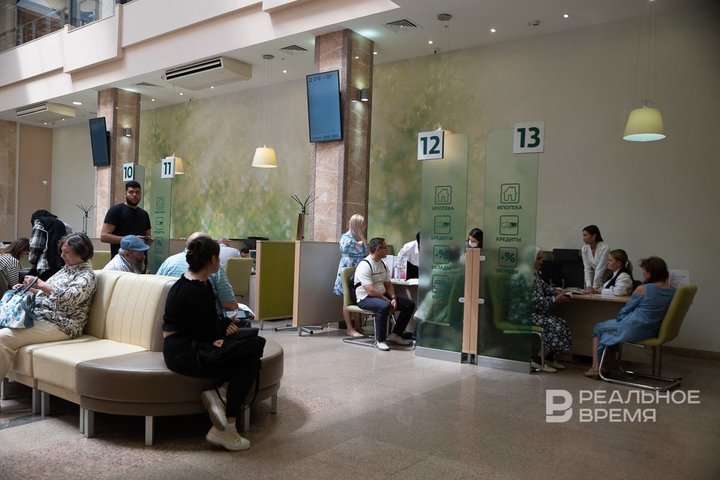
The republic ranks first in the Volga Federal District for mortgage arrears, followed by Bashkortostan with 5.6 billion rubles and Samara region with 3.2 billion. Overall, overdue housing loans in the Volga region rose 2.4 times to 28 billion rubles over the year. Nationwide, Tatarstan ranks sixth among the top 10 regions with the largest overdue mortgage debt.

She noted that despite the threefold growth, the volume of overdue mortgage debt in Tatarstan remains low, and the share of arrears corresponds to the national average (0.8% of the portfolio). However, other experts still view the trend negatively.

Still, he believes it is premature to speak of a mortgage bubble in the Russian market: “The share of household mortgage debt relative to GDP remains low by global standards; the share of overdue loans in domestic banks’ mortgage portfolios is also relatively low. In Tatarstan, the share of overdue mortgages is about 0.8%, lower than the national average of 0.9%.”

Nevertheless, the rising trend in mortgage arrears is concerning given the possibility of new economic shocks, as well as geopolitical and other risks. To prevent rapid risk accumulation in the banking system, the Bank of Russia applies strict macroprudential measures on mortgage lending, including direct limits on loans to highly indebted individuals. Banks, in turn, apply strict requirements to potential borrowers, with refusal rates exceeding 60% nationwide. “I believe all this will ultimately keep the situation under control,” the analyst added.
By the end of 2025, domestic banks’ mortgage portfolios are expected to grow 4–5% following a 10.9% increase last year.
“Many bought apartments without considering whether they could afford them”
The Central Bank notes that while the doubling of overdue mortgages from 0.5% to 1% is significant, it remains moderate in absolute and historical terms. Previously, the country saw higher rates, such as over 3% in 2015–2016.
The current increase in problem mortgages is linked to the “maturing” of loans issued in early 2024 and 2023, when borrower requirements were too lenient. Experts expect the Bank of Russia may tighten mortgage conditions again.

He recalled the frenzied demand in previous years: “First, people bought saying: everyone is buying, so we must too. Second, programs offered low down payments. Yes, it was tempting: you buy an apartment and pay nothing upfront, but the monthly payment was high. I already foresaw that most people who hadn’t saved for a down payment would struggle to pay 70–80 thousand rubles per month. Sooner or later, they would fall into financial trouble.”
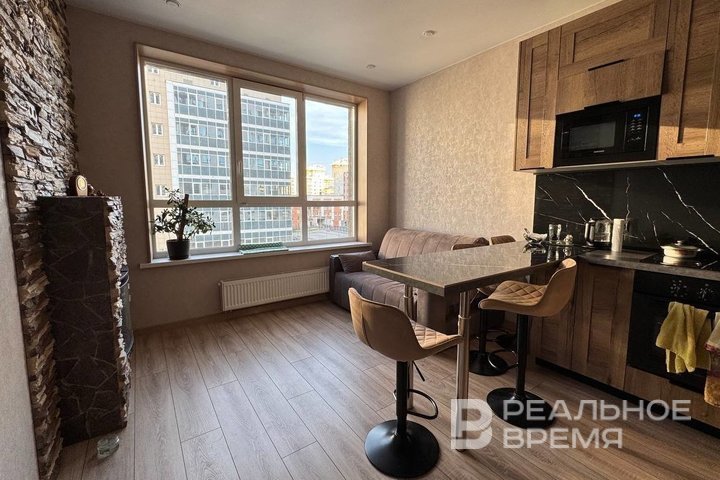
According to Safin, this is one reason for the sharp rise in arrears. Many Tatarstan residents who bought housing on borrowed funds over the past couple of years had no financial plan for repaying their mortgages.
“We see growth, and this year also contributed — many took mortgages they didn’t need. People bought just to have property, not as investors or for life purposes. A typical buyer approaches the process reasonably, understanding how they will pay the mortgage. So, the problem lies with the borrowers,” he emphasized.