Tatarstan and Perspektiva establish a venture fund worth 4-6 bn rub
The New Chemical Industry fund will operate under the management of two teams — the Investment and Venture Fund of the Republic of Tatarstan and Moscow’s New Industry
Tatneftekhiminvest-Holding, together with the Perspektiva venture fund ecosystem, has established the venture fund New Chemical Industry (NCI) with seed capital of 4–6 billion rubles. Its main purpose is to overcome dependence on imports in the field of small-scale chemistry. “Our dream is to build here a regional technological infrastructure in which project companies will be able to replace imported technologies,” explained Gazprombank Deputy Chairman Dmitry Zauers at TNF-2025. Rafinat Yarullin has been elected Chairman of the fund’s Scientific and Technical Council. Under his leadership, the management companies will select projects for equity participation in order to ultimately increase the profitability of venture investments.
Growing a new industry the Chinese way
The establishment of the new venture fund New Chemical Industry (NCI) was announced during the presentation of the new ecosystem of Russian funds, unveiled at the plenary session of the XXXII Tatarstan Oil, Gas and Petrochemical Forum in Kazan. The NCI fund was created jointly with Tatneftekhiminvest-Holding JSC and the Russian Direct Investment Fund, according to the slides presented. Within the venture financing ecosystem, it has taken a special place, as it is aimed at creating domestic technologies in small-scale chemistry.
“Technology is a global factor of competitiveness and fully determines the shape of a nation’s economy,” stated Gazprombank Deputy Chairman Dmitry Zauers at the time.
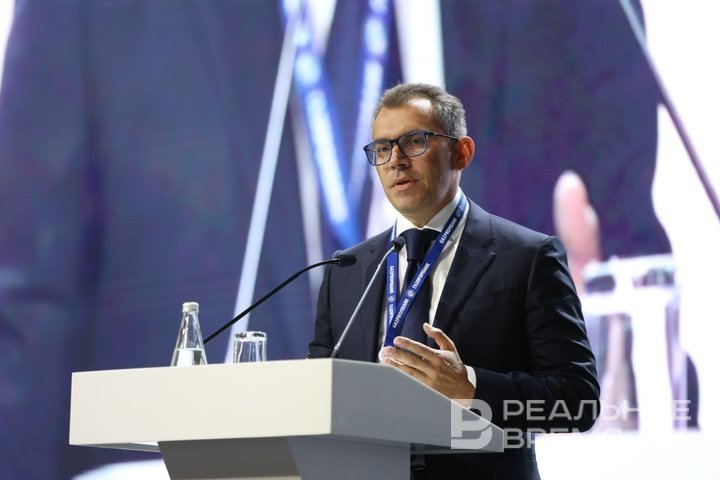
According to him, the state is ready to take an active part in financing the creation of advanced innovative products that will ensure the country’s technological sovereignty in the future. “In a market environment, it is almost impossible to create large new industries, which is why we are guided here by China’s experience,” he noted. And a new industry must be created now so that “in 10–15 years we will have a new Tatneft, new companies,” he believes.
The United States and China are directing enormous investments into science, and Russia does not intend to lag behind. “By 2030, the share of high-tech products should amount to 78 trillion rubles, and spending on research and development should increase to 2% of GDP, that is, double,” Dmitry Zauers reminded, referring to the target task of achieving technological sovereignty set by the country’s leadership.
Head of TNHI-H, Rafinat Yarullin, entrusted with selection
New Chemical Industry is a venture fund established by Tatneftekhiminvest-Holding with the participation of Moscow’s Perspektiva venture fund ecosystem, which is close to Gazprom Neft, sources told Realnoe Vremya. The fund’s total seed capital may amount to 4–6 billion rubles, meaning this sum could be invested in project companies developing new chemical products.
Formally, NCI was established in July this year, but the “fine-tuning” of its organizational structure then began. Firstly, the fund is managed by two management teams: the Investment and Venture Fund of the Republic of Tatarstan and the Moscow-based Perspektiva management company. Secondly, a Scientific and Coordination Council was established within the fund, which has been granted the authority to define the main approaches to venture investing. In practice, NCI cannot take equity in project companies without its approval.
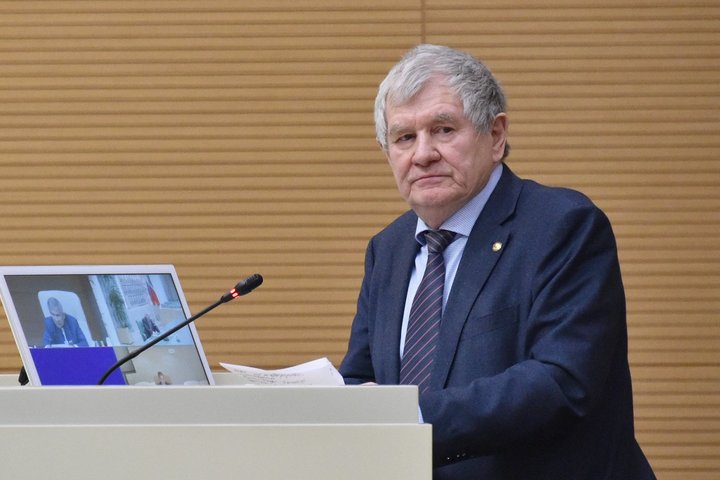
Rafinat Yarullin, CEO of Tatneftekhiminvest-Holding JSC, was elected chairman of the fund’s Scientific and Technical Council. In a conversation with Realnoe Vremya, he stated that the selection of promising projects in small-scale chemistry will be based on the country’s strategic objectives.
“During the Soviet Union, the country was the undisputed global leader in terms of the number of small-scale chemical products, while China was gaining ground by attracting Western capital. As a result, China’s chemical industry now ranks first, accounting for half of the growth in the global chemical market,” he noted.
According to him, the fund aims to restore the positions lost by the country. However, competition in the global small-scale chemistry market is high. “Today, the global supplier of small-scale chemical products, BASF, produces over 8,500 items, while Tatarstan and Bashkortostan together offer around 2,000 products,” Rafinat Yarullin outlined the industry’s starting point.
The fund is preparing venture interventions to create new production stages based on Tatarstan’s chemical raw materials. One high-profile project could be the launch of production chains for epoxy resin in the republic. At present, it has to be imported in large volumes, as it is essential for producing microelectronics, obtaining composites and compounds for the automotive industry, and creating powder coatings and adhesives. “The need to establish domestic epoxy resin production has long been discussed, but it still does not exist,” laments the head of TNHI-H. The possibility of producing chlorinated organic compounds is also under consideration.
Venture Fund “enters” chemistry for five years
The maximum investment period will be five years, according to sources at Realnoe Vremya. Projects for the fund’s investment will be selected at various stages of development, but the technologies must have potential for commercial growth in both the Russian and international markets, the sources said.
“Over a 3–5 year horizon, a project company should have the potential for threefold growth. This is the main criterion,” they stated.
In other words, NCI plans to take equity in project companies for a period of 3–5 years.
“We understand that not all projects will succeed, but high-tech applicant projects must have growth and scaling potential within the industry,” the sources said. “Technologies should not be purely scientific; they must be applied and solve production challenges. A business component is essential.”
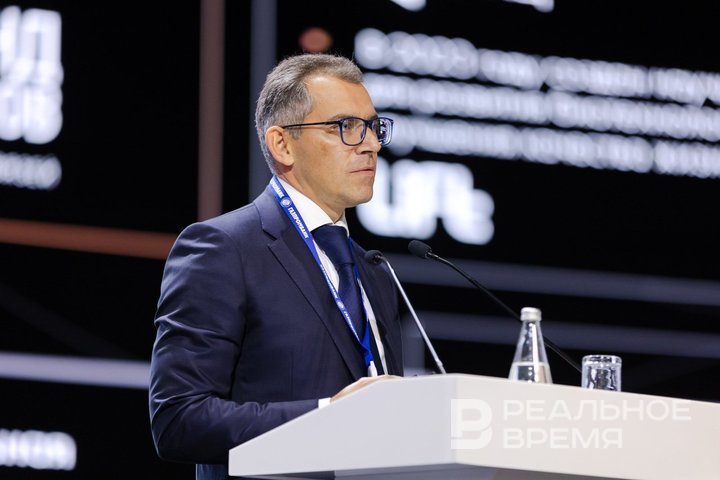
“Our dream is to build a regional technological infrastructure here, in which project companies will be able to replace imported technologies and, ideally, become national champions,” Dmitry Zauers explained at TNF-2025.
However, the main problem in achieving technological sovereignty is seen not in funding, but in the “difference in scale” between Russian and Chinese production. “Approach any businessman and offer him to buy ‘chemicals’ for, say, $1,000. It won’t work. Because in China, he buys the same for half the price, $500,” explains Rafinat Yarullin. “The twofold difference in production cost is due to China immediately targeting massive scales, which lowers the product cost. In Russia, production is local. How to reach large volumes — that is the challenge for investors.”
Chemistry plus oil production
The New Chemical Industry fund will participate in venture financing for at least 15–20 projects, according to sources at Realnoe Vremya. At the same time, the founders are ready to step beyond the core chemical profile and will consider projects aimed at improving oil recovery from reservoirs.
The expansion of the fund’s scope is partly due to the accumulated expertise of Moscow’s Perspektiva fund network. Before the establishment of NCI, it was entrusted with managing the specialized venture fund UT IT New Industry PLC for the Fuel and Energy Complex. Primarily, it supported Gazprom Neft’s projects in oil extraction at Siberian fields. At the end of last year, this fund, which operated as a simple investment partnership, ceased operations: “a decision to liquidate was made,” according to data from the SPARK-Interfax system.

The change in the fund’s profile has led to the need for management by two management companies. This means that both teams must possess similar relevant experience and qualifications when evaluating projects. They will have to jointly develop the fund’s development strategy, as well as maintain comparable competencies in project management. In addition, representatives of the two management companies will have to join the governing bodies of project companies after taking equity stakes. Will their interests align?
How to Bridge the “death gap”
So far, the overwhelming majority of venture investments in the country have gone to non-chemical areas — IT solutions, logistics, and artificial intelligence, according to data from the Dsight platform. In this sense, the New Chemical Industry fund could become one of the first during sanctions to work directly on the strategic needs of the chemical industry. According to experts, with the emergence of this fund, venture capital will “reach the regions,” as previously the geography of venture deals was largely limited to Moscow.
The need to support them has been repeatedly emphasised by Dmitry Zauers. He noted that university startups often disappear into the “death gap” after graduation, and a special venture investment regime will save this intellectual capital.
The role of venture investing is crucial for the development of high-tech and potentially fast-growing industries, experts agree. According to them, venture capital provides long-term investment, whereas traditional investors consider such sectors too risky. By agreeing to take on high entrepreneurial risks over a multi-year horizon, a venture fund expects to earn super-profits and increase the value of its stake in a startup company. Chemistry is precisely the sector that can generate high returns, experts believe.
They add that the emergence of the New Chemical Industry fund can be seen as a signal of the recovery of the venture market in the country. According to data from the Dsight platform, last year venture investments in Russia increased by 1.5–2 times, reaching $178 million. This growth was driven by the steady expansion of the economy and the activity of large industrial corporations. The only factor slowing venture investor interest is the high tax burden.