BRICS Energy Matrix: shaping a new market architecture
Resource Potential: a New Weighty Force in Global Energy
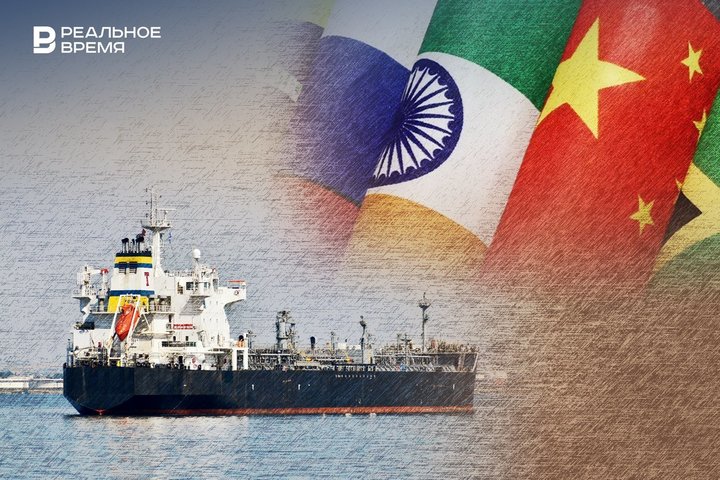
The expansion of the BRICS in 2023-2024 has led to fundamental changes on the global energy map, creating an alliance with a critical mass of resources. The BRICS countries control 35.2 per cent of the world's proven oil reserves, according to OPEC-based calculations, forming the foundation of their energy sovereignty and market power. In terms of production, the alliance has also emerged as a key player: in 2024, based on calculations based on data cited by the International Energy Agency (IEA), its share was 27.25 per cent of global daily production, equivalent to 28.05 million barrels of the world's 102.9 million bpd. Digital economist Ravil Akhtyamov tells us more about how the alliance is demonstrating its ability to adapt to pressure, with the potential to increase its influence on global energy, and what role Russia is playing in this in his column for “Realnoe Vremya”.
Synergy between exporters and importers
Within BRICS, Russia with 10.75 million bpd, China (5.26 million bpd), Brazil (4.28 million bpd) and the UAE (4.16 million bpd) lead in terms of oil production. These figures are confirmed by authoritative sources, including IEA reports, OPEC monthly reports and national statistical services. The stability of economic ties within the alliance is demonstrated by the impressive intra-bloc trade turnover, which reached $678bn in 2024, according to the Russian Ministry of Economic Development and Trade, and is still growing even under external pressure.
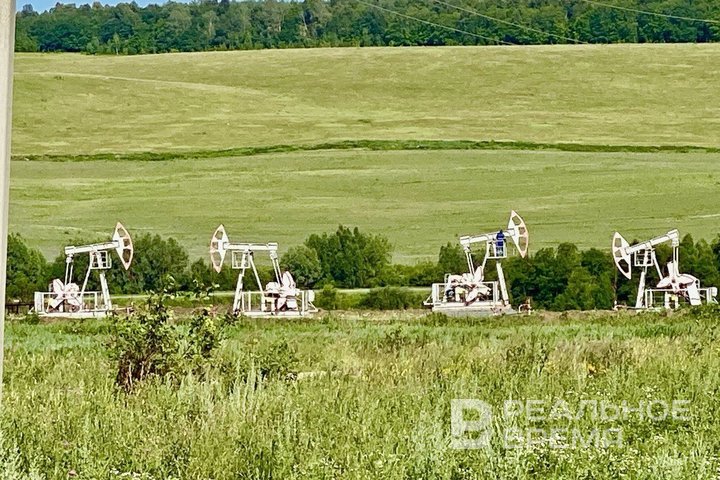
A distinctive feature of BRICS is the combination of net energy exporters (such as Russia, UAE, Brazil) and the world's largest importers (China, India). The alliance is successfully transforming this energy imbalance into a competitive advantage by forming new value chains. A stark contrast is illustrated by the UAE, which produces oil many times more than its domestic needs, and India, which covers only about 23.5 per cent of demand with its own resources. This complementarity gives rise to unique partnerships: Russia has diverted significant oil exports to Asian markets (China, India) to cover their deficits, which has fuelled the development of its maritime logistics. China is investing in the modernisation of Iranian refining, strengthening technological cooperation. India, in an effort to ensure reliable supplies and logistics, has taken operational control of the strategically important port of Chabahar in Oman's Omani Gulf, opens up access to the resources of Central Asia and Russia, as well as alternative routes to Afghanistan.
Transformation of financial flows: dedollarisation and digital infrastructure
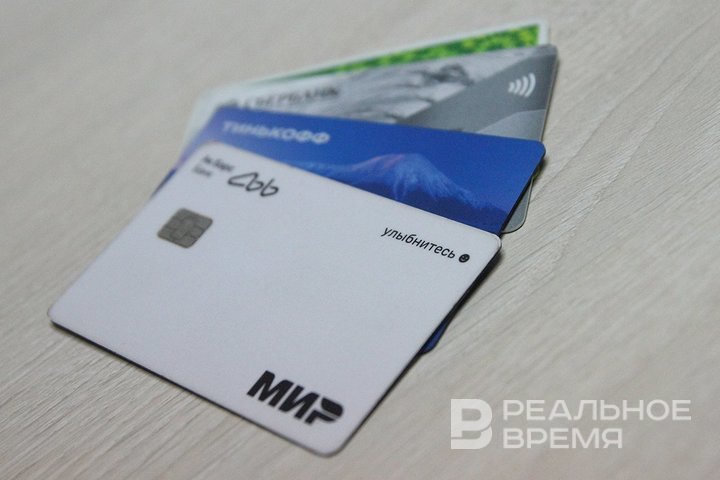
The most important trend in 2025 is the large-scale abandonment of the US dollar in energy payments within the BRICS. This is a strategic response to sanctions risks and a step towards financial sovereignty. This is being implemented through specific mechanisms: for example, 90% of Russian-Indian trade has already been switched to settlements in national currencies (rubles and rupees) using special vostro accounts (correspondent accounts of Indian banks in Russia, and vice versa). Trilateral schemes have also emerged — Indian refineries actively pay for a significant part of Russian oil supplies in UAE dirhams. In parallel, digital currency instruments are developing: The UAE Central Bank is creating a state-owned stablecoin linked to the dirham. In order to solve the problem of accumulation of non-convertible currency balances (for example, the excess of Indian rupees among Russian exporters), the expert community is actively discussing the project of a supranational steiblcoin BRICS Coin, potentially backed by a pool of sovereign bonds of the participating countries. The integration of national payment systems, such as Russia's Mir and India's RuPay, completes this picture
Logistics: Construction of Alternative Corridors
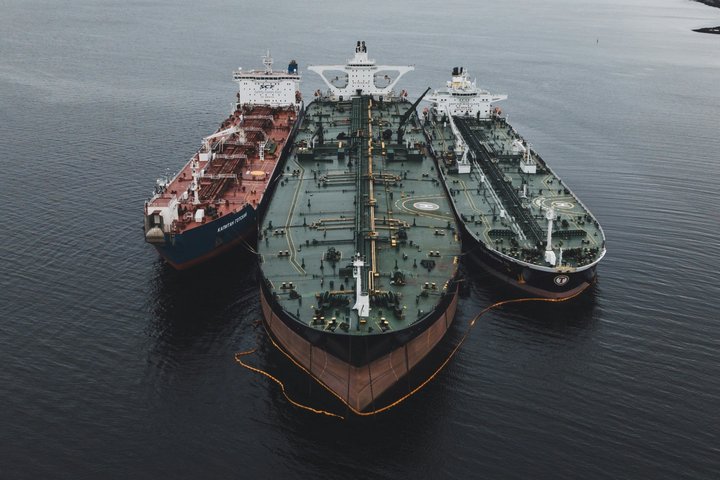
Sanction pressure has become a catalyst for the development of alternative transport routes, the key of which is the International North-South Transport Corridor (Russia — Iran — India). This multimodal corridor, combining sea (Caspian, Persian Gulf), railway and road transport, according to forecasts by the Russian Ministry of Economic Development, by 2030 could reach a capacity of 42.5 million tons. Its main advantage is a significant reduction in the route and logistics costs compared to the traditional route via the Suez Canal for cargo flows between Russia/Central Asia and India/the Middle East. The port of Chabahar in Iran, funded by India, is becoming a key transit hub on this route. The development of the corridor has a multiplier effect, stimulating the growth of non-energy trade turnover, as evidenced, for example, by the record trade turnover between Russia and India of $69.2 billion in the first half of 2025 (Bloomberg data). Financing of large-scale infrastructure, including ports, is actively supported by the New Development Bank of BRICS (NDB BRICS).
Despite successes, the alliance faces a range of internal challenges that require coordination. Key risks include currency volatility due to the use of multiple national currencies in settlements and the difficulties of their conversion. A significant problem is excess production capacity, especially the significant reserve capacity of the UAE, estimated by OPEC+ experts, which can create internal imbalances and put pressure on prices. The divergence of economic models and priorities of the member countries also complicates the development of a unified policy. Quota-based mechanisms for regulating production and exports (similar to OPEC+, but taking into account the specifics of BRICS) are being considered as potential coordination mechanisms to stabilize prices, as well as the creation of joint stabilization funds to smooth out currency fluctuations or compensate for losses from price shocks.
Energy Balance Strategy
The BRICS countries are taking a pragmatic, balanced approach to building their energy mix, combining the development of renewable energy sources (RES) with the utilisation of traditional resources. The alliance remains a global centre for coal-fired power generation with around 70% of the world's coal-fired power plant capacity (Global Energy Monitor). At the same time, the importance of gas is increasing: by 2023, the BRICS countries will account for around one third of global natural gas production and around 20 per cent of exports (Energy Institute). At the same time, major projects are being realised in the field of renewable energies: China is leading the way in the commissioning of solar capacities, while India is actively investing in offshore wind energy. The total volume of industrial wind and solar power generation in the BRICS countries is already twice as large as the volume of fossil fuel projects (coal, oil, gas). However, the national strategies differ: India and South Africa are taking a conservative stance due to the availability of coal; China is still heavily dependent on coal despite the rapid growth of renewable energies; Russia is focussing on gas and nuclear power in the long term. The BRICS countries are expected to account for 41% of global energy consumption by 2040, emphasising their crucial role in the global energy mix.
Contours of the New Energy Architecture: Principles and Prospects for Influence
Three fundamental principles are highlighted on which the BRICS are shaping a new energy architecture:
- Resource sovereignty. It is ensured by control over strategic reserves (35.2% of the world's oil reserves) and critical infrastructure (fields, refineries, ports, pipelines), which is the basis for independence from external diktat.
- Financial convergence. This is achieved through the integration of payment systems (Mir-RuPay) and the development of digital currency instruments (UAE Stablecoins, BRICS Coin project), which dramatically reduces dependence on the US dollar in energy payments.
- Logistical independence. Formed by creating alternative, sustainable transport corridors (Russia-Iran-India, Chabahar Port) that reduce the time, costs and geopolitical risks associated with dependence on traditional vulnerable routes (Suez Canal, key straits).
Forecasts and potential
The effectiveness of this emerging model is confirmed by the steady growth of trade turnover within the bloc even in the face of sanctions pressure, with Russia-India trade dynamics being a prime example. By 2030, the alliance, with control over significant resources, developed alternative logistics and its own financial mechanisms, will potentially be able to exert significant influence on pricing in a large segment of the global oil market. If current trends of dedollarisation continue, the share of the U.S. dollar in settlements with oil prices will increase by 2030.
BRICS is presented as an emerging centre of power creating a new multipolar energy architecture. It is based on the synergy of resource potential, financial convergence based on digital solutions and independent logistics infrastructure. Despite internal challenges, the alliance demonstrates its ability to adapt to external pressures and develop new rules of the game, with significant potential to increase its influence on global energy and finance by 2030.