Gerald Sakuler: ‘Sanctions harm the EU more than Russia, and neutrality plus CryptoBRICS+ are the solution’
President of the Austrian Business Club in Russia Gerald Sakuler about the harm of restrictions for the EU itself and a new stimulus for trade at BRICS+
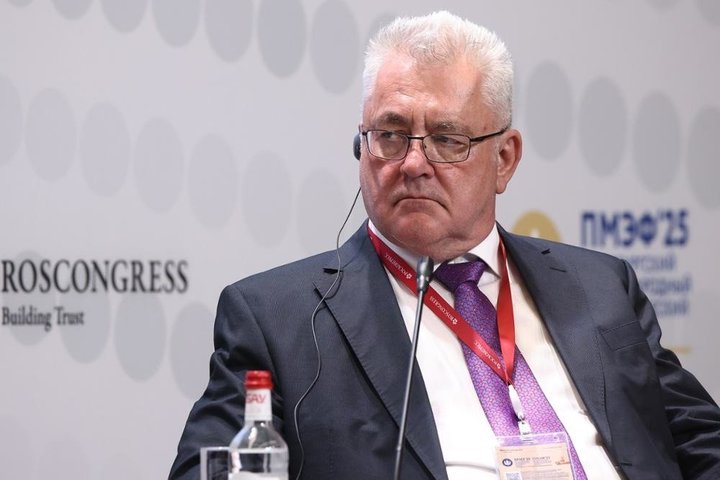
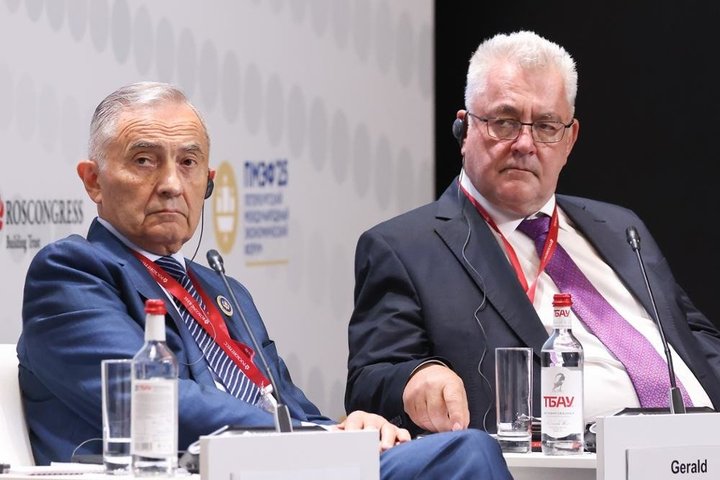
The European Union has been losing around €100 billion in export turnover every year since it imposed sanctions against Russia, says President of the Austrian Business Club in Russia and Co-Chair of the Russia-Austria Forum Gerald Sakuler. In an exclusive interview with Realnoe Vremya, the invited expert of the SPIEF’2025 analyzes the damage of restrictive measures for Europe, explains the strength of Austrian neutrality and offers a specific solution for trade in BRICS+ — CryptoBRICS+ Stablecoin (CBC). The interview with the speaker was conducted by digital economist Ravil Akhtyamov.
Experience in business and Russia-Austria relations
Mr Sakuler, how have geopolitical changes (sanctions, BRICS expansion) over your 30 years working in Russia impacted Austrian business? What strategies do you recommend for operating under sanctions while maintaining EU-Russia trade?
Sanctions have inflicted enormous damage on the European economy. EU export statistics clearly show: there has been no growth since 2022. Taking into account the annual inflation of 4% in Europe this stagnation means missing export business of approximately €100 billion per each year, because even if the volume of exports does not grow, the amount should grow at least by the percentage of the inflation. This is the result not only of reduced exports to Russia but also of falling competitiveness across the entire European industry due to soaring prices for raw materials and energy. In Austria, as in the EU as a whole, there is an economic crisis provoked by our own sanctions.
The only question is how long EU citizens will tolerate this damage before demanding politicians put an end to it.
Here, the gigantic unrealized potential for cooperation with Russia is obvious. Recall 2003: the EU and Russia agreed to create “four common spaces” — external and internal security, economy, science. This would have given us world leadership. The key question today is: why was this agreement never implemented? That's where the key to the strategy lies — reviving this pragmatic approach.
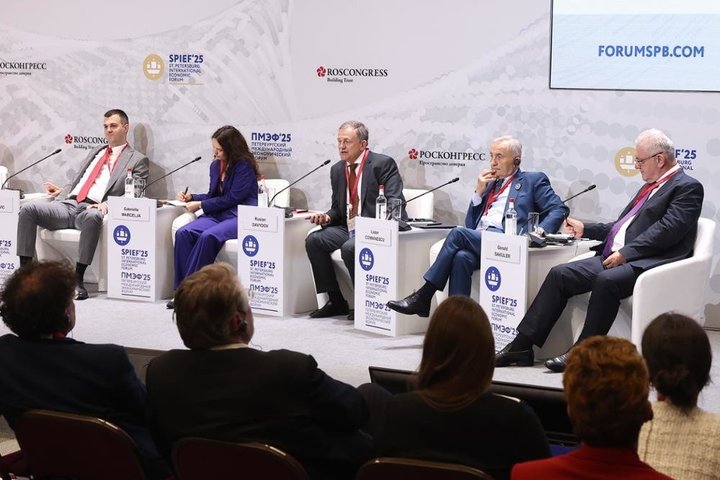
In April 2025, you participated in discussions on the 70th anniversary of the Moscow Memorandum. Do you believe the principle of Austria's permanent neutrality could serve as a model for conflict resolution in the BRICS+ space, especially considering dedollarization initiatives?
Absolutely, neutrality is an extremely powerful, yet unfortunately underestimated political tool today. I am surprised by the debates about its significance. The Hague Conventions of 1899 and 1907 provide a clear definition: a neutral country is obliged to behave in such a way that no party to a potential conflict gains advantages from it or is placed at a disadvantage. This concerns not only refraining from participation in hostilities or military blocs but also economic relations. Only obvious, demonstrable neutrality in everything allows a country to avoid being perceived as an enemy by one side.
All current problems on the continent could have been prevented if Eastern European countries after 1991 had adopted the model of Austrian neutrality, guaranteed, for example, by Russia, the USA, China, and France. Regarding dedollarization in BRICS+ — a neutral approach is also important here, but an economic one. The essence is simple: business seeks profit, society seeks prosperity. The solution that is faster, better, cheaper, simpler, and more convenient will win. Politics should create the conditions for finding such a solution, not substitute itself for this basic economic law. Dedollarization will become a reality when a better alternative appears.
Participation in BRICS and economic strategies
BRICS is exploring stablecoins for international settlements instead of the dollar. As an expert in sustainable finance, do you consider this feasible given fragmented regulatory spaces (e.g., Brazil's focus on blockchain vs. Russian initiatives for asset-backed stablecoins)?
The main principle is: do not mix politics and economics without extreme necessity.
If there is no direct threat to the state's financial stability, economic decisions should be made based on economic logic. Differences in regulation between Brazil and Russia are a technical issue. If a stablecoin as a tool truly proves to be faster, cheaper, and more reliable than existing international settlement systems, it will find a path to implementation. The problem with EU sanctions lies precisely in violating this principle — there, politics has crudely interfered with economics.
Brazil during its BRICS presidency (2025) emphasized blockchain over a single currency, citing “sovereignty concerns.” Should BRICS members sacrifice part of their sovereignty to create a single payment system?
If a country's concerns about loss of sovereignty outweigh the potential benefits — it has the right to retain its currency and not join. Joining any currency zone inevitably means delegating part of sovereignty to a supranational body (e.g., a future BRICS Central Bank for a single currency). This may seem to contradict the idea of multipolarity, but strong multipolarity also requires some common actions. Look at the Eurozone experience: smaller countries (Austria, Portugal, etc.) gained enormous advantages from a single currency — price transparency, stability, reduced costs for businesses and investors.
A compromise solution for BRICS+ is the CryptoBRICS+ Stablecoin (CBC). This is not a single currency requiring a political union and a single central bank. It is a tool for trade. To demonstrate its benefit, we need to create a BRICS+ trading platform/exchange where all prices are listed in CBC. A buyer will be able to purchase goods in any participating country without currency conversion and exchange rate risk. This will stimulate mutual trade. Later, the platform could be opened to other neutral countries, such as Austria.
How can Austrian business utilize partnerships within the BRICS+ format under Western sanctions?
The key is my proposed CryptoBRICS+ Stablecoin (CBC) and the BRICS+ trading platform. CBC, unlike bank transfers, is independent of the Western banking system and SWIFT. All transactions on the platform will be legal, yet they will bypass the sanctions barriers created by banks out of fear of violating rules.
The main problem for business today is not even the sanctions themselves, but the atmosphere of fear and uncertainty.
A transparent platform with a unified settlement instrument, CBC, will solve this problem.
Stablecoin infrastructure and risks
The Bank of Russia fears Bitcoin volatility. At the end of January 2024, a bill was introduced to the State Duma adding a definition of “backed stablecoins” to the law “On CFA.” Is it possible to combine them with the Brazilian Drex project or BRICS Pay without conflicting monetary policies?
Yes, it is possible through a proven model similar to Tether (USDT). CBC must be a backed stablecoin, its value maintained by a basket of national currencies of BRICS+ countries. The CBC operator (an independent company) must issue CBC only in an amount backed by government bonds of the participating countries, purchased proportionally to their share in the system. The risk is solely connected with the operator that can be for example mistakes, technical problems, mismanagement or fraud. This precludes direct conflict of monetary policies, as the value of CBC is determined by the market value of the underlying assets (government bonds).
Critics point to BRICS fragmentation. Can a stablecoin system succeed without political rapprochement?
For CBC — absolutely possible! Its success depends not on political agreement, but on economic feasibility and technical reliability. Its value is determined by the market exchange rates of the currencies in the basket, and its backing — by government bonds purchased on the open market. Deep political rapprochement would only be required for introducing a full-fledged single BRICS currency with a single central bank, requiring fixed exchange rates. CBC is a pragmatic first step, demanding no political sacrifices.
The role of the private sector and prospects
You promoted “energy-autonomous buildings” in Russia. Could “green” technologies become neutral ground for EU-BRICS+ cooperation under sanctions?
Unconditionally — yes! We have one planet. Climate problems recognize no borders, sanctions, or political disagreements.
Protecting the environment is an absolute imperative for all humanity. No political positions can be above this goal.
Russia, with its vast territories largely untouched by humans, already plays a key role in preserving global ecosystems. Together with Brazil, Canada, and Australia, it possesses unique natural resources and space. We need to find innovative, perhaps yet unspoken, formats of cooperation that unite these resources with the technologies and needs of densely populated EU and Asian countries. “Green” technologies are the perfect neutral platform.
Should BRICS create an agency or fund to support stablecoins? How would the exchange rate of such a BRICS stablecoin be determined?
For launching and operating the CryptoBRICS+ Stablecoin (CBC), a special BRICS agency or fund is not needed at the initial stage. Clear rules for the CBC operator are sufficient.
Its operating mechanism and value determination would be as follows:
- Start: 1 CBC = 1 USD. This is a clear starting point.
- Backing: The CBC operator is obliged to hold government bonds of BRICS+ countries for an amount equal to the issued CBC volume. The structure of the bond portfolio (shares of each country) is determined proportionally to their share in the total volume of international trade of BRICS+ countries. For example, if China accounts for 40% of BRICS+ trade, then 40% of CBC reserves must be in Chinese government bonds. This balances the influence of industrial goods exporters (China, India) and raw materials exporters (Russia, Brazil, etc.).
- Value calculation: The actual value of CBC is determined daily (hourly) based on the weighted average of the market exchange rates of BRICS+ country currencies against the USD (or another basket, e.g., IMF SDR), where the weight of each currency equals its share in BRICS+ trade. Thus, the CBC exchange rate reflects the value of the currency basket, not pegged rigidly to the USD.
- Recalculation of shares: The countries' shares in the basket (currency weights) are reviewed, for example, every 5 years, based on up-to-date world trade data. Essentially, this is the Tether model, but backed not by dollars, but by a diversified portfolio of BRICS+ government bonds according to their economic weight. This ensures stability and aligns with the principle of multipolarity.
Conclusion by the author: rhe interview with Gerald Sakuler paints a picture of significant economic losses for Europe from sanctions and proposes concrete paths for business and BRICS+ countries: from reviving forgotten agreements and strict adherence to neutrality to implementing a technological trade instrument — the backed stablecoin CBC. His key message: in economics, efficiency wins, not political will. “What is faster, better, cheaper, simpler, and more convenient — that will win," the expert summarizes.