Olga Aiduganova: “Without affordable energy, our ambitions for digital sovereignty will remain an illusion”
Russian industrialists are asking the Ministry of Energy for subsidies for plants, based on the experience of their Tatarstan colleagues.
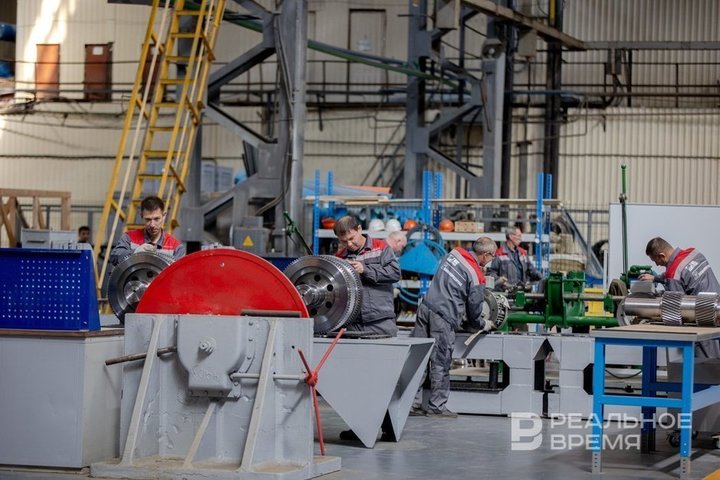
The experience of Tatarstan industrialists with partial reimbursement of electricity costs has inspired the entire industry to follow this example. The Business Association of Clusters of Russia has appealed to Russian Minister of Energy Sergei Tsivilev with a request to support real production, putting forward proposals for subsidies for plants, as in our republic. The key goal is to stimulate domestic demand for innovative and import-substituting products manufactured by domestic enterprises, but this cannot be done without affordable energy, believes the head of one of the association's committees, director of the “Engineering and Production Center” (IPC) Olga Aiduganova. In an author's column for “Realnoe Vremya," the expert explains why digital sovereignty in Russia is only possible if it is built on the basis of a powerful national industry.
“We critically lack the resources for maneuver”
In the architecture of the economy, there is an unshakable rule: the superstructure cannot be more stable than the foundation. Today we are building the gleaming glass facade of a digital economy, while its industrial foundation is beginning to sag under the weight of regulatory costs and growing tariffs.
As a manager, I often face the fact that the initial broad package of support measures has significantly narrowed, and today we are forced to choose from only a few priority areas.

I understand all the responsibility and rigidity of modern budgetary policy, however, we, as representatives of the industrial community, critically lack the resources for maneuver. We are surrounded by a paradox: the country strives for a technological breakthrough, but at the same time, industry is suffocating from a sharp increase in costs against a backdrop of falling sales volumes. The tax burden remains excessively high, but even more insidious are the hidden regulatory costs. Take certification, for example: the cost of these procedures does not decrease, and when production volumes fall, the specific weight of the cost of each certificate in the price per unit of goods increases. This directly undermines our cost price and drains working capital that could have gone towards modernization.
“We risk sliding into a model of a colonial economy”
I often ask myself: what does our digital future actually rest upon? We are used to perceiving IT as something ephemeral, but digital sovereignty cannot simply be bought or imported — it must be built on the basis of a powerful national industry. This is a single, inseparable chain: from mineral resources — to the machine tool, from the machine tool — to the generator, from the generator — to the server on which artificial intelligence runs. Without domestic machine building and the affordable energy it generates, all our ambitions in the field of data will remain merely an illusion. If we weaken the industrial base today for the sake of momentary benefits of other sectors, we risk sliding into a model of a colonial economy, where we will be forced to buy equipment at a price dictated from outside. That is precisely why, in defending the interests of IT, we must first and foremost strengthen its industrial foundation.
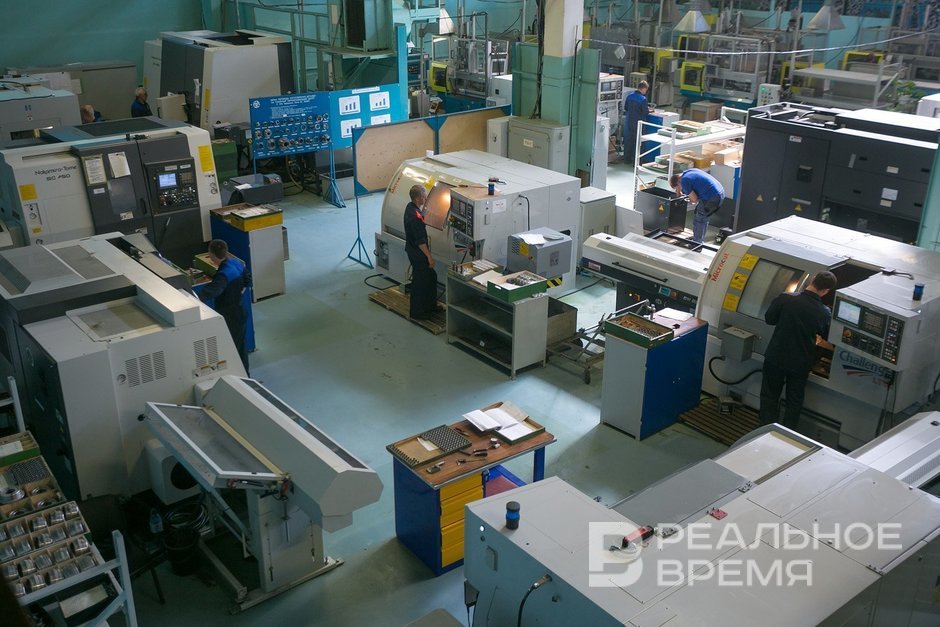
Our active position is reflected in the collective actions of the professional community. As part of the work of the Industrial Cluster of the Republic of Tatarstan, the Business Association of Clusters of Russia appealed to the Minister of Energy of the Russian Federation, Sergei Tsivilev, in December. Our key goal is to stimulate domestic demand for that very innovative and import-substituting product that our enterprises produce. We see how artificial intelligence is changing industry, increasing equipment efficiency by 20-30%. However, according to specialized research data (Digital Economy Indicators: 2024, HSE ISSEK), expenses for AI implementation constitute about 15% of all digitalization costs, with a third of these sums going to expensive “hardware.” I am convinced that the market often offers us excessive and unjustifiably expensive solutions. Practical experience of participating in hackathons proves: a task for which major players ask 5 million rubles can be effectively solved using our own resources for 500 thousand.
“We must provide factories with free access to cloud computing”
The situation with energy consumption also requires deep reflection. According to data from Sber's analytical hub (forecast for the development of the data center market in Russia until 2030), the capacity of data centers in the country should grow 2.5 times by 2030 — to 2.5 GW. But what do we spend this precious resource on? The enormous capacities of giants like Yandex or VK go towards generating free visual content that carries no practical value.
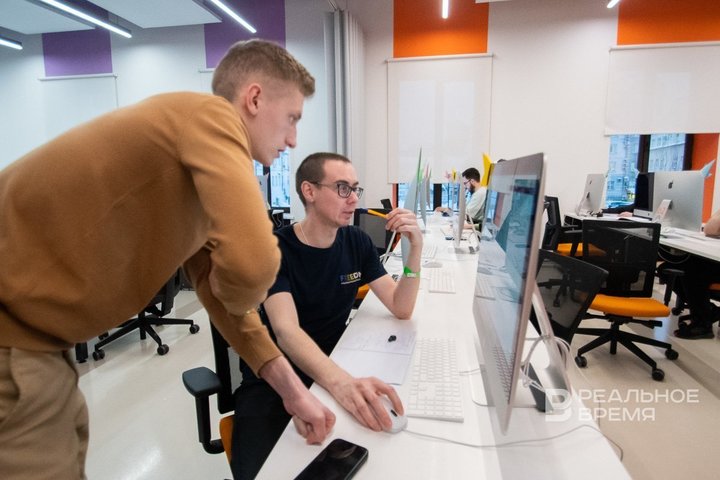
As Alexander Vedyakhin from Sberbank notes, the electricity costs for training just one large language model are comparable to the needs of an average Russian city. We propose to reconsider this approach: it is necessary to limit the creation of “useless” digital noise and direct the freed-up capacity to support real production. We must provide factories with free access to cloud computing through grants and subsidies, create joint centers with IT companies, and massively train employees of traditional industries to work with AI. Only in this way, by supporting those who create real value at the machine tools, can we achieve true technological sovereignty.