A structural shift in the credit market: businesses borrow 2 trillion rubles ahead of VAT increase
The drivers of growth, according to the expert, are monetary policy and tax expectations

October 2025became a landmark moment for the Russian credit market: corporate lendingshowed record acceleration, forcing the regulator to revise its forecastsupward. After a modest increase in September, the corporate loan portfolio ofthe banking system made a powerful leap. What lies behind this surge isexamined in detail in his article for Realnoe Vremya by digital economist RavilAkhtyamov.
Record-breaking October: the figures that reshaped forecasts
The key indicators for October are striking: overall lending growth accelerated to 1.8% from 0.6% in September. The absolute increase in the corporate loan portfolio reached a historic high — around 2 trillion rubles in a single month (against roughly 700 billion rubles in September). Lending to companies rose by 2.2% after 0.6% the previous month. A notable structural feature was that almost 80% of October’s growth was driven by ruble-denominated loans.
These figures proved so strong that the Bank of Russia officially raised its 2025 lending growth forecast to 10–13% from the previous 9–12%. Growth in the third quarter as a whole accelerated to 3.7% after 2.5% in the previous quarter.
Lending dynamics: from stagnation to boom
An analysis of data from July to November 2025 shows a steady acceleration in lending activity. Over this period, the total volume of loans to the economy increased by 8.2 trillion rubles, with the main drivers being loans to organisations, which rose by 7.4 trillion rubles.
Table: Lending dynamics in the economy (bn rubles)
| |||||||||||||||||||||||||||||||||||
| Source: Bank of Russia |
Growth drivers: systemic factors
The analysis shows that the current boom is not accidental but the result of several systemic forces. The Central Bank directly links the acceleration to the monetary easing cycle launched in summer 2025. The key rate was cut from 21% to 16.5%, lowering banks’ funding costs. Banks shifted en masse from fixed-rate products to loans with floating rates tied to the key rate. As of 1 October 2025, such loans accounted for 65.4% of portfolios, and in 90.2% of cases the base component was the key rate itself.

Expectations of a VAT increase from 20% to 22% from 1 January 2026 became a powerful catalyst. Companies in capital-intensive sectors such as construction and engineering rushed to borrow in advance to finance investment purchases of equipment and materials. According to the Central Bank, this supported loan demand in the fourth quarter.
Growth was also fuelled by unprecedented market concentration. According to Expert RA, the share of the 10 largest banks in total sector assets exceeded 80% for the first time. Their combined loan portfolio remained almost unchanged (down 0.1%), whereas banks outside the top 10 saw a 9% contraction. This indicates that growth is concentrated among major borrowers working with leading banks.
Structural shifts and sectoral specifics
A key structural change was the growing share of long-term ruble loans, pointing to an investment-driven nature of financing. Ruble-denominated loans accounted for nearly 80% of the October increase in loans to organisations.
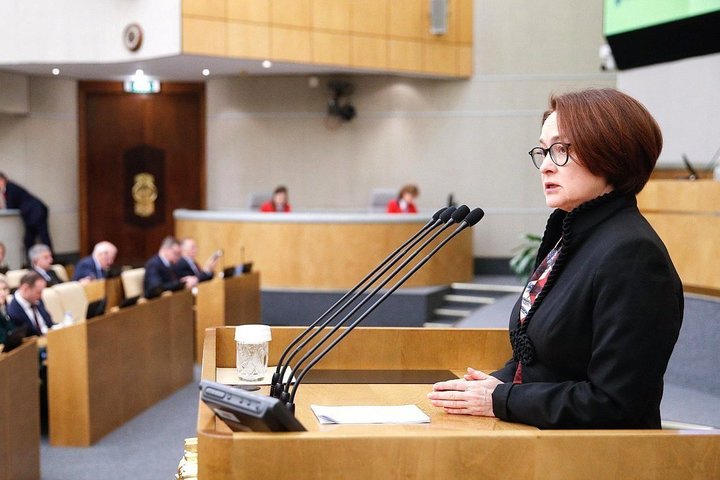
At the same time, the corporate bond market has expanded markedly. As the Governor of the Bank of Russia Elvira Nabiullina noted in her address to the plenary session of the State Duma on the Main Directions of the Unified State Monetary Policy for 2026–2028, “banks are financing the real sector not only through lending. Recently, banks have been more actively purchasing bonds issued by companies.” This aligns with the table data, which show a 707-billion-ruble increase in corporate bonds over the five-month period.
Sectoral dynamics have been particularly strong. For example, according to DOM.RF Bank, since the beginning of the year, the large corporate loan portfolio in trade and services has grown 5.8-fold, while lending for tourism projects has increased 4.5-fold.
Accumulating risks: behind the record-breaking numbers
Despite the impressive figures, risks are building up, prompting the regulator to remain vigilant. Corporate debt burden has reached critical levels — 24.1% of companies, according to the Bank of Russia, have overdue loan payments.
Although the share of overdue corporate loans is formally low (3.6%), the volume of non-performing loans to legal entities reached 9.1 trillion rubles in the first half of 2025, or around 10.5% of the portfolio. The cost of risk (COR) continued to rise, reaching 1.1% in the second quarter of 2025.
Regional imbalances are also evident — the sharpest rise in overdue debt was recorded in the North Caucasus Federal District (+1.7%), while the Urals and Siberian districts saw a decline. The regulator has expressed concern over the quality of loan portfolios.
A sign of rising systemic risks was the additional provisioning by banks in the third quarter of 2025. This affected companies with high debt burdens facing upcoming repayment deadlines on previously issued loans.

Outlook: what awaits the market after the boom
Most analysts agree that October’s surge is unlikely to become a new sustained trend. In the coming months, loan issuance is expected to slow once again. The Bank of Russia forecasts more moderate and balanced growth of 7–12% for 2026, reflecting the accumulated effects of tight monetary policy.
After the new VAT rate comes into force, businesses may face a period of adjustment during which loan activity could temporarily decline, particularly in consumer-oriented sectors. However, the current profitability of the banking sector — expected to reach the upper bound of the projected range (3.2–3.5 trillion rubles) — provides a buffer against potential shocks.
Thus, the record rise in lending is a symptom of the economy adapting to new conditions, combining both investment impulses and cyclical factors. The future trajectory will depend on coordinated efforts by the regulator, banks and businesses to balance growth support with maintaining financial stability.