How AI in Russia violates consumer rights and shapes the political agenda
And what aliens who arrived in Cheboksary have to do with it
The development of artificial intelligence (AI) technologies is being actively discussed at the highest levels around the world. Just yesterday, Russian President Vladimir Putin instructed officials to develop a national plan for the introduction of generative AI and to establish a headquarters to oversee the industry. According to experts, these technologies will soon be shaping public and political agendas. Read more details in the Realnoe Vremya report.
For Russians, AI is a helper, not a toy
Russians are increasingly getting used to AI: more than half of them — 63% — used it over the past year. Most often respondents used a voice assistant (31%), received text-based answers to queries from neural networks (31%), turned to a chatbot (21%), or used an object recognition system (19%). This was reported at the round table “Artificial Intelligence: Public Good or Harm?” by Mikhail Mamonov, director of the political research department at the VTsIOM analytical centre.
But do Russians trust artificial intelligence? Every second respondent — 52% — answered positively.
Some 38% of respondents view new technologies with distrust.
“Who is AI [to Russians] anyway? The main answer, of course, is that it is a helper. There is hope that these technologies are capable of making life easier and accelerating many processes. So, 54% of Russians perceive AI primarily as a helper. This figure is significantly higher among young people. In second place, with a substantial gap, is the answer ‘a toy’,” the speaker said.
At the same time, Russians do not believe AI can operate autonomously. Some 77% of those surveyed stated that the ethical evaluation of its products and decisions must necessarily be carried out by a human. Only 11% of participants believe that neural networks can be taught morality.
It is no surprise that the main risk of AI development, according to Russians, is its use for selfish purposes (65%). Among other negative consequences citizens named:
- data collection that could be stolen — 61%;
- the risk of erroneous decisions — 58%;
- the risk of decisions for which no one will be responsible — 57%;
- depriving people of jobs — 40%.
Incidentally, in the future AI will take part in sociological surveys instead of humans. According to Mamonov, such methods are already used in the West, though not yet in Russia. The point is the so-called synthetic respondent — digital models of people who “with a high degree of probability predict the respondent’s answers”.
“Does this comply with consumer rights legislation? Absolutely not”
Artificial intelligence needs a different name altogether, said Dmitry Gusev, first deputy head of the “A Just Russia” parliamentary faction. According to him, it would be fair to call it, for example, a system of analysis and synthesis.
“What we call artificial intelligence, of course, is not intelligence. Intelligence has morals and conscience. What we are talking about is a computer programme. The more we humanise this very programme, the more risks we face. When we call a programme intelligence, even artificial, we humanise it and treat it like a conversational partner. But this is not the case — a programme will act strictly in accordance with the algorithms embedded in it,” he argued.
Today the use of AI in many fields is insufficiently regulated by law, Gusev suggested.
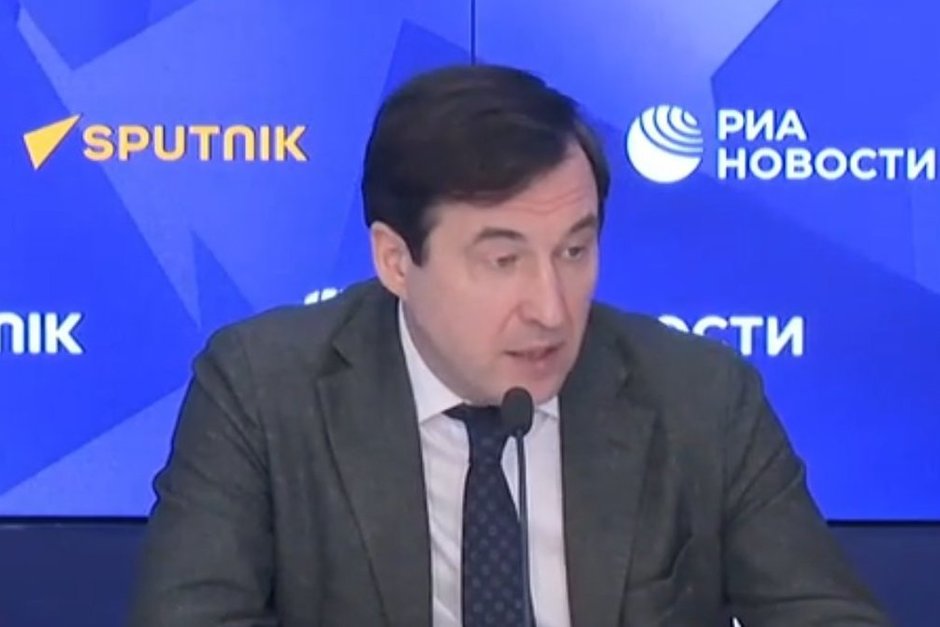
“When using programmes we call artificial intelligence, consumer rights issues arise. For example, when you buy a plane ticket. You go into one service, then another. You return to the first — the ticket is more expensive, [even though only] three to five minutes have passed. That is how the algorithms work. Or if you compare prices on Yandex Taxi from a certain point and back, the trip home is always more expensive. Does this comply with current consumer protection legislation? Absolutely not. This is a gap. You don’t have a situation where you go into one supermarket, then another, and when you come back to the first the price of sugar has suddenly gone up,” the MP said.
He also spoke in favour of marking content created with AI. However, as other participants in the discussion argued, marking such materials is impossible. Questions also arise about controlling compliance with such a measure. Realnoe Vremya has previously asked experts whether the market can regulate this issue without government intervention. More details are available in the newspaper’s report.
How AI-generated content shapes the political agenda
In the near future AI will be shaping the public agenda in different countries, believes Nikita Dyakov, head of the targeting division at ANO Dialog Regions. There are already precedents worldwide. For instance, recently in Toronto (Canada) the local authorities decided to remove parking spaces near small shops and install a public transport lane. As a result, fake videos spread across social media featuring people speaking out against the changes.
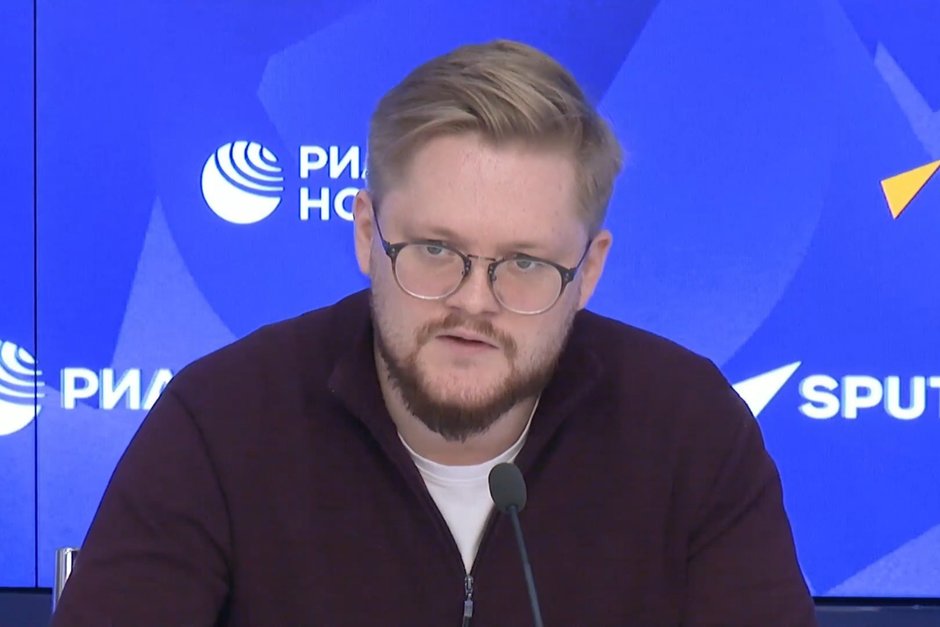
“Business owners contacted a PR agency to generate these videos. They were picked up, people discussed them. The authorities had to postpone the decision for some time,” Dyakov said.
He gave another example, this time from neighbouring Chuvashia, where elections for the head of the region were recently held.
“A series of videos about aliens appeared on social media. According to the plot, they arrived in Cheboksary intending to capture it, but found that everything in the city was wonderful. This content was perceived very positively by residents,” the speaker emphasised. “The elections are just around the corner. How will AI be used in them? I think this election campaign will see active use of it.”
Today every political party and every political actor in Russia is actively using AI, added the first deputy head of the “A Just Russia” faction:
“It is impossible not to use it. The amount of content produced by political actors doubles or triples each year. I can say from my own experience: three years ago a certain volume of content allowed me to hold clear positions in the country’s information landscape. Today I am forced to produce two or three times more. Everyone uses computer technologies. When all political parties level out in these technologies, the advantage will not lie in AI, but in entirely different things — including personal meetings.”