Sharia-compliant insurance: why the service remains unavailable to clients of Islamic banking
Insurers have examined the issue but are not ready to enter the partner-financing market
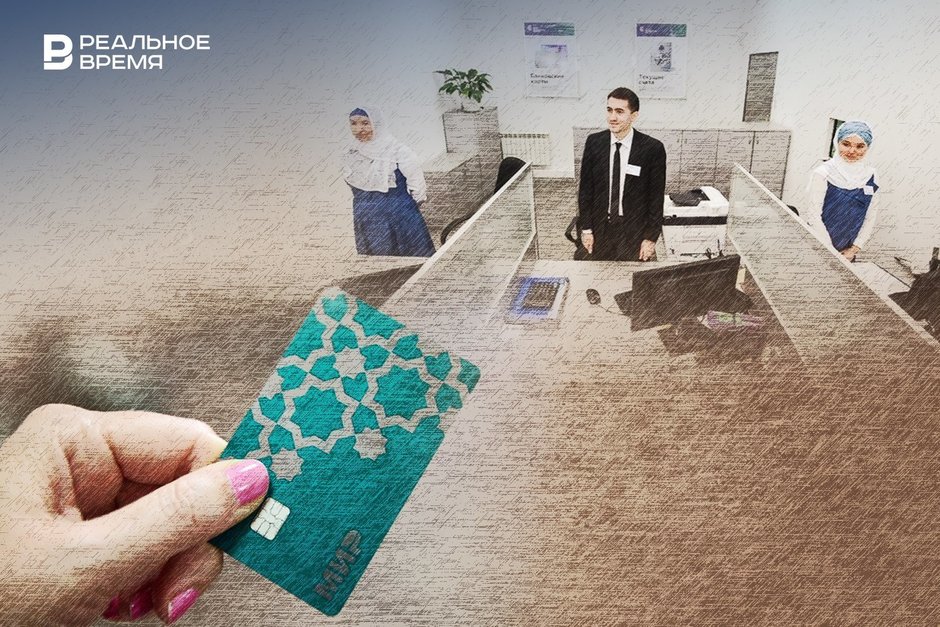
Tatarstan insurers have explored the possibility of entering the Islamic banking market but are not yet prepared to insure its clients, citing the specific requirements of Sharia. “Frankly speaking, there is still not a single company in Russia that would be ready to embark on this,” the president of the Tatarstan Insurers’ Union, Rinat Kasimov, told Realnoe Vremya. Among the reasons he named the underdeveloped system of partner financing itself and the acute shortage of halal investments in the country — read the details in the report.
“There is still not a single company that would be ready to embark on this”
In Russia, the experiment on Islamic banking, implemented in four regions including Tatarstan, has been extended for another three years. Meanwhile, one of the key issues for expanding this market — insurance — remains unresolved in the country. Across the Muslim world, takaful, or insurance in accordance with Sharia norms, is developing alongside the Islamic finance industry. In Russia, however, it is still only being considered.
As the president of the Tatarstan Insurers’ Union, Rinat Kasimov, told Realnoe Vremya, the association has examined the conditions for introducing takaful but is not ready to work with it: “We have conducted certain studies related to Islamic insurance. But everything is still very raw, because there are many nuances.”
In the end, when asked whether clients of Islamic banking in the country would be insured, he replied as follows:
Nevertheless, in the view of the head of the union, the situation regarding the development of partner financing in Russia may change in the coming years: “Things are changing rather dynamically with us. It is quite possible that there will be rapid growth here as well. After all, substantial work is being done in the direction of Islamic banking, and our republic is ahead of all other regions. So anything is possible.”
“The main problem is that the legislation needs to be seriously amended”
Another representative of the republic’s insurance community — the former president of the Tatarstan Insurers’ Union, Rustem Sabirov — also studied in detail, in his time, the introduction of Islamic insurance in Russia. Since then, he says, little has changed:
The system of Islamic insurance is based on the distribution of profits and losses between participants and the operator according to Sharia norms. The takaful mechanism differs significantly from traditional commercial insurance. It is based not on the insurer’s profit but on the concept of cooperation. Participants in the arrangement distribute financial surpluses among themselves after deducting administrative expenses. In accordance with Islamic investment models, insurance companies invest surplus funds.
“In takaful everything is very different, beginning with how and which company may handle insurance contributions and ending with how insurance reserves are allocated according to Islamic rules. There are very many nuances. In addition, people’s mindset must also be changed. Ordinary insurance in our country is already poorly developed compared with other states, and we are trying to launch some of its offshoots," Sabirov noted.
The reasons that are slowing the introduction of takaful
Economist Rustem Shayakhmetov, head of R-Invest, also links the absence of Islamic insurance in Russia to legislative constraints. According to him, many aspects of the Islamic banking system contradict the current banking legislation of the Russian Federation, and the difficulty lies in the need to combine them:

The main distinction of Islamic financial products is the prohibition of interest, and the activity itself is closest to project investment. “As an investment instrument, it can be used, but only in a limited way. Much needs to be changed in the legislation to alter the situation,” Shayakhmetov added.
“Developing takaful requires knowledge of partnership finance”
Responding to the question of what restrains the development of Islamic insurance in Russia, Renat Edikhanov, chairman of the As-Salyam Group and head of the subcommittee on Islamic finance at Delovaya Rossiya, cited statistical data. By the end of August 2025, around 130 insurance companies were operating in the country’s market. At the same time, by the end of October there were 306 banks and more than 1,400 leasing companies.
According to him, it is logical that there are far more specialists in financial fields related to instalments, leasing and project financing than specialists in insurance who “understand the field, rather than simply work in insurance, for example as agents.”
The second reason lies in the legislation, Edikhanov agrees with other speakers. He noted that the current legislation is oriented toward classical insurance, including the placement of insurance reserves and the coefficients for valuing assets: “In particular, the value of many assets is recognised as zero, with the exception, for example, of bonds (and not all bonds), the classical version of which is prohibited in partnership finance, while the market for Islamic sukuk bonds in the country is only beginning to emerge. There are also nuances in taxation.”
According to the expert, different approaches may be used to solve the problem. The first is to implement several pilots within the current legislation. “It is possible to structure takaful within the existing legislation. In some cases it may be inconvenient, just as it was inconvenient for banks to work with instalments before the adoption of Federal Law No. 417 on partnership finance, but at least it will be possible to ‘feel out’ the market and its needs,” he believes.
The second option is to create, by analogy with Federal Law No. 417, a dedicated law on an experiment in takaful insurance with corresponding amendments to the regulatory acts governing the insurance sector. “At the same time, it is of course necessary to carry out activities aimed at improving financial literacy in the field of partnership finance in order to reduce the impact of the statistical factor restraining the development of takaful insurance,” Renat Edikhanov added.
It is also necessary, he said, to work actively on developing standards for partnership finance, including takaful insurance, to demonstrate to the market the financial and legal model of this service. “Given the development of the partnership finance market itself, takaful insurance, as one of its components — including one that supports its development by reducing the risks of operations such as instalments or leasing — will undoubtedly at a certain stage become necessary to implement and will be implemented,” the speaker added.
“Elevated risks compared with traditional finance effectively create a barrier to the development of the partnership finance market, but not one so critical as to claim that partnership finance cannot develop without takaful insurance. At the same time, it should be noted that for the harmonious development of the partnership finance market as a whole, such an infrastructural element as takaful insurance companies is essential. This can improve the overall quality of financial services," he said.
According to him, reducing risks, increasing the transparency of services and forming new products to finance various sectors of the economy through takaful insurance will contribute to structural changes in the current practice of the partnership finance market, and will also increase the attractiveness of the Russian partnership finance market for foreign investors. At the same time, a reinsurance market may emerge in foreign takaful insurance companies.
Problems, solutions and prospects for introducing Islamic insurance (takaful)
Rustam Sagdeev, CEO of Amal, one of the first Islamic financial organisations, noted that in Russia there is growing discussion about the importance of developing partnership (Islamic) banking and financial services such as Islamic insurance — takaful. “Over the past three years, the country’s economy has been adapting to sanctions, seeking new sources of financing and strengthening its ties with the Middle East, Southeast Asia and Muslim CIS states. In these conditions, such a form of insurance can reduce risks, provide long-term financing and attract foreign investment,” he stressed.

According to him, as has long been discussed in financial circles, barriers to the introduction of takaful in our country do indeed exist, and they are quite serious. The speaker decided to focus on the key issue that lies in the very philosophy of the difference between traditional insurance and takaful. This is the fundamental contradiction between their business models. As the interviewee noted, traditional insurance is built on the principle of appropriating profit from unused insurance reserves: “This is, in fact, the main source of income for an insurance company. If you take out a car insurance policy for a year and pay, say, 20,000 rubles, and no insured event occurs, that 20,000 remains with the company as its profit. The financial attractiveness of such a model is very high.” However, in Islamic insurance (takaful) everything is arranged in a fundamentally different way, the expert said:
“Here, the concept of tabarru — voluntary donation — applies. The management company has no right to claim participants’ unused contributions. These funds remain in the community’s common fund, and they may either be returned to participants or distributed according to the principles of mutual assistance. Thus, the structure of profit generation is entirely different — the company receives only its fee for management (wakala) or participates in profit distribution as a partner (mudaraba), but does not appropriate collective savings.”

According to him, this contradiction creates an obstacle. Russian insurance companies accustomed to the traditional model see in takaful a less attractive source of revenue. The inability to claim what remains unused automatically reduces the financial appeal for such players, Sagdeev explained.
To solve the problem, in the expert’s view, development can move in two parallel directions. The first path is the involvement of major institutional players. “This refers to the possibility that large Russian insurance companies could enter this market by creating specialised units or so-called windows for offering takaful products. This approach is already successfully used in Malaysia, Bahrain, the UAE and Turkey, where full-scale insurance corporations offer Islamic and traditional products in parallel. This allows them to use existing infrastructure, human resources and their client base,” he explained.
The second path, he said, lies in the development of mutual insurance systems and micro-insurance communities: “A suitable instrument here may be the model of a mutual insurance society, which is already provided for in Russian legislation, although it requires adaptation. Micro-insurance communities, including cooperative structures, can be managed by a management company while observing the principle of tabarru. This route may prove less demanding in terms of initial capital and more flexible in a regional context.”
Takaful will increase the share and volume of capital in the Islamic finance sector
In addition, at the legislative and regulatory level, several tasks must be solved in parallel, Sagdeev believes. First, the definition of takaful must be introduced into legislation and a legal regime established for takaful operators — by analogy with the regulation of partnership banking. Second, tax neutrality must be ensured: contributions to the tabarru fund should not be regarded as taxable income. “This is critical, because otherwise double taxation (both at the point of contribution and at the point of distribution) will make the model unprofitable,” he stressed.
It is necessary to ensure tax neutrality: contributions to the tabarru fund should not be regarded as taxable income.
“The prospects for introducing takaful in Russia are considerable, especially given the current context. At this moment an experiment is under way to develop partnership (Islamic) finance, and it will continue for several more years. It is the right time to use this window of opportunity to launch Islamic financial insurance products," the expert is convinced.
For now, however, the absence of takaful, he said, affects the development of the Islamic finance market: “Undoubtedly, yes. The absence of Islamic insurance creates a serious structural barrier. The absence of takaful significantly restrains the development of the partnership (Islamic) finance market.
Insurance is a key element of financial infrastructure that provides protection against risks and creates the conditions for sustainable investment growth. Without Islamic insurance, businesses and households have limited access to comprehensive financial products, which reduces the attractiveness and scale of partnership finance.”

Sagdeev believes that the emergence of takaful could significantly change the situation by expanding the range of Islamic financial products. This would give businesses and individuals reliable tools for risk management, increasing the confidence of investors and market participants, he noted, and added that thanks to the principles of mutual assistance and collective loss coverage, takaful reduces financial uncertainty and stimulates the attraction of long-term investment.
“As a result, the introduction of takaful will increase the share and volume of capital involved in the Islamic finance sector. This will expand opportunities for economic growth, improve access to financing and strengthen economic ties with foreign partners interested in Islamic financial instruments. Thus, the development of takaful is an important step in creating a full-fledged ecosystem of partnership finance that contributes both to stabilising and expanding the market," the expert stressed.
The new funds attracted through takaful, he said, will be recycled into other Islamic financial instruments, creating economies of scale and improving the competitiveness of the Russian market on the international stage. “In other words, takaful is not simply an insurance product; it is a catalyst for transforming the entire ecosystem of partnership finance in Russia, ensuring its financial stability, international appeal and social inclusiveness,” the speaker concluded.
“There is no market demand for pooling risks into common takaful funds”
In turn, Madina Kalimullina, executive secretary and member of the coordinating council of the Russian Association of Experts in Islamic Finance (RAEIF), noted that Islamic insurance is an important component of the financial market, particularly the Islamic segment. “Market participants accustomed to mitigating certain risks through insurance today face the absence of appropriate instruments. Nevertheless, assessing the current market situation, one can say that the Islamic finance market in Russia is so far managing without insurance products. However, their shortage is periodically felt, and ways of minimising the related risks are being considered,” she said.
In particular, she noted that when discussing risks associated with collateral and leased assets, it is important to highlight the key difference between Islamic leasing (ijara) and conventional leasing: in Islamic leasing, all risks related to the loss or damage of an asset are borne by the financial institution. As a result, companies working with such products raise the issue of the need for Islamic insurance.
Unlike traditional insurance, Islamic insurance, she noted, requires an independent insurance fund that is supplemented by investment funds. “At present, there is insufficient practice, experience and a clearly expressed unified market demand for pooling risks into common takaful funds. Recent legislative changes (for example, Law 417-FZ) open up new opportunities for mutual insurance societies (MIS), removing some restrictions, but MIS require a high degree of self-organisation among participants, and we are only on the way to this stage of market development,” she pointed out.
“Particular attention should be paid to legal aspects: Islamic insurance requires a certain independence of the insurance fund and a specific procedure for distributing funds in the event of the fund’s liquidation, which may contradict the legal requirements for MIS and insurance companies. In addition, the placement of insurance reserves is strictly regulated, and takaful operators may face difficulties due to the insufficient development of halal investment products and the sukuk market. The emergence of new Islamic investment products (low-risk) and sovereign sukuk would provide a good basis for placing takaful reserves," the RAEIF representative believes.
At the same time, she noted that the structure of takaful is not necessarily tied only to the form of insurance or MIS — it may involve various internal reserves performing the functions of mutual insurance and quasi-investment products, such as long-term accumulative programmes similar to pension schemes. “The development of the partnership finance market may be constrained by the absence of insurance products, which increases the cost of Islamic financial services. Market participants note that the cost of insurance in traditional products is often compensated by the higher price of Islamic financing,” she added.
“Solving this problem requires the formation of a wide range of products and services aimed at both corporate participants and individuals, enabling effective risk management and sustainable development of Islamic insurance," she believes.
RAEIF discussion participant Aleksei Kovalenko, who has experience working in takaful, agrees with her. According to him, the set of barriers to introducing Islamic insurance in Russia can be divided into regulatory, operational, financial and cultural-educational.
“Here are just some of them. The absence in legislation of the term “Islamic insurance”/partnership insurance (although there is the concept of a mutual insurance society) and the lack of a clear legal status for takaful by analogy with partnership/Islamic banking; the absence of regulatory practice concerning taxes, reserves and capital requirements for takaful operators, he listed, adding: “The Central Bank’s regulatory standards and insurance legislation are oriented toward classical products (risk premium/insurance compensation), which complicates the accounting of tabarru mechanisms, fund separation and commission payments to the management company. There is no legal status for shariah councils in the regulation of financial services, which creates uncertainty for market participants.”
The Islamic banking market in Russia is growing by 40% a year
The global Islamic finance market may reach $5.3 trillion by the end of this year, and in five years is forecast to reach $9 trillion, according to the General Council for Islamic Banks and Financial Institutions (CIBAFI). Finance itself accounts for over 70% of the market, around 15% is held by Islamic funds, and another part — takaful, or Islamic insurance. The latter segment, according to forecasts, will exceed $36.51 billion by the end of 2025 and will continue to grow at an average annual rate of 15.2%.
In Russia, Islamic banking has been implemented as a pilot project for the third year in four regions: Tatarstan, Bashkortostan, Chechnya and Dagestan. The experiment is now at the beginning of its second stage of development, and 33 organisations are registered in the special register maintained by the Central Bank, including several major banks.
The regulator provides statistics on the volume of operations within the pilot only for last year. As of the end of September 2024, deals worth 2.8 billion rubles had been concluded (+56%). The largest share — 43% — consisted of murabaha contracts (purchase financing). Islamic banking clients bought real estate, vehicles, specialised machinery, equipment and materials on instalment plans. Almost 27% of transactions were investment loans and mudaraba (trust financing) contracts.
At KazanForum, Anatoly Aksakov, chairman of the State Duma Committee on the Financial Market, lamented the low volume of attracted investment — around 4 billion rubles over two years of the experiment. However, Madina Kalimullina, executive secretary and member of the coordinating council of the Russian Association of Experts in Islamic Finance (RAEIF), noted that even before the pilot began the Russian Islamic banking market was around 12 billion rubles in assets (+40% per year). According to her forecast, by 2030 it may reach around 180 billion rubles.